The Reason We’re All Here: Pebble Beach and the Making of Monterey Car Week
By Sunday morning of Monterey Car Week, automotive excess has already reached fairly ridiculous levels. Hundreds of millions of dollars have changed hands at the auctions. Laguna Seca has spent days reverberating with historic racing engines. The Quail has assembled enough hypercars to make a billionaire feel inadequately prepared for life. Manufacturers have unveiled new cars, collectors have thrown parties, and almost every parking lot in the Monterey Peninsula has somehow become a car show.
Then dawn arrives at Pebble Beach. And everything suddenly makes a little more sense.
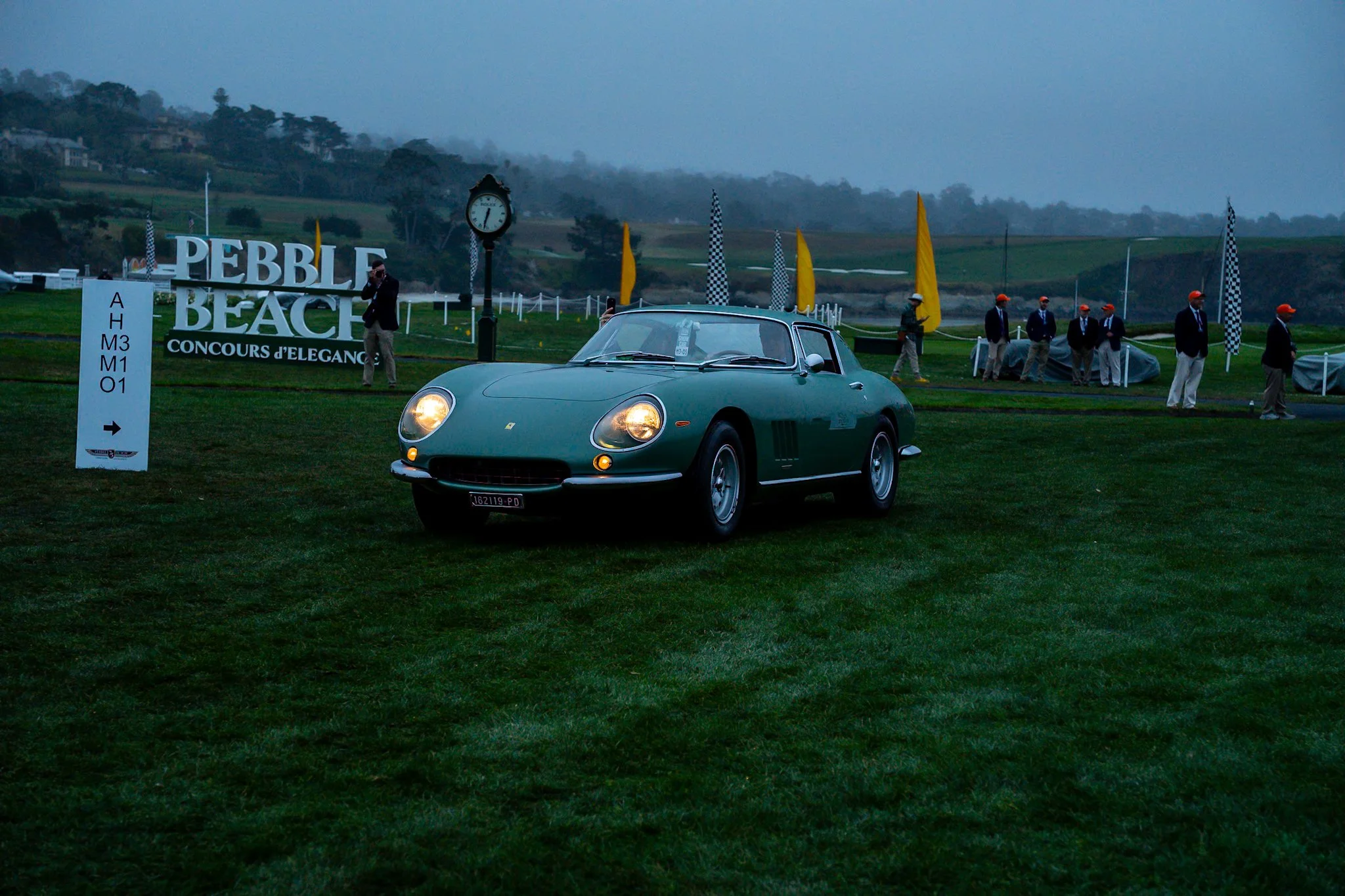
Dawn at Pebble Beach
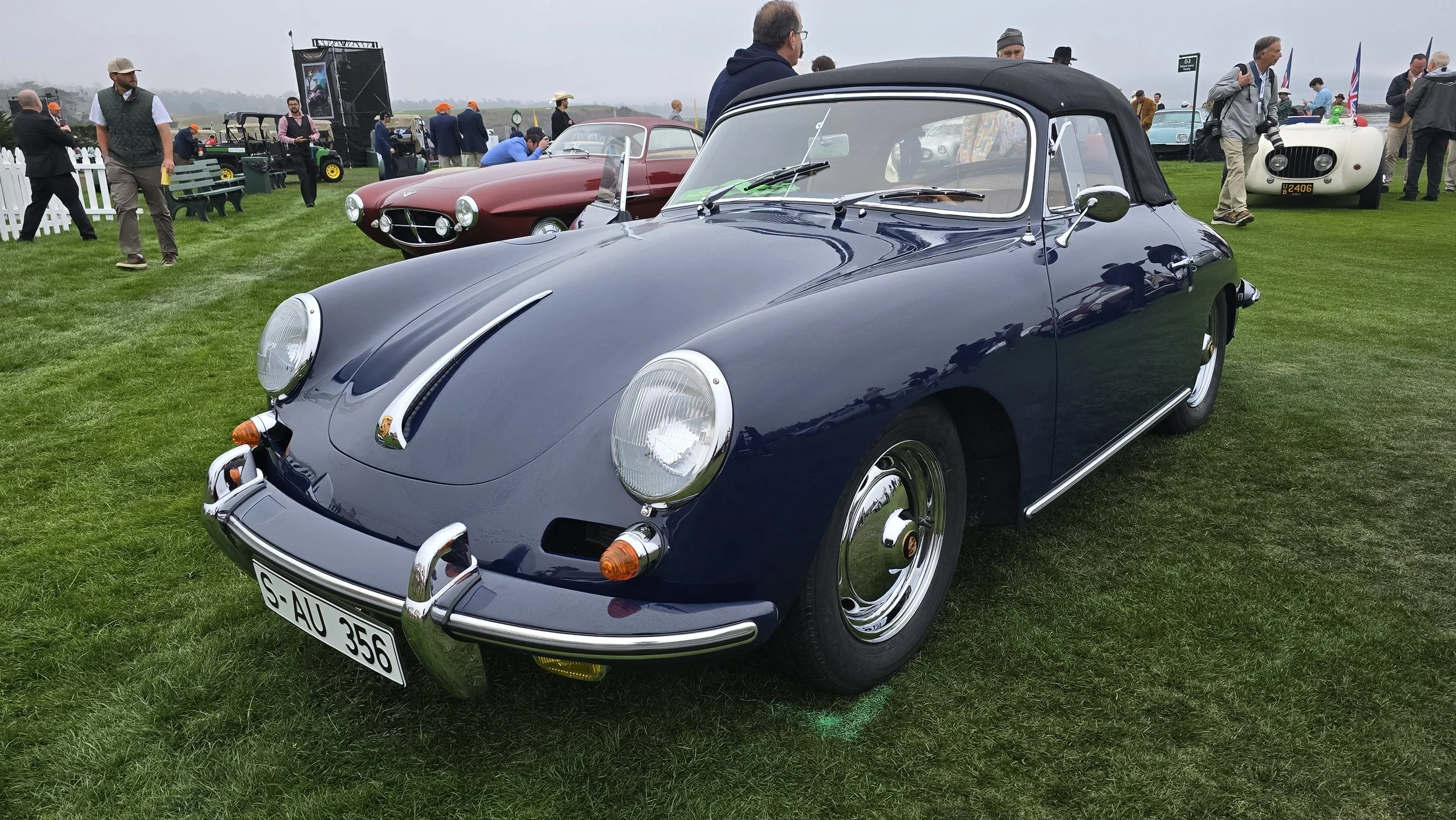
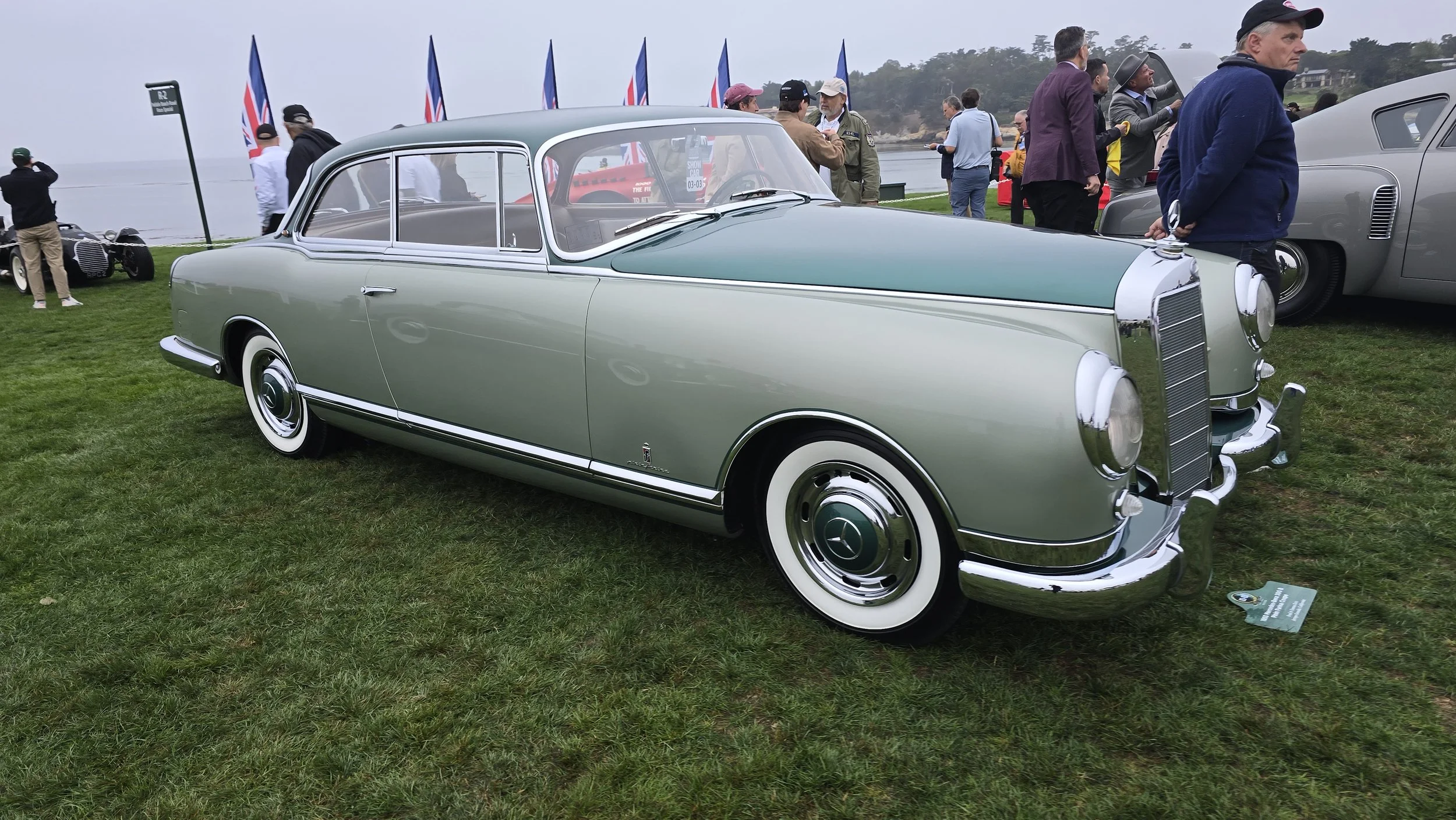
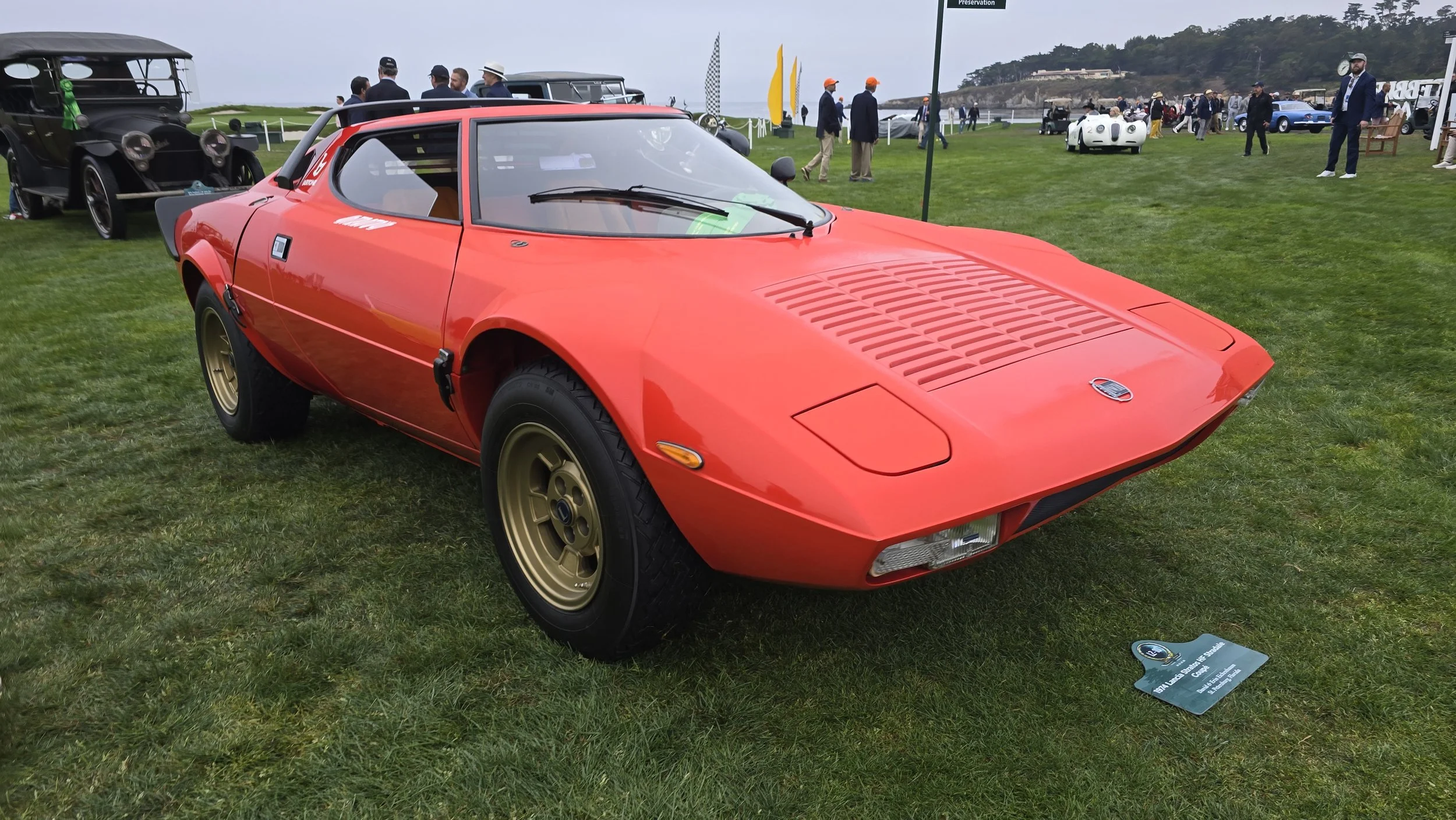
The Pebble Beach Concours d’Elegance is not merely the finale of Monterey Car Week. In many respects, it is one of the reasons Monterey Car Week exists at all.
The story begins in 1950, when the first Pebble Beach Road Races were held on the narrow roads twisting through Del Monte Forest. The Concours was the supporting act: a relatively last-minute social event organized alongside the racing, with cars judged in a nearby field before being paraded past the start-finish line. The race was the attraction and the Concours decidedly secondary. That hierarchy did not last.
As the road racing machinery became faster, racing through a forest bordered by trees, hay bales and optimism became increasingly untenable. After the final Pebble Beach Road Races in 1956, competition moved to the newly constructed Laguna Seca in 1957. The Concours remained at Pebble Beach and gradually evolved from a gathering that initially featured contemporary automobiles into perhaps the world’s most influential collector-car competition.
Over the decades, an entire automotive ecosystem grew around it. Auctions arrived to serve the collectors already coming to town. Historic racing flourished at Laguna Seca. Manufacturer events, concours, rallies, club gatherings and increasingly elaborate product launches followed. Monterey Car Week now encompasses scores of events spread across the Peninsula, but its traditional destination remains the same patch of grass beside Carmel Bay.
The Hat
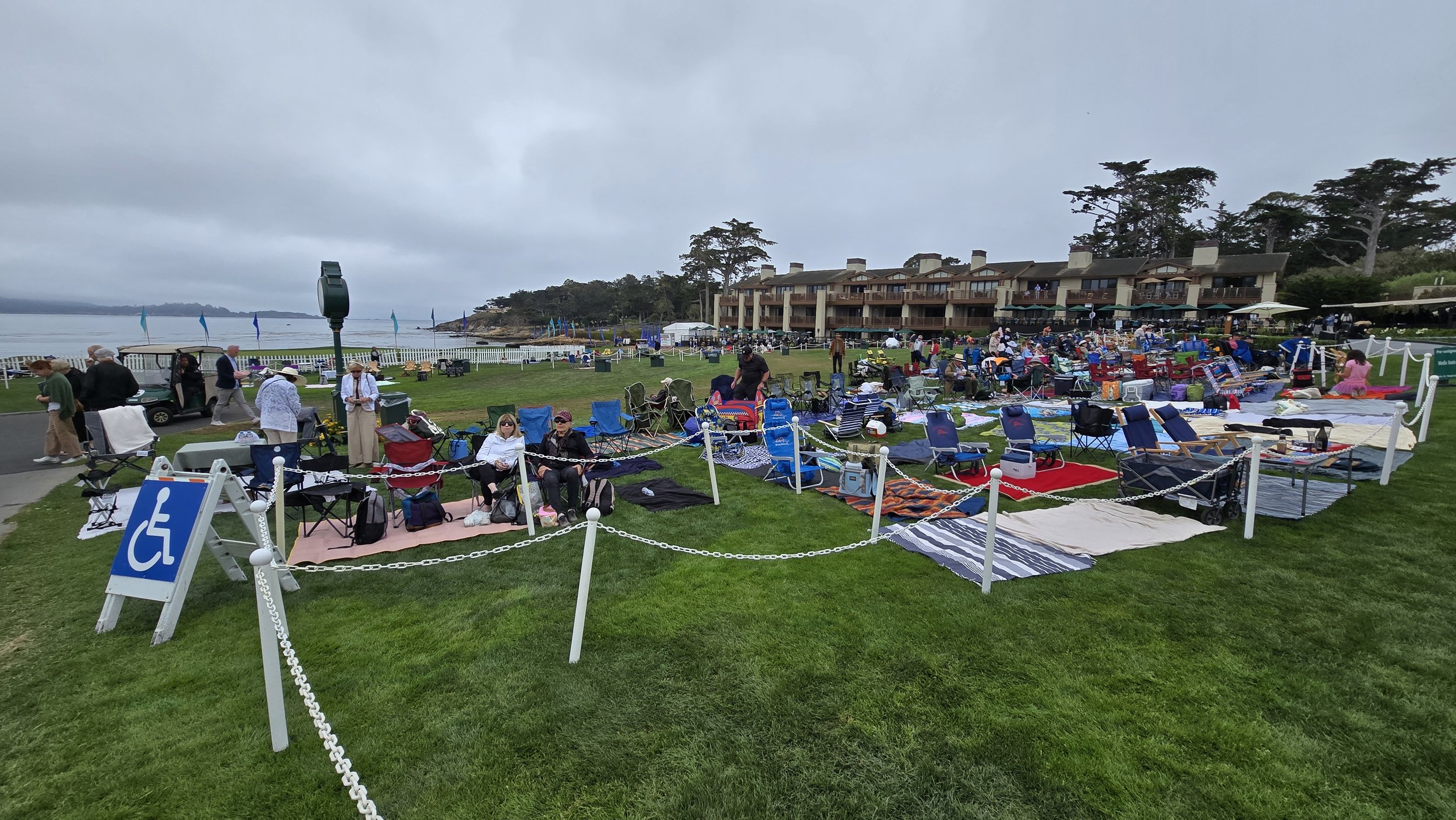
One of Pebble Beach’s stranger traditions has very little to do with the cars themselves: the annual pursuit of the Dawn Patrol hat. Long before the judges begin fussing over panel gaps and provenance, a small army of particimants abd spectators is already roaming the darkened grounds with the intensity of people hunting a limited-edition Rolex. The hats are supposed to be a charming souvenir for those hardy enough to arrive before sunrise, but they have become something closer to automotive contraband—coveted, traded, photographed and, inevitably, resold online (almost instantaneously) for sums that make the whole exercise seem faintly ridiculous. There is something wonderfully absurd about standing in the cold at an indecently earky hour on a Sunday morning, surrounded by multimillion-dollar machinery, while grown adults quietly strategize over how to secure a free baseball cap. And yet, like so much about Pebble Beach, that absurdity is part of the appeal. The hat is proof that you were there before the champagne, before the crowds and before the lawn became a spectacle.
Despite our shuttle never arriving to pick us up at a remote parking lot, we were still rewarded. After a pitch black walk through the Del Monte Forest and the long decent down to the fairway and through security, we found ourselves wondering if we’d missed our opportunity for a hat this year. Unbelieveably, as we walked over to the completely packed Hagerty sponsored doughnut and coffee zone, a random guy opened his hagerty branded bag and started handing out hats. For the first time in the past few years we didn’t have to enter the melee of pusing, shoving, and ripping reguars to get our hats.
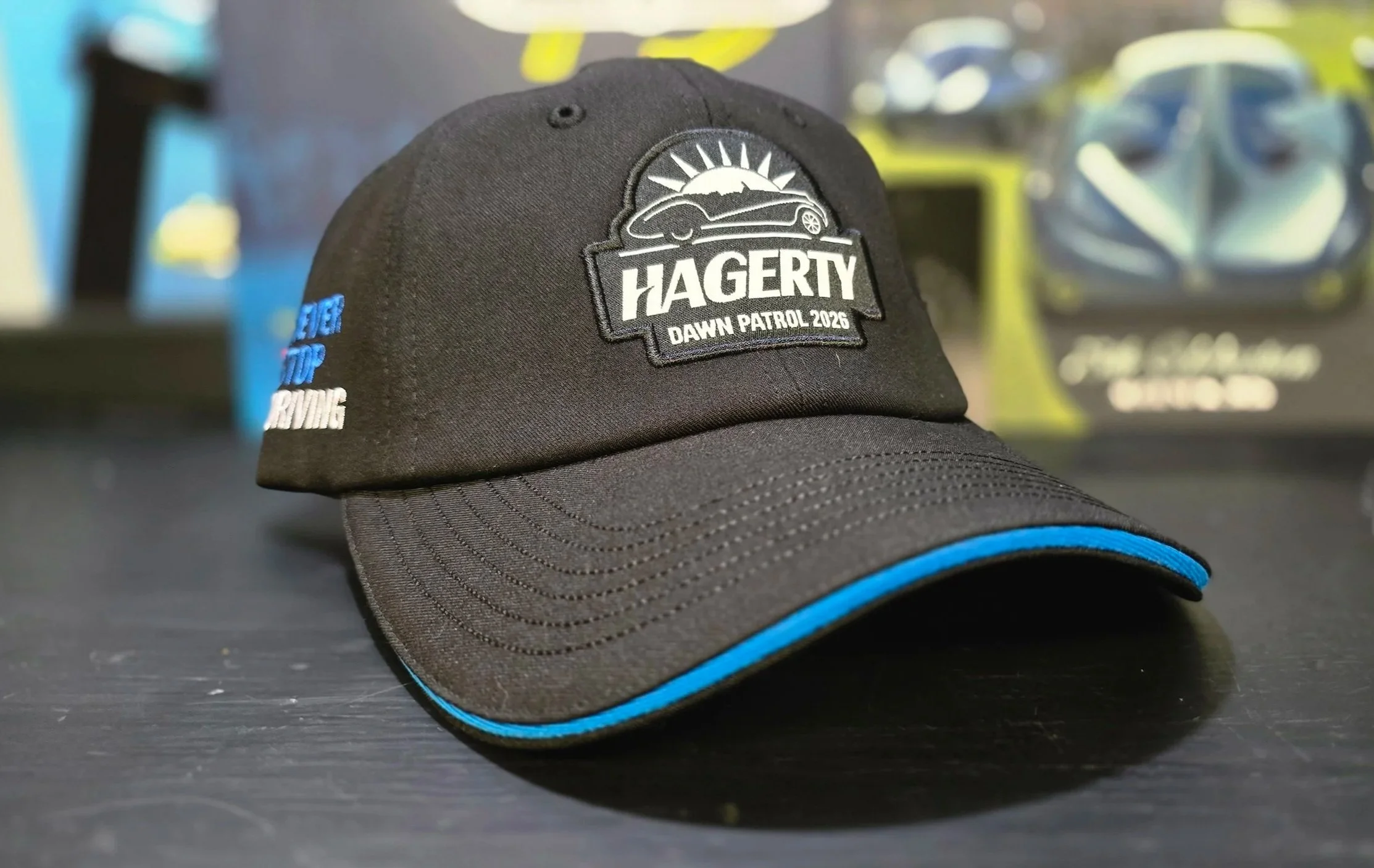
Success!
Seventy-Five Years, and Back to the Beginning
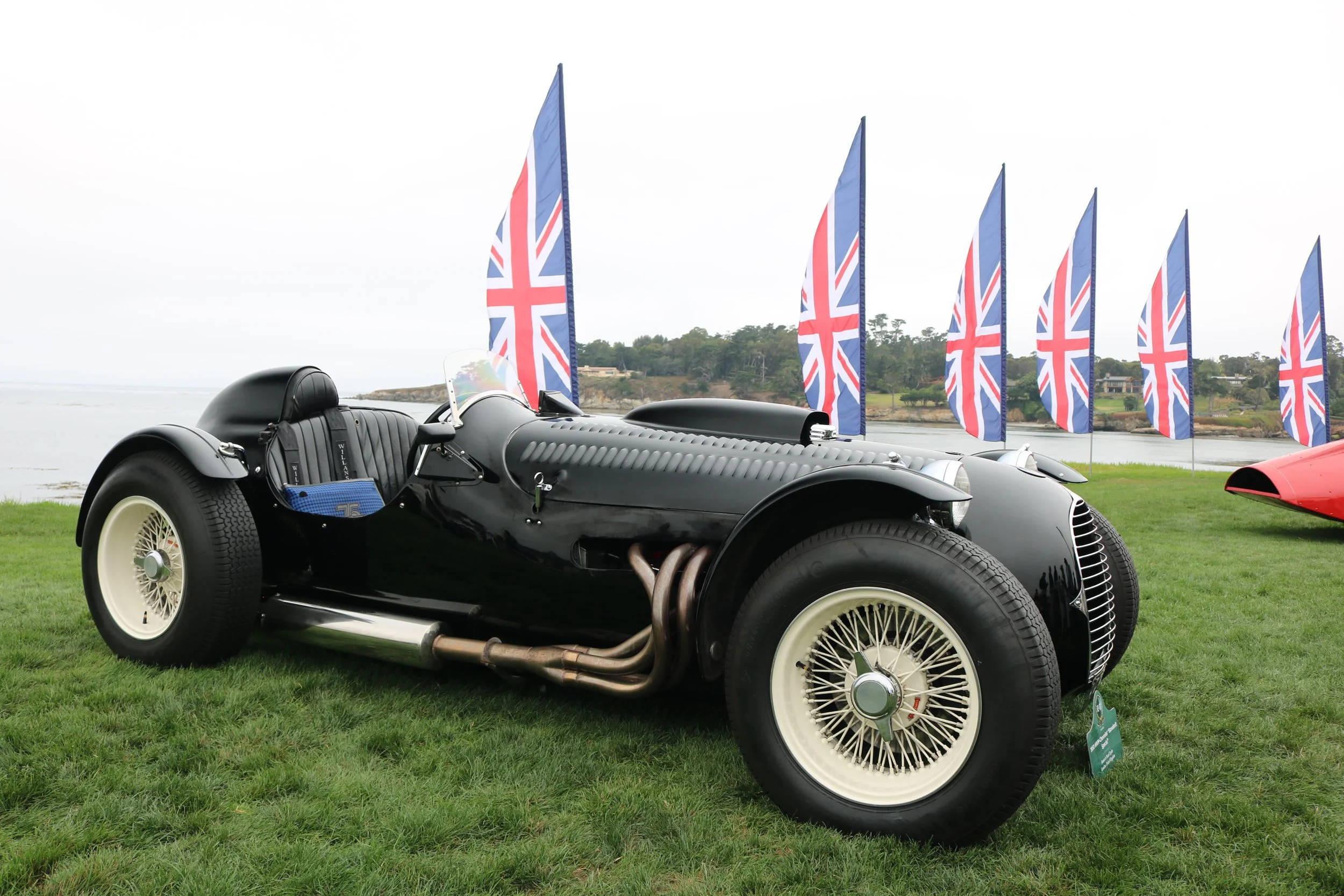
For its 75th incarnation, Pebble Beach appropriately spent quite a bit of time looking backward. The 2026 field included a special Pebble Beach Road Races class, reconnecting the modern Concours with the competition cars that once tore through Del Monte Forest. Among the historically significant returns were the MG-based R1 and R2 specials associated with Ken Miles, including the wonderfully named Flying Shingle. Miles raced at Pebble Beach alongside names including Phil Hill, Carroll Shelby and Richie Ginther long before those men became permanent fixtures of motorsport mythology.
That connection matters because historic racing and concours culture are sometimes treated as separate corners of the collector-car world. Pebble Beach’s history shows that they were intertwined from the beginning.
The Ferraris
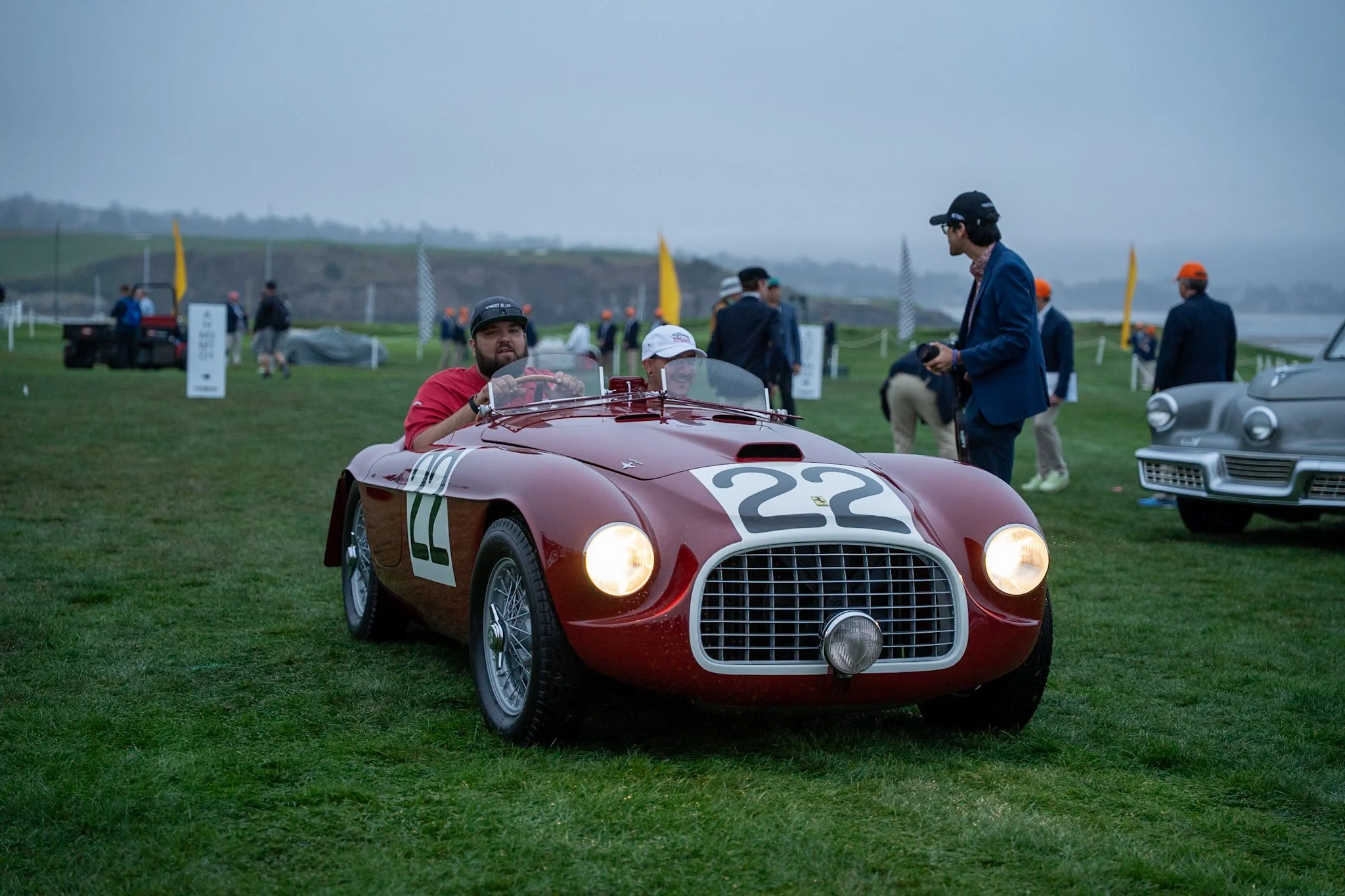
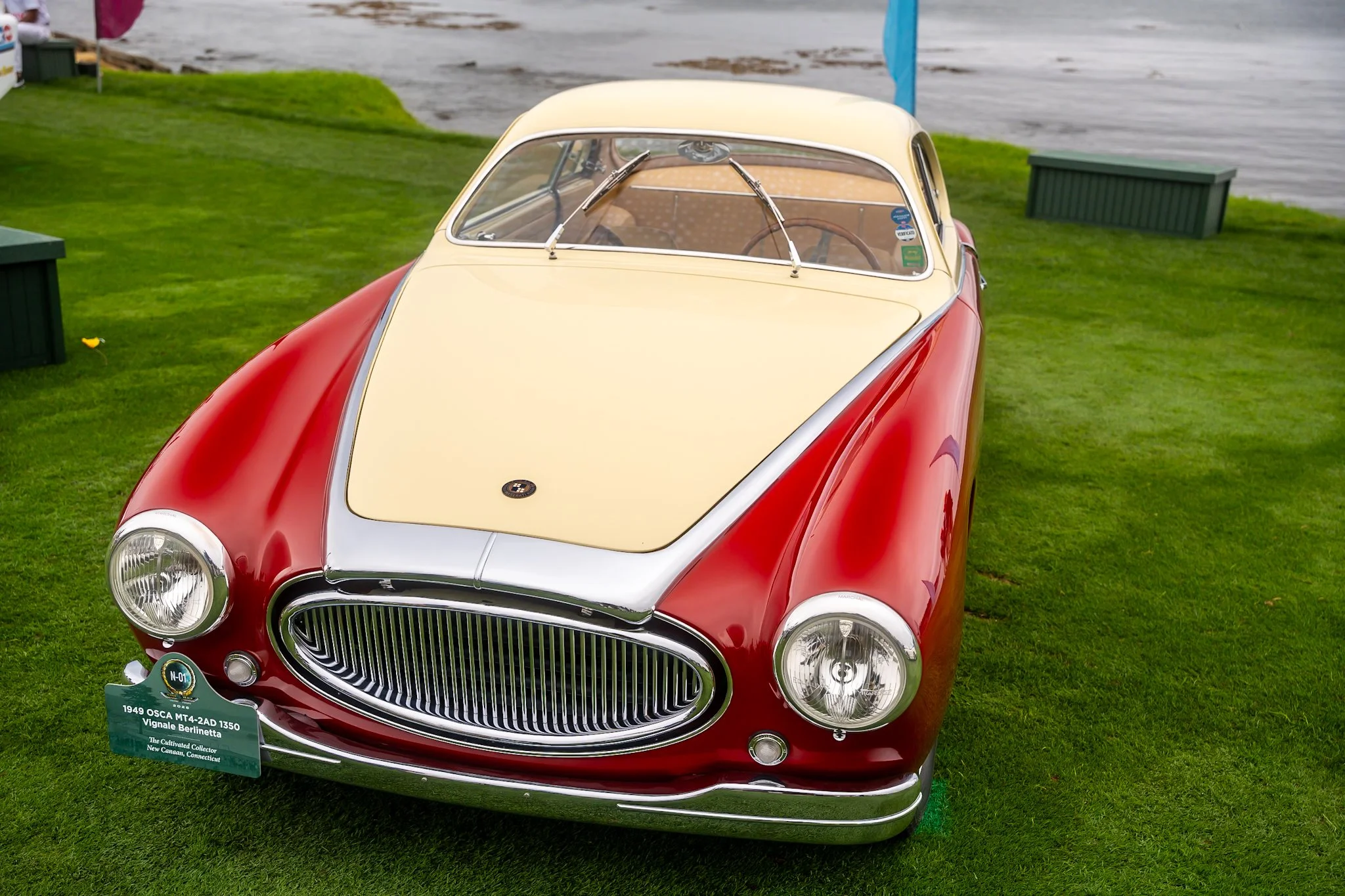
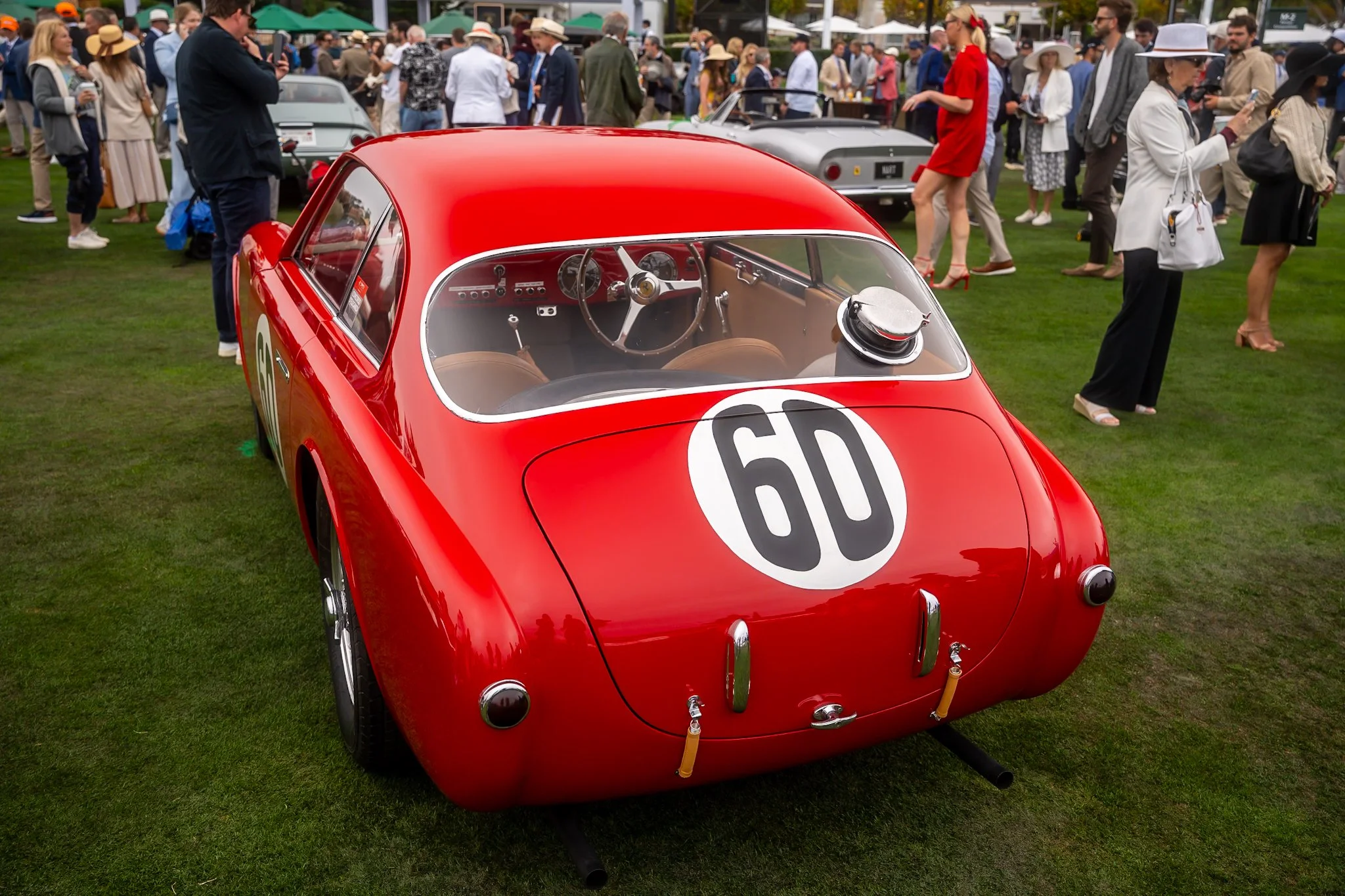
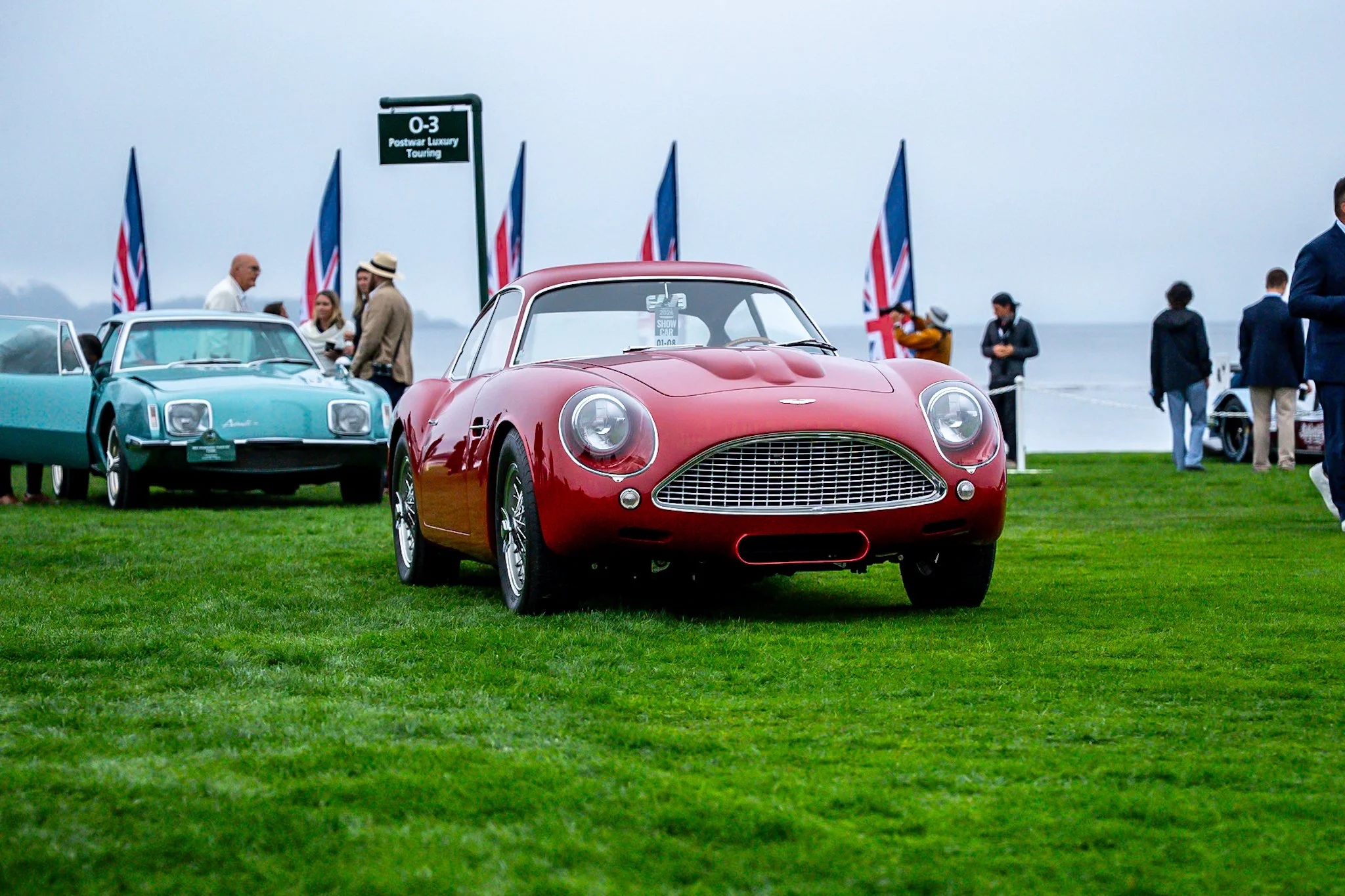
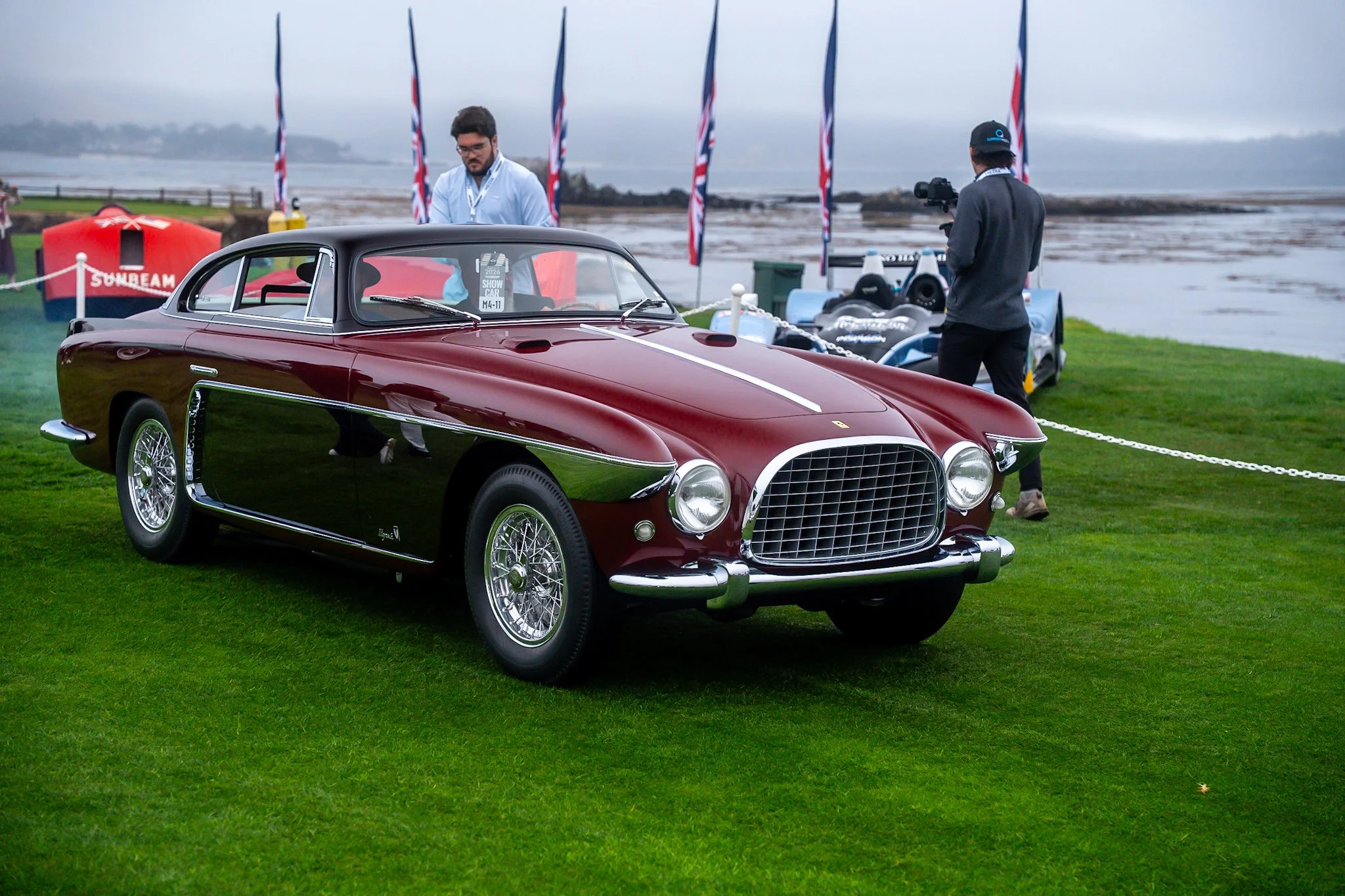
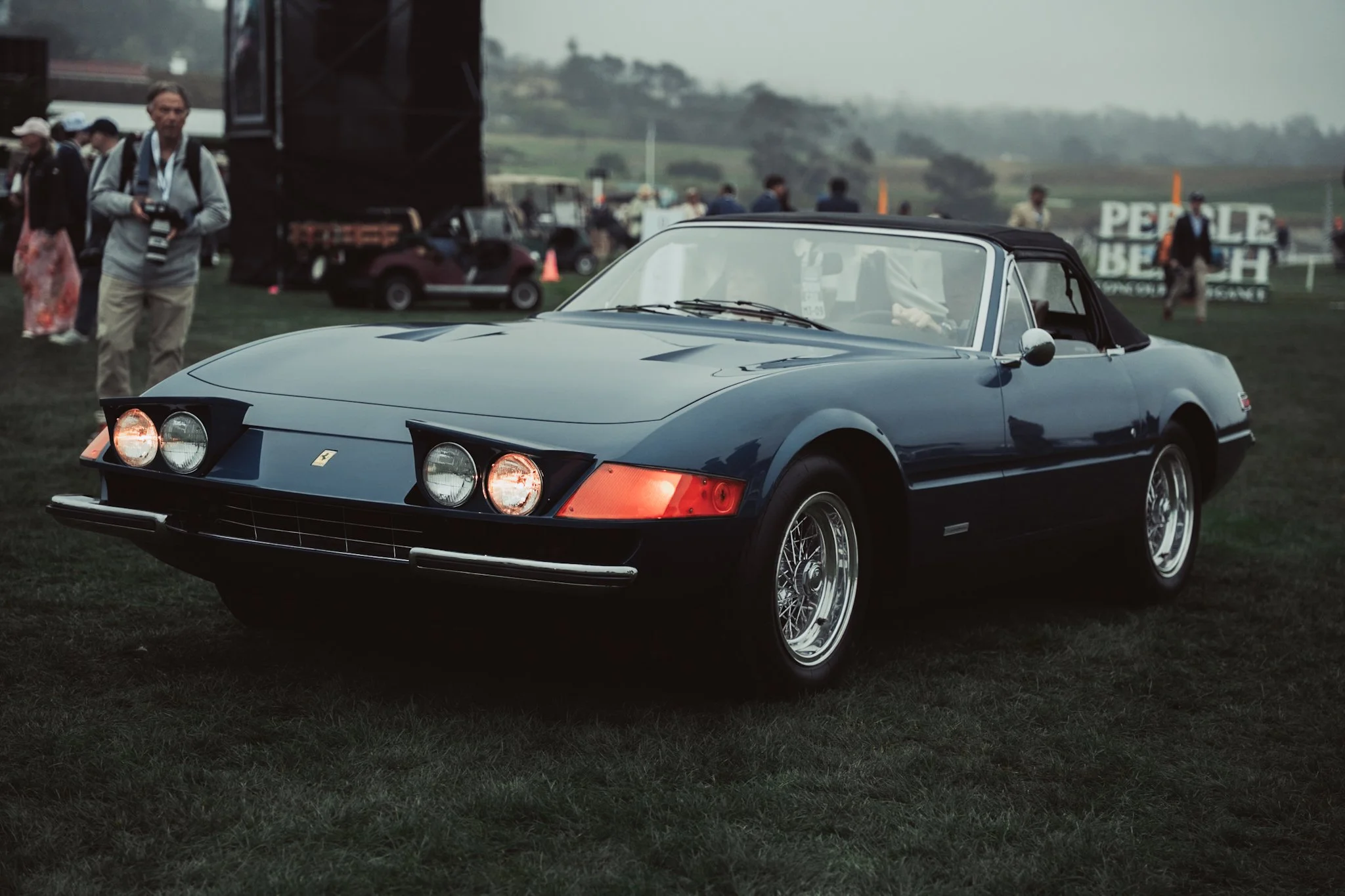
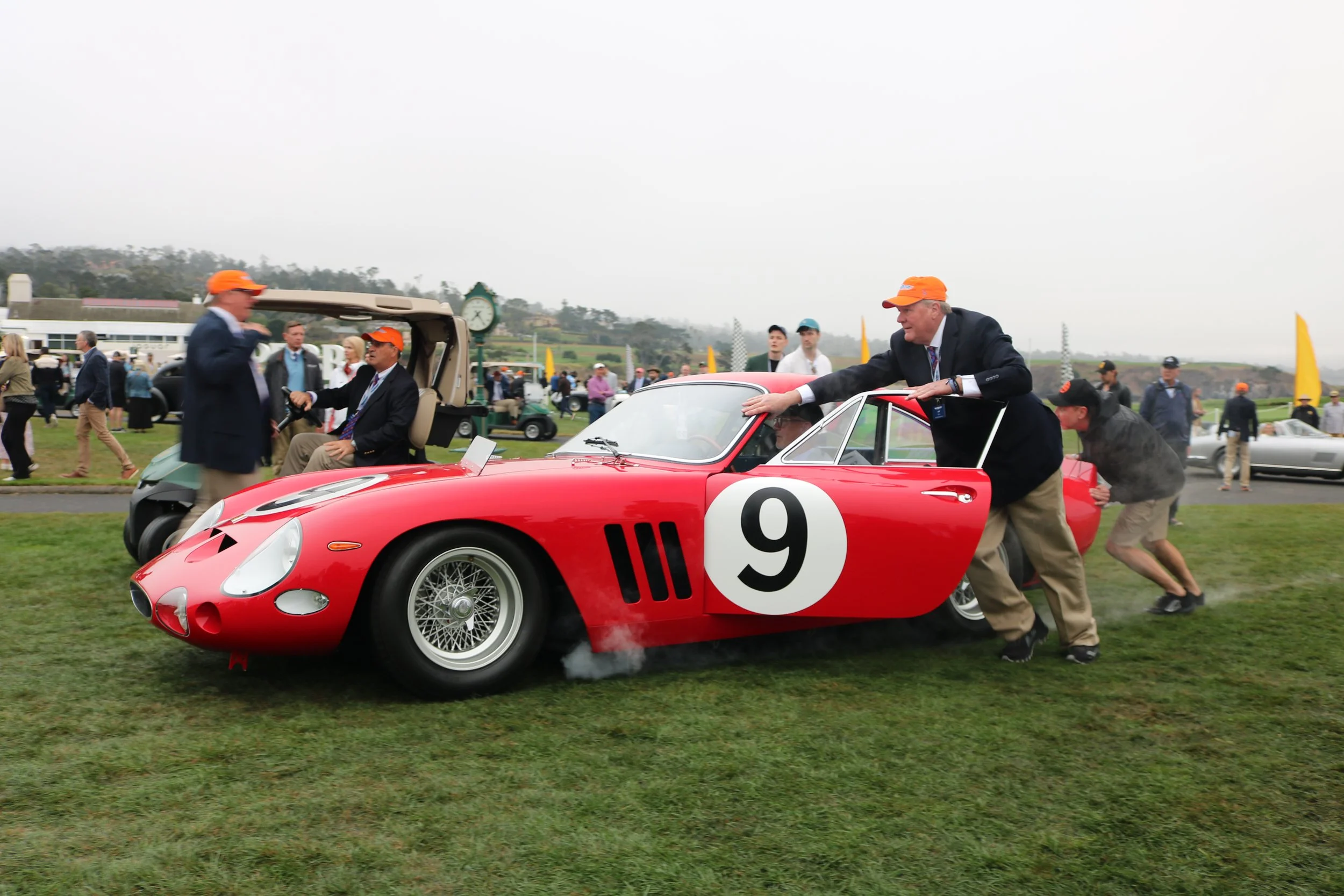
Ferrari continued to serve as a featured class…er, classes. Ferraris have appeared at the Concours since 1951, and the 2026 field went substantially deeper than another parade of immaculate red road cars, with categories devoted to NART competition cars, Ferrari Le Mans winners, Ferrari Grand Touring cars and Ferrari-bodied-by-Vignale creations.
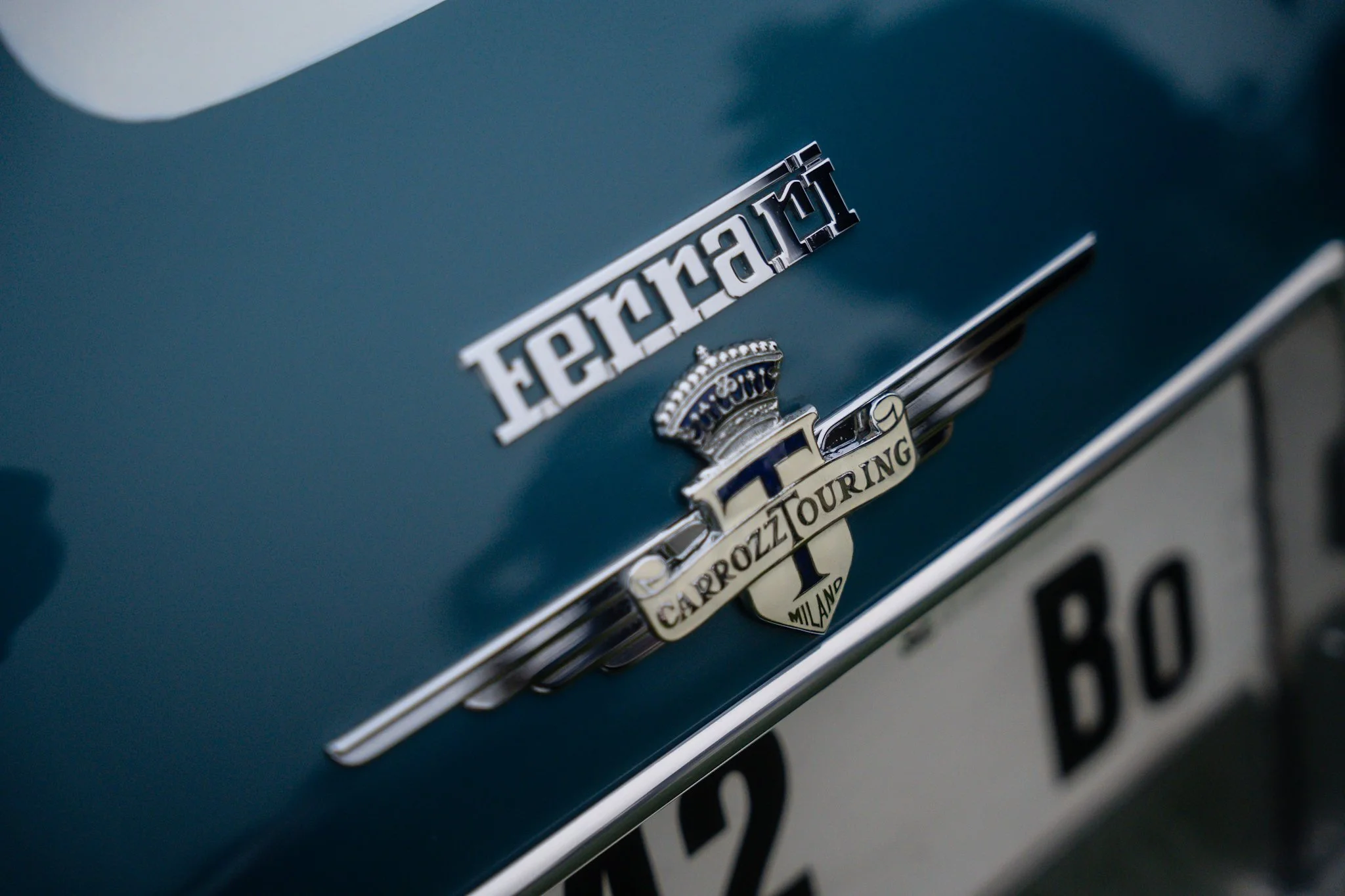
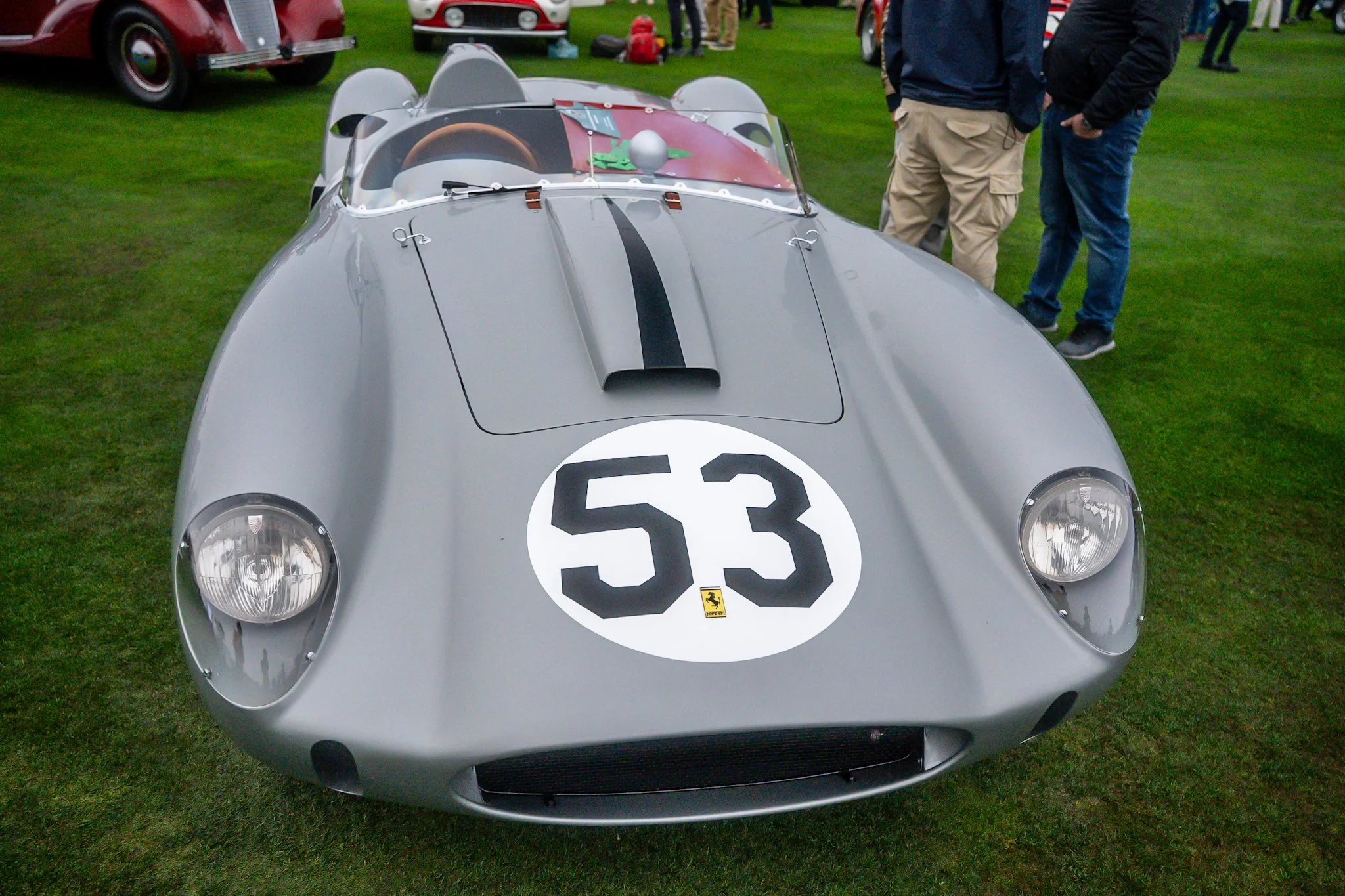
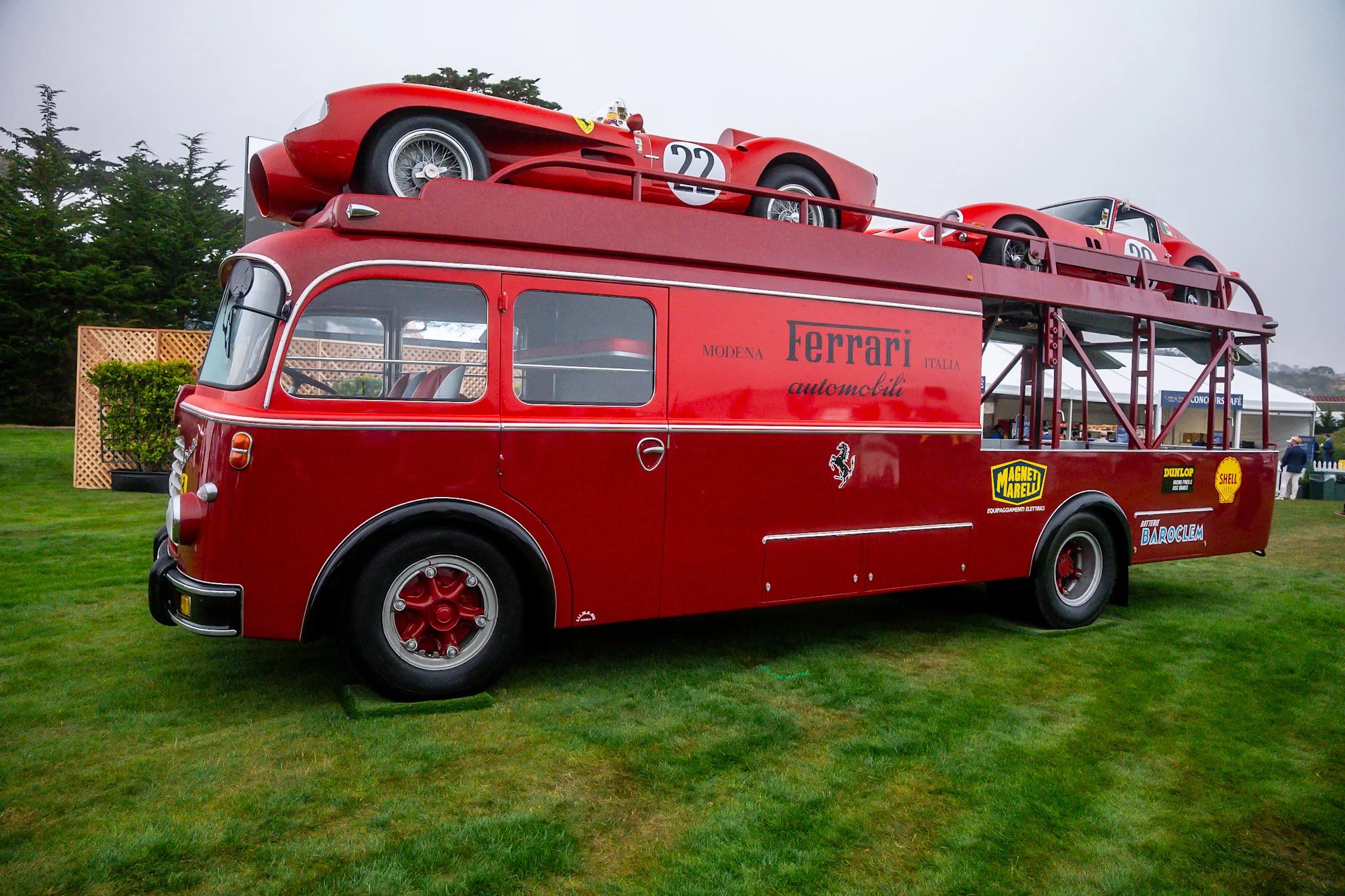
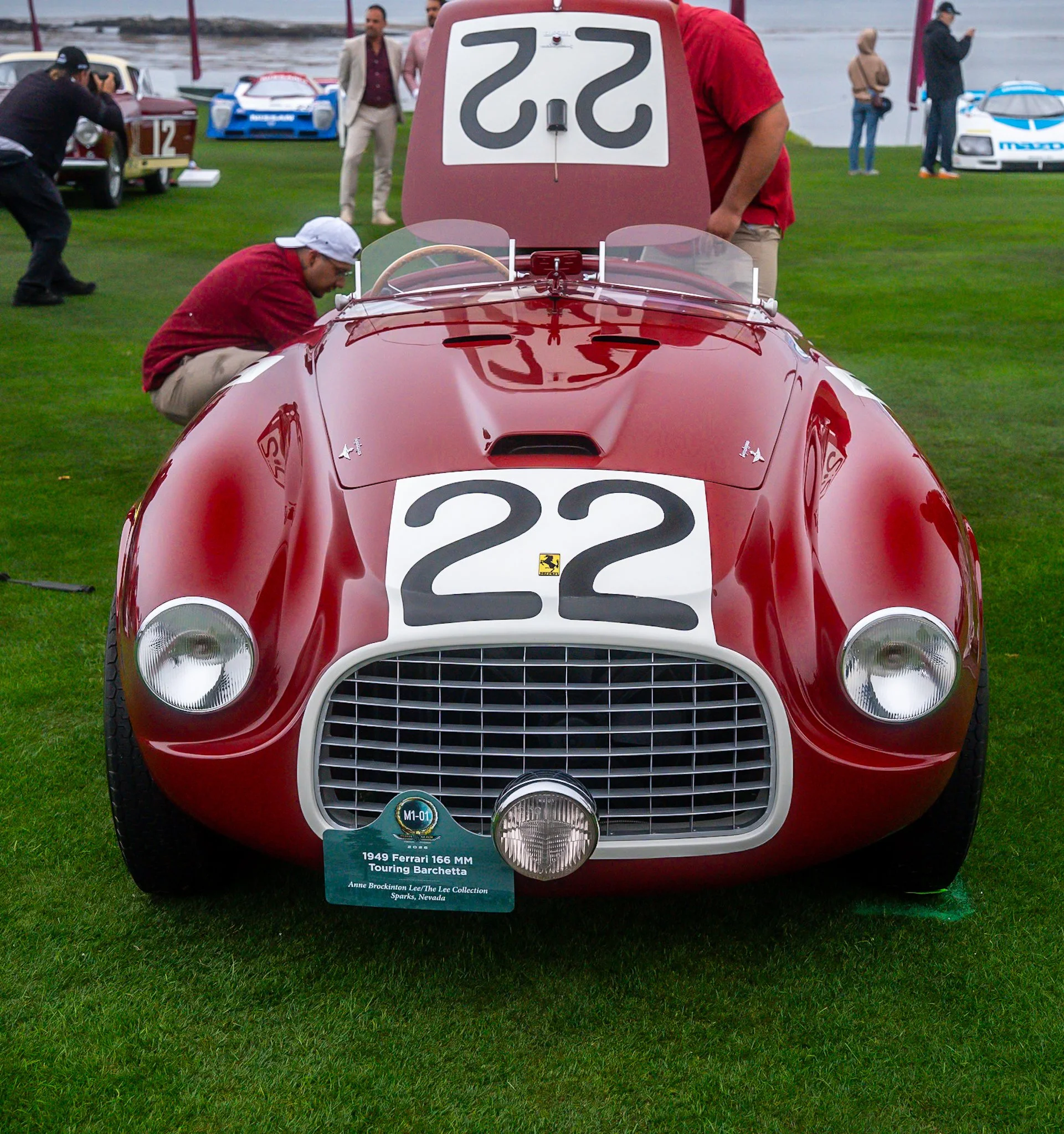
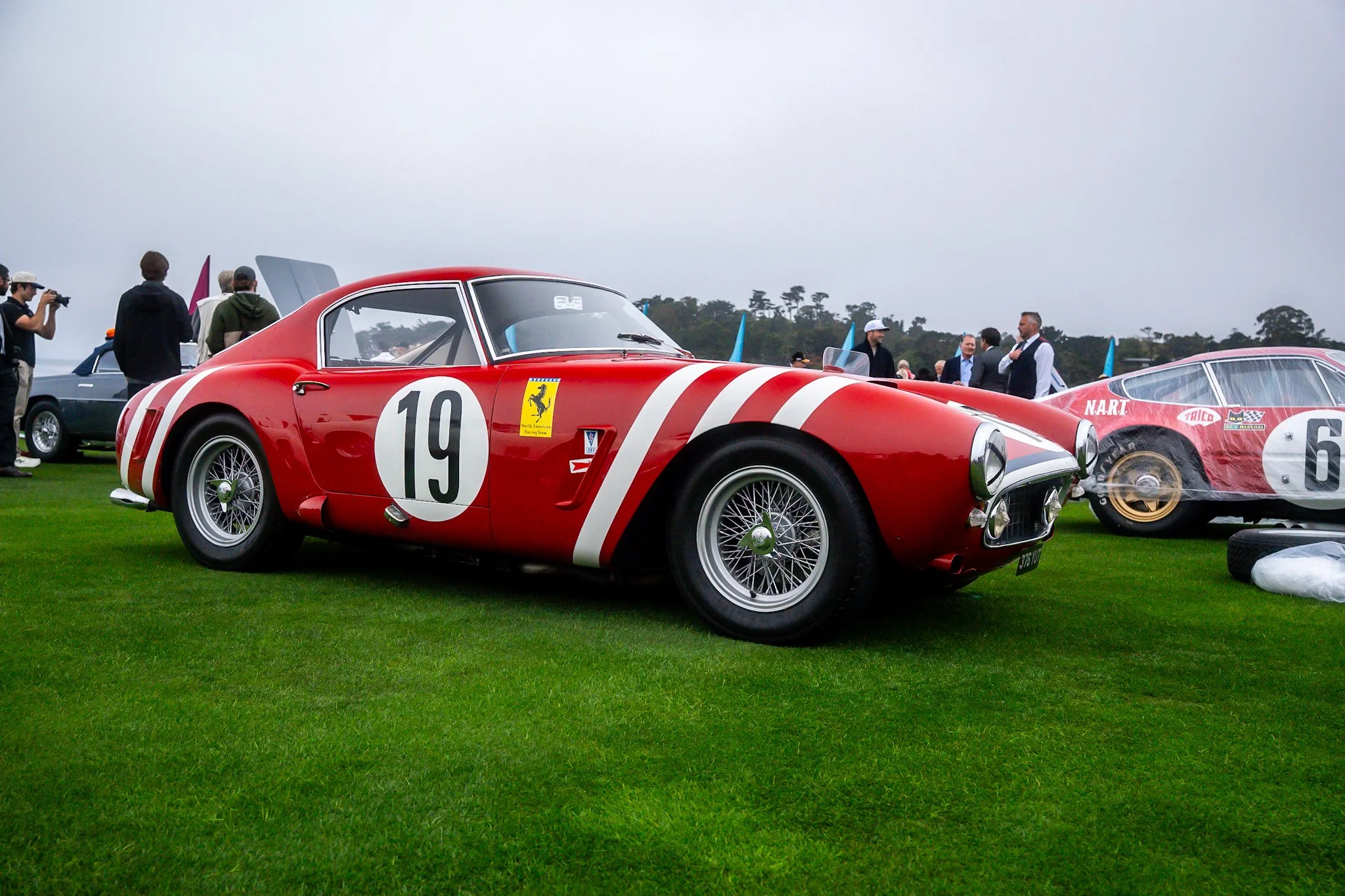
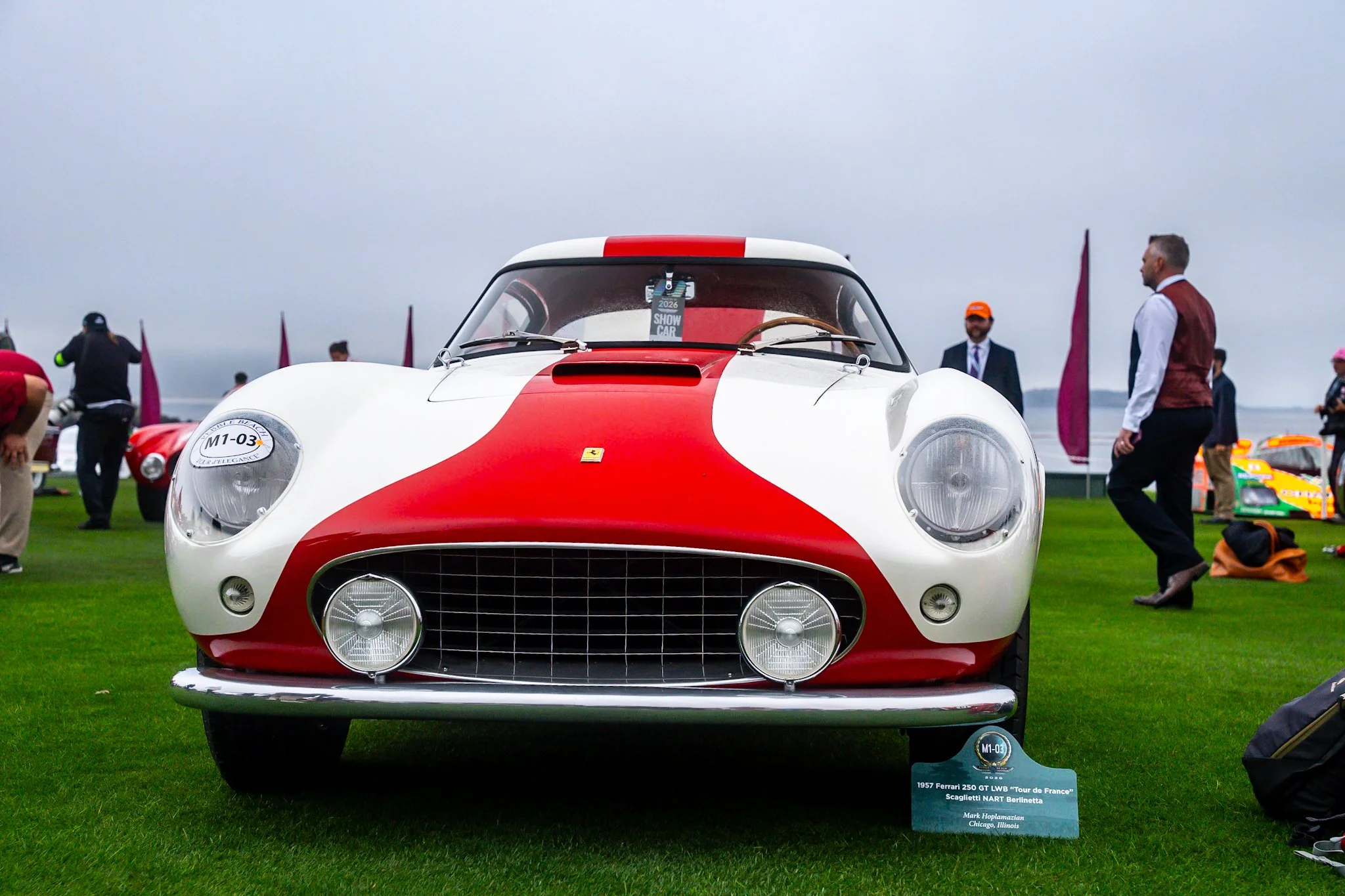
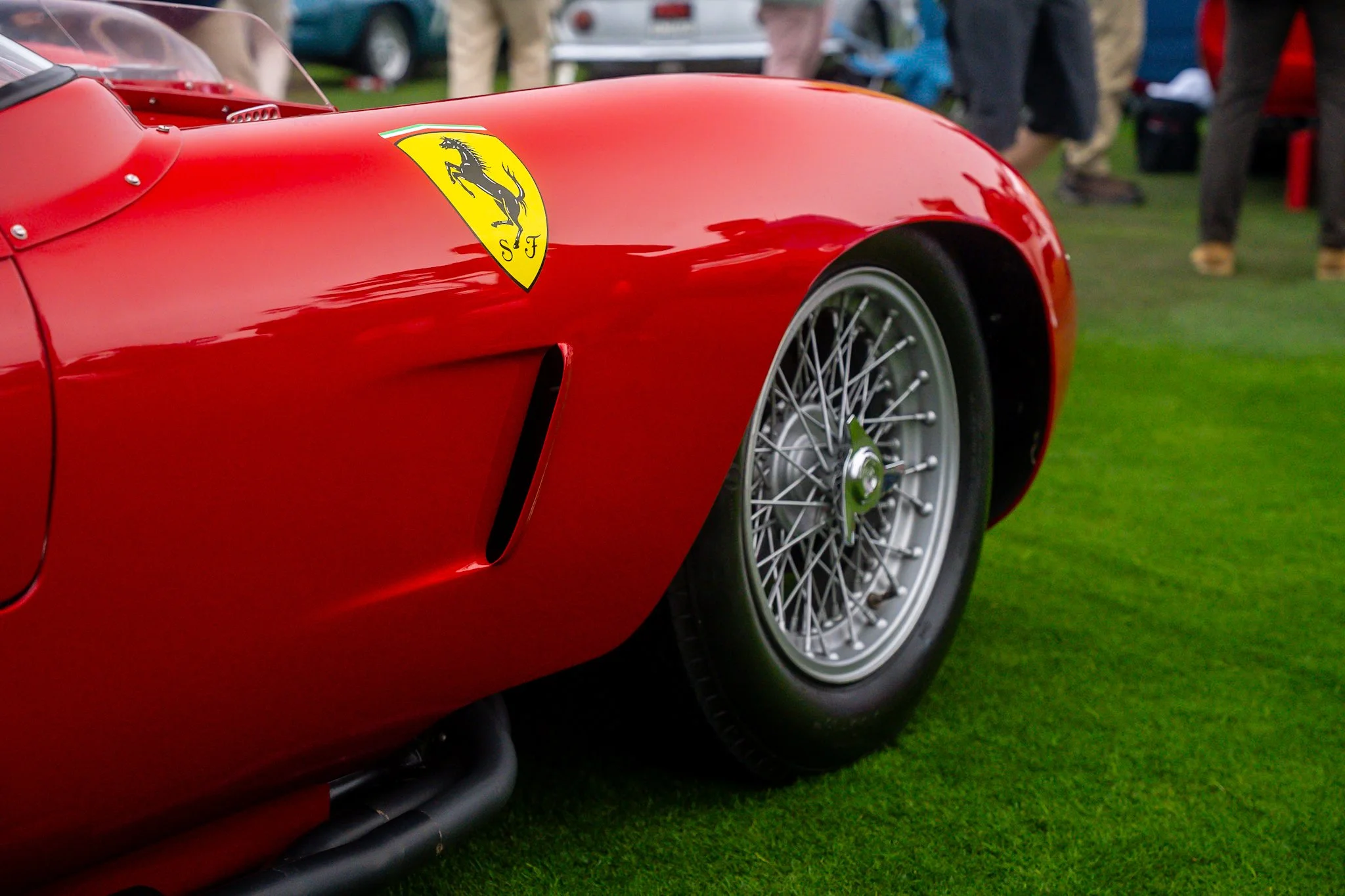
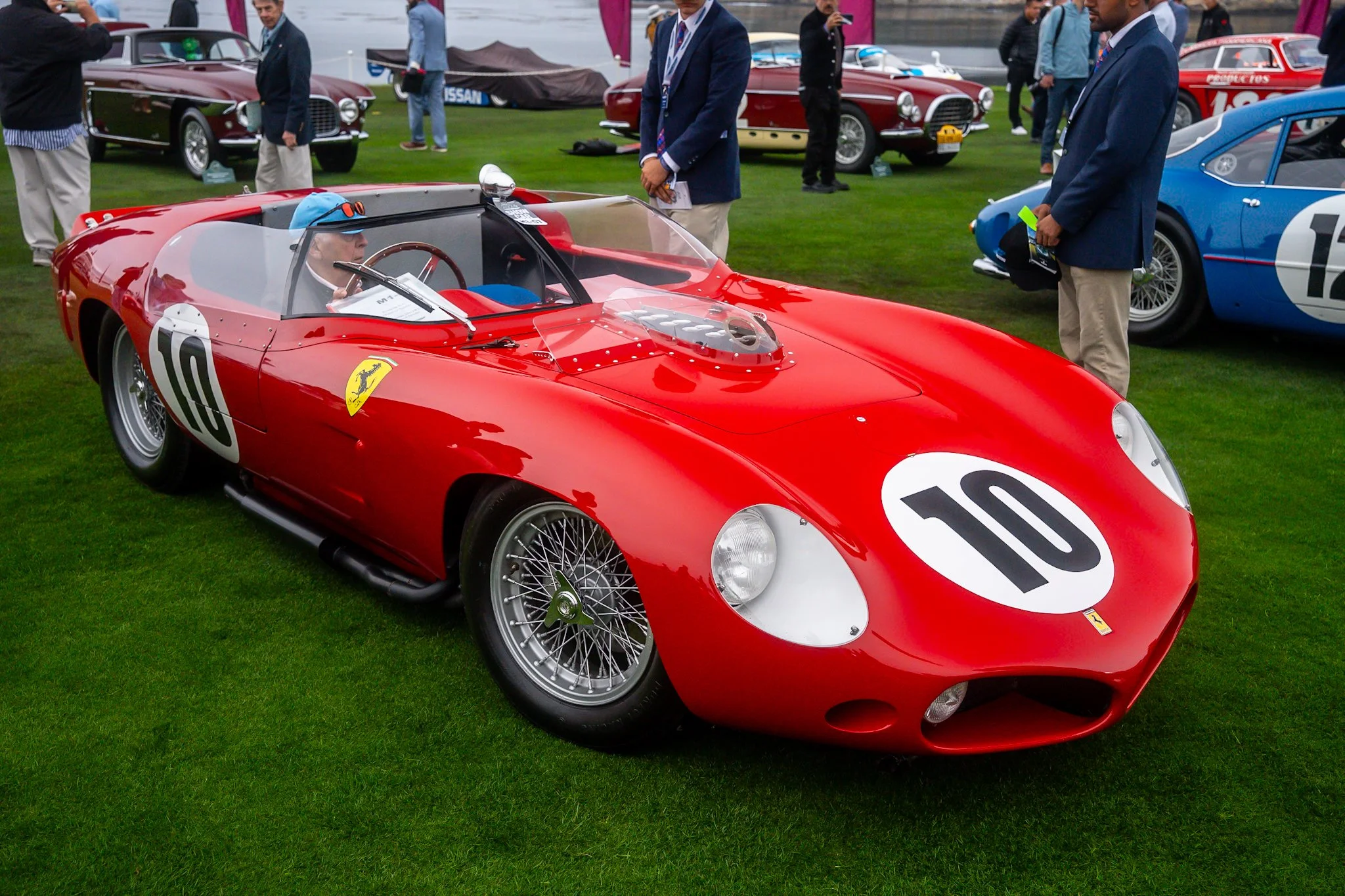
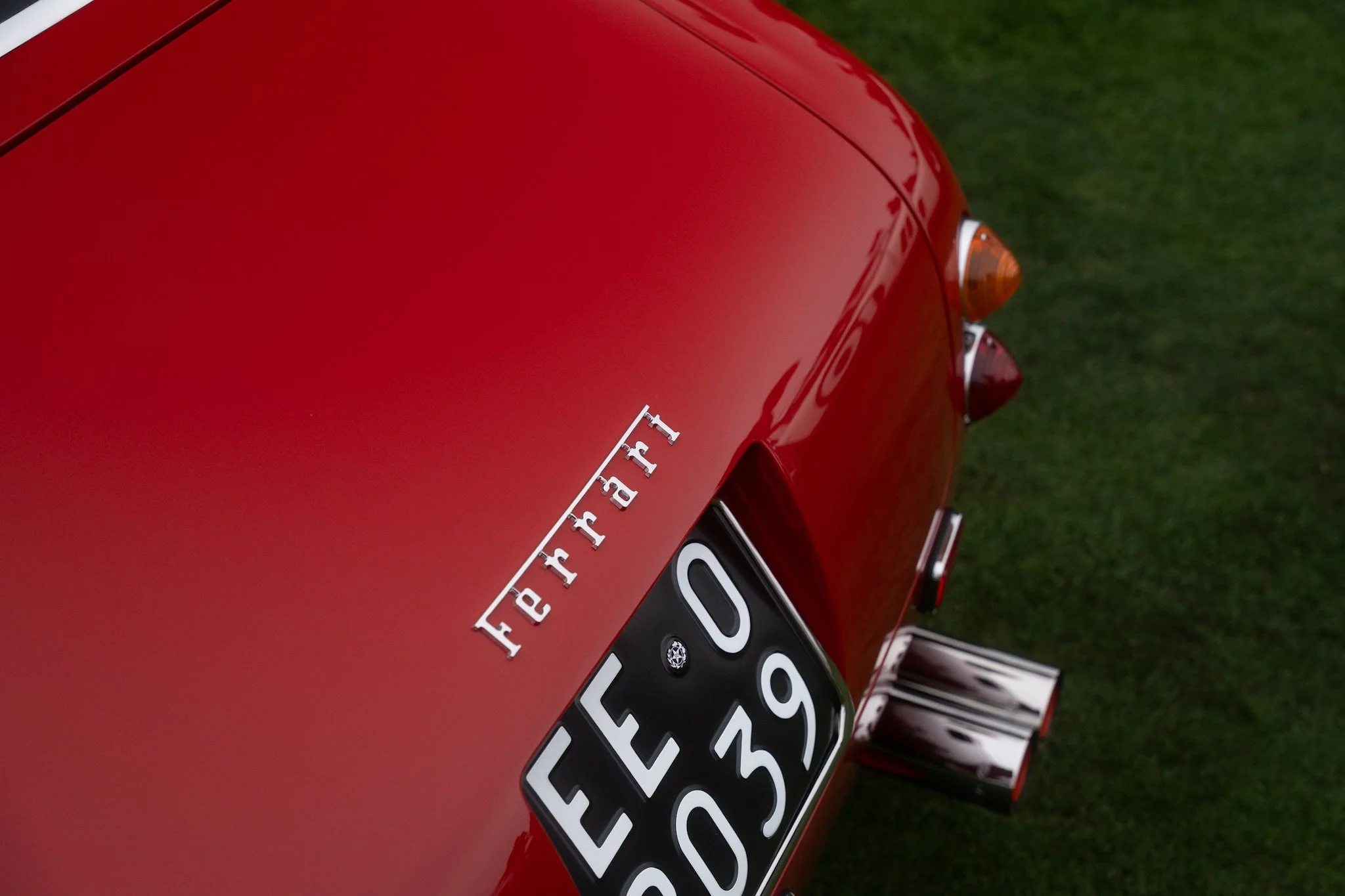
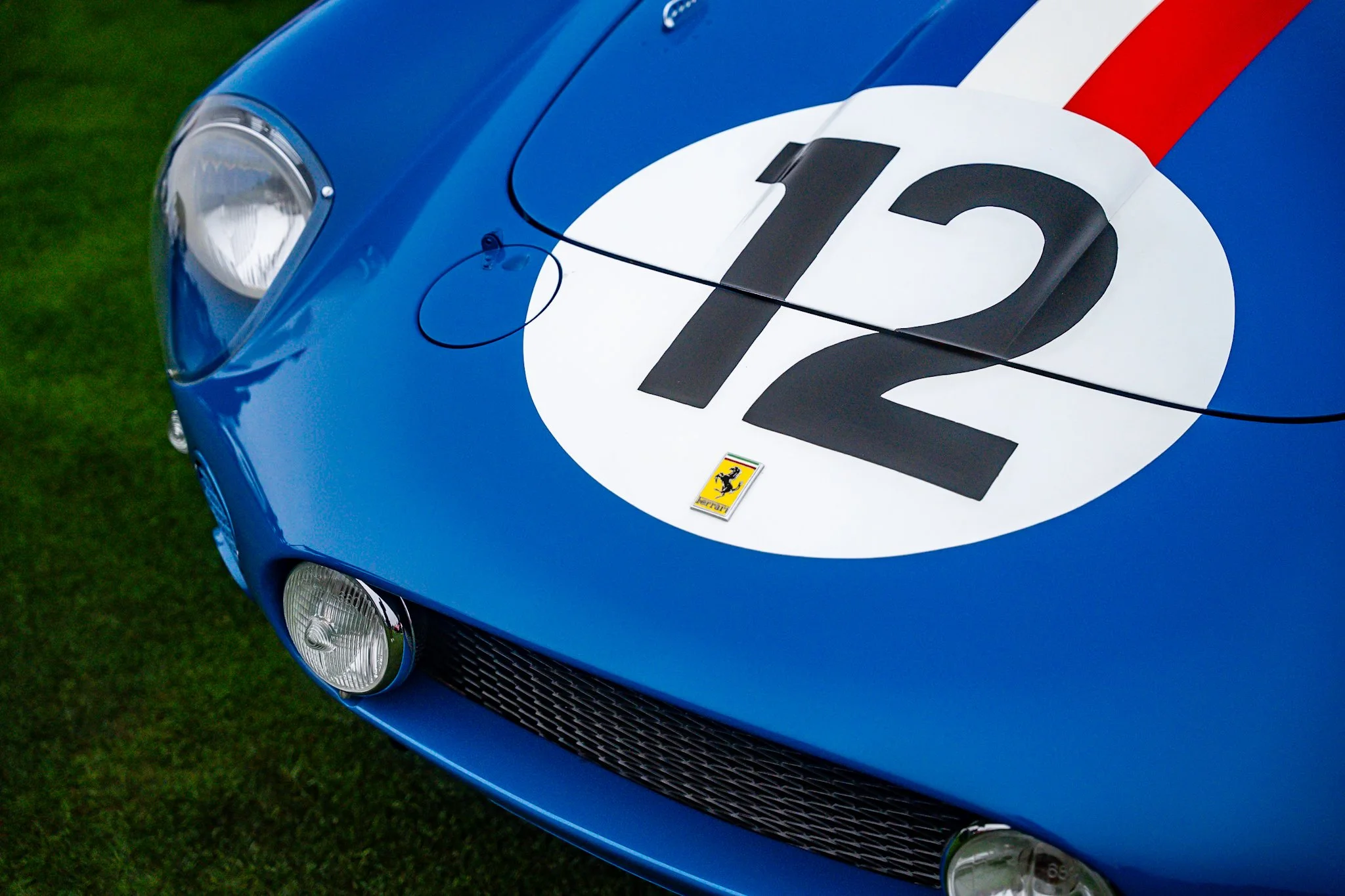
The attention given to Luigi Chinetti and the North American Racing Team was particularly appropriate. NART represents the period when Ferrari’s American story was built as much at circuits such as Sebring, Daytona and Le Mans as it was inside a showroom.
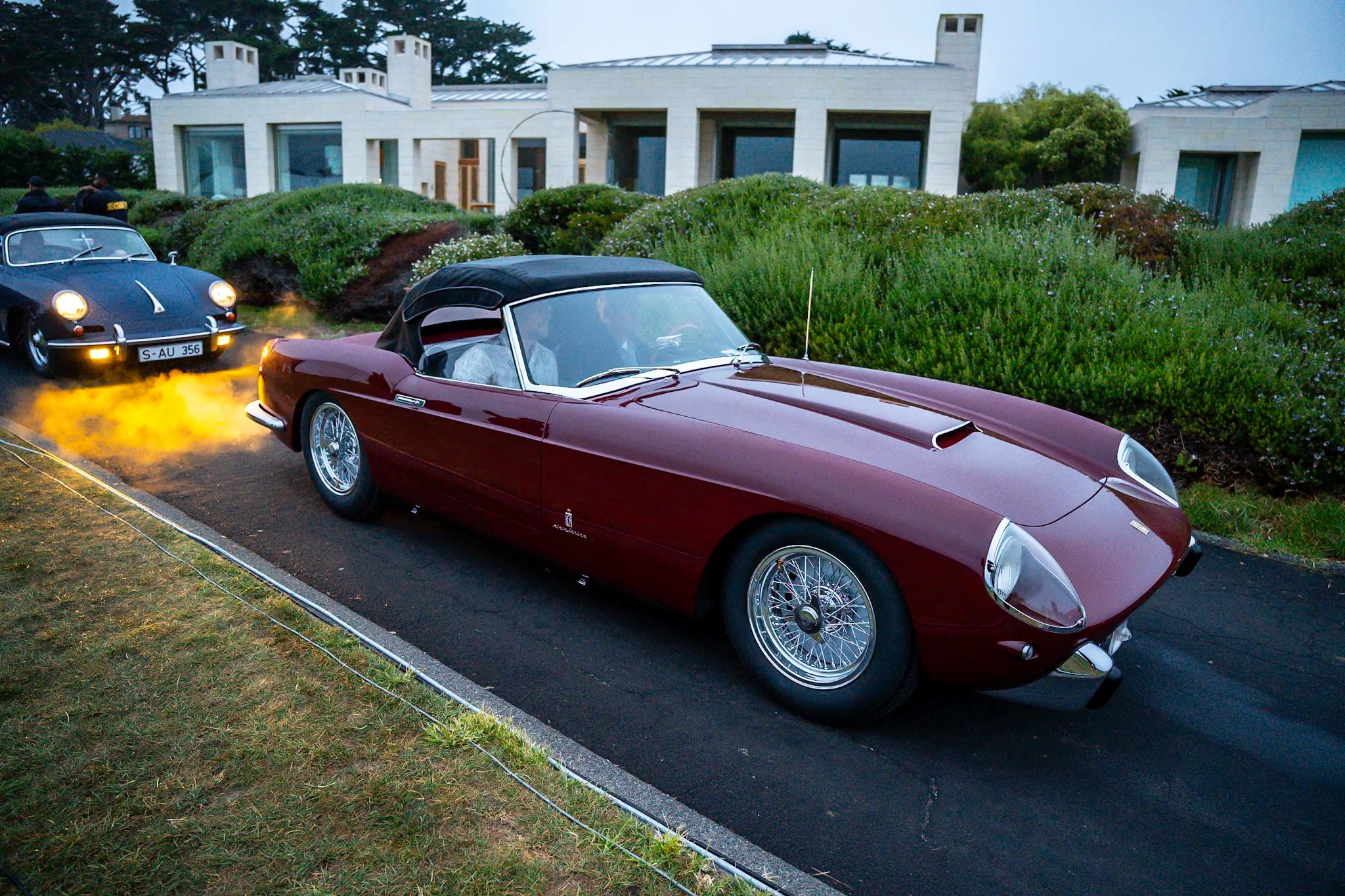
Coachbuilder Carrozzeria Alfredo Vignale received its own spotlight as well. Working frequently from Giovanni Michelotti’s designs, Vignale clothed everything from Ferraris and Maseratis to Lancias and Fiat 8Vs. Their cars epitomize the wonderfully optimistic Italian coachbuilding era when a chassis could apparently be regarded merely as an invitation to create something completely different.
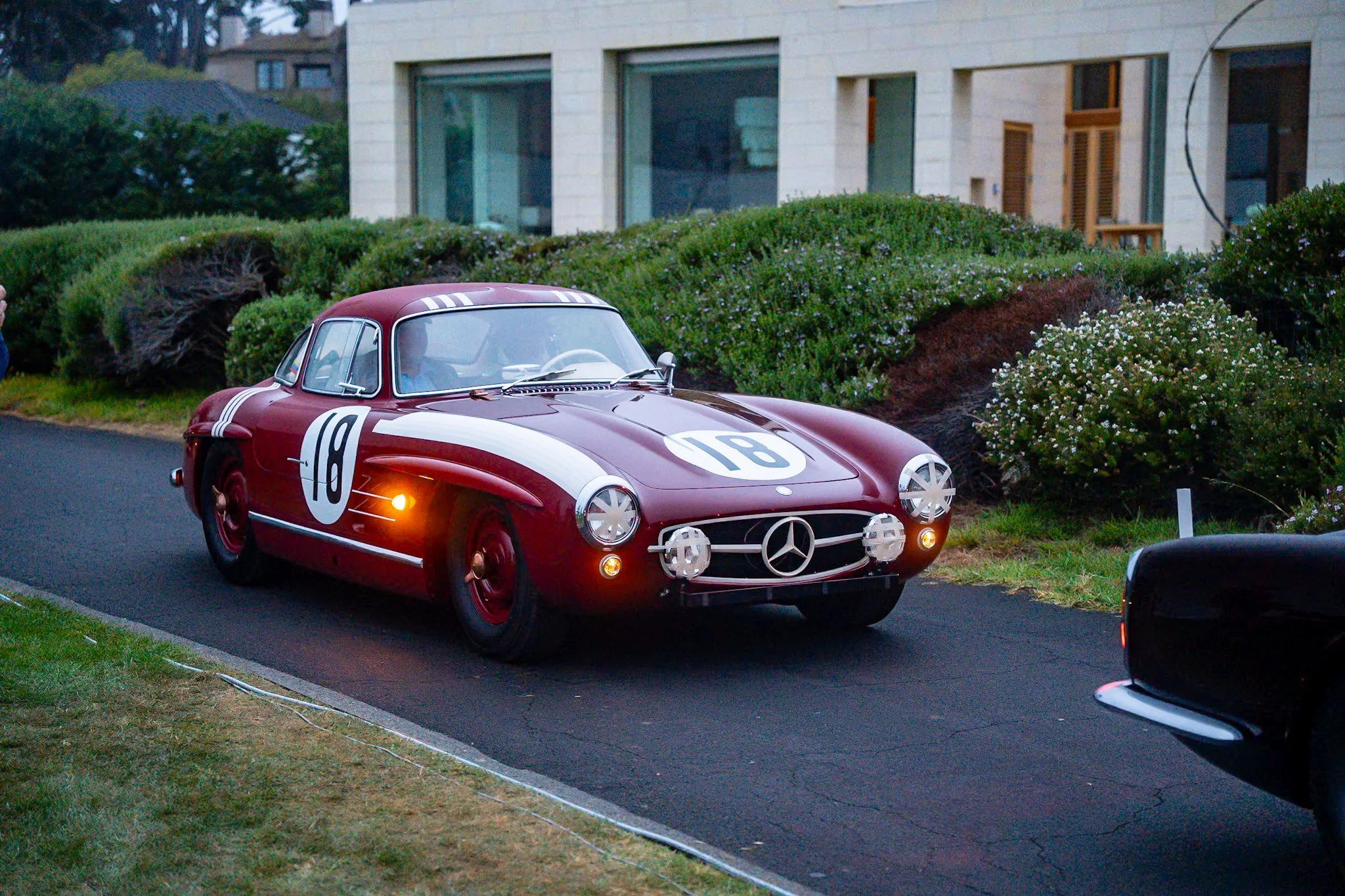
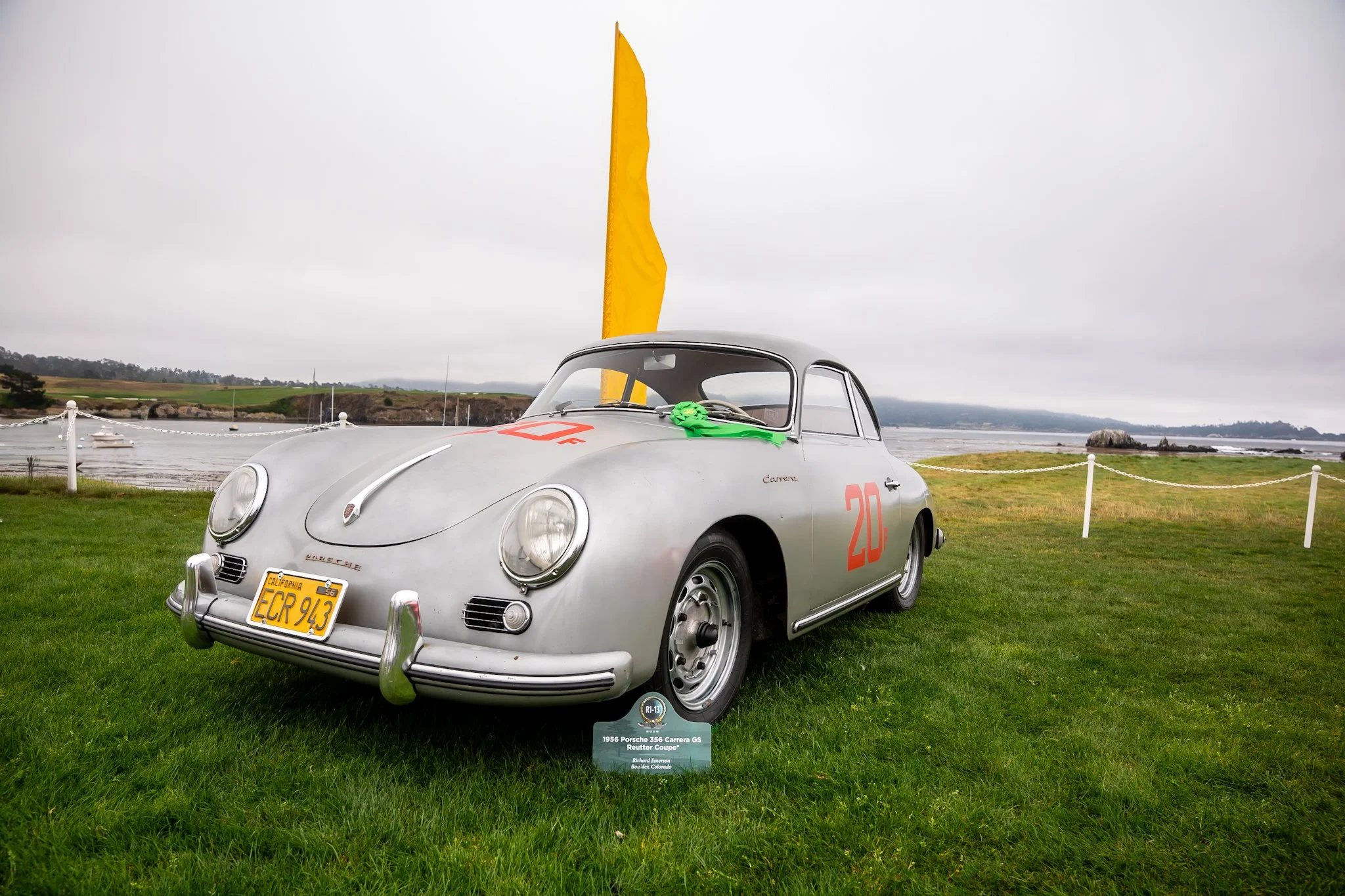
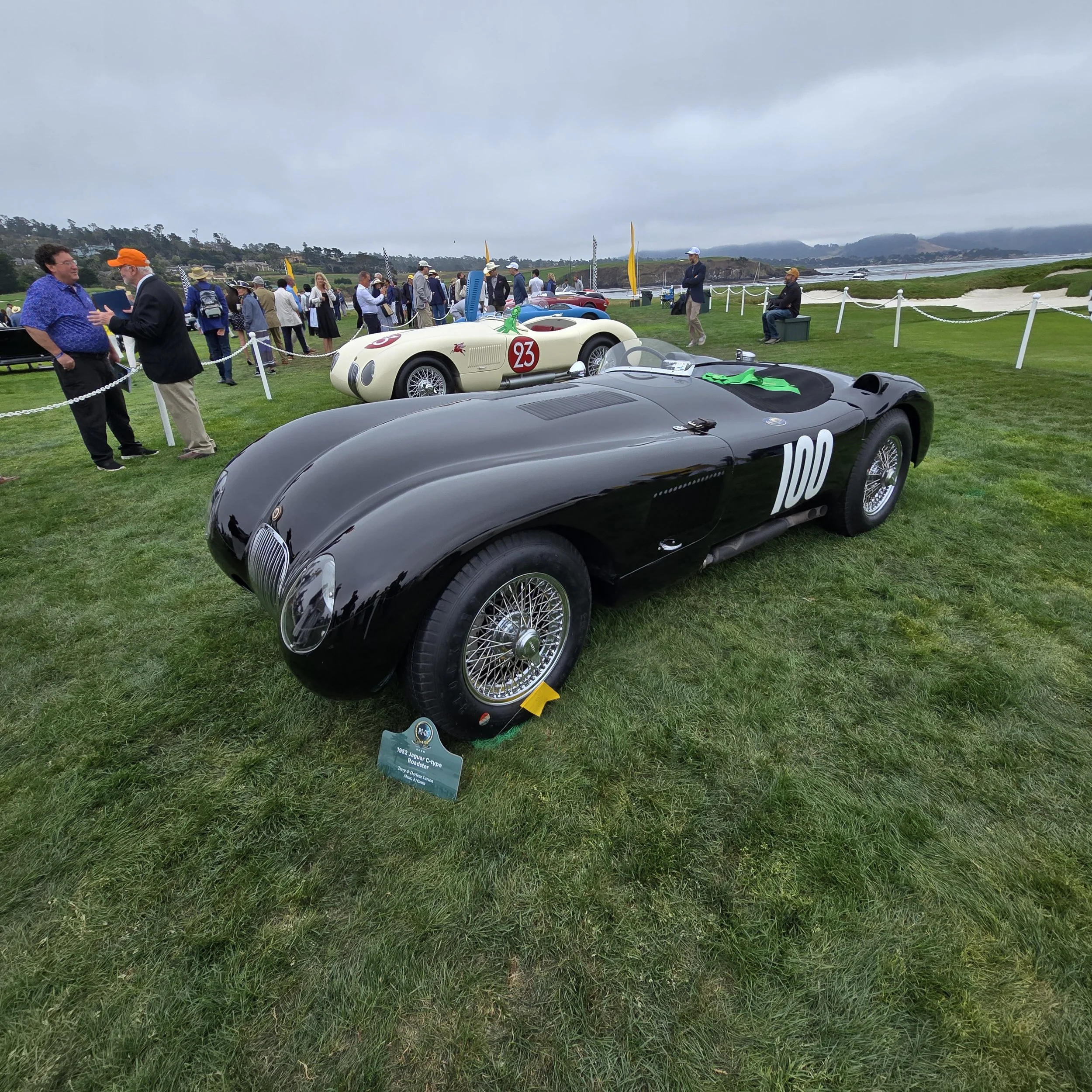
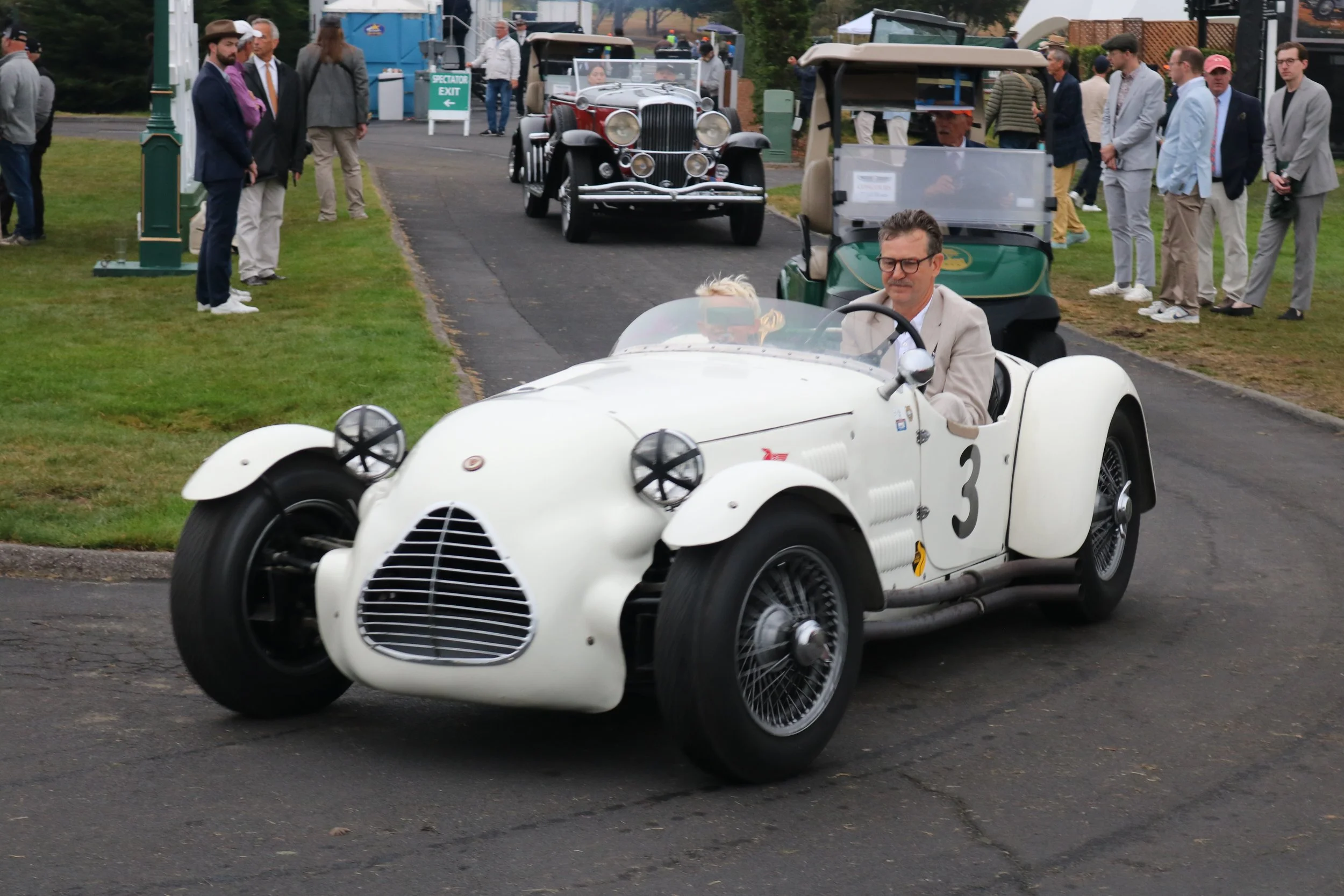
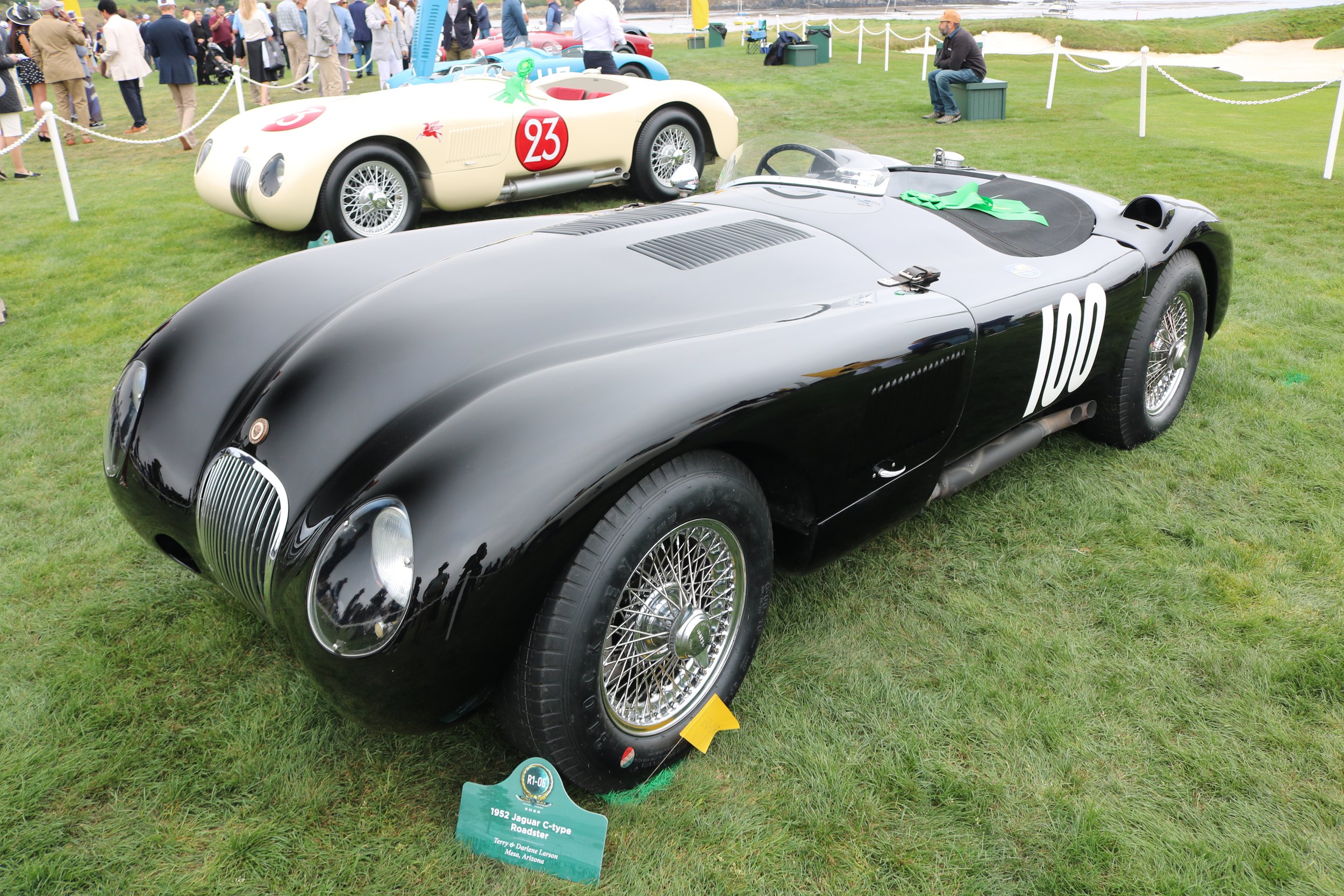
The Pebble Beach Road Races display was one of the most important features of the 75th Concours because it connected the event directly to the reason Pebble Beach became an automotive destination in the first place. The Concours and the Road Races began together in 1950, with the races sending sports cars through the narrow, tree-lined roads of Del Monte Forest until 1956, when rising speeds and the fatal crash of Ernie McAfee made the course untenable and helped prompt the creation of Laguna Seca. For 2026, Pebble Beach brought back more than 20 cars, representing that era, ranging from relatively stock production racers to wonderfully improvised specials built when ingenuity often mattered as much as a factory development budget.
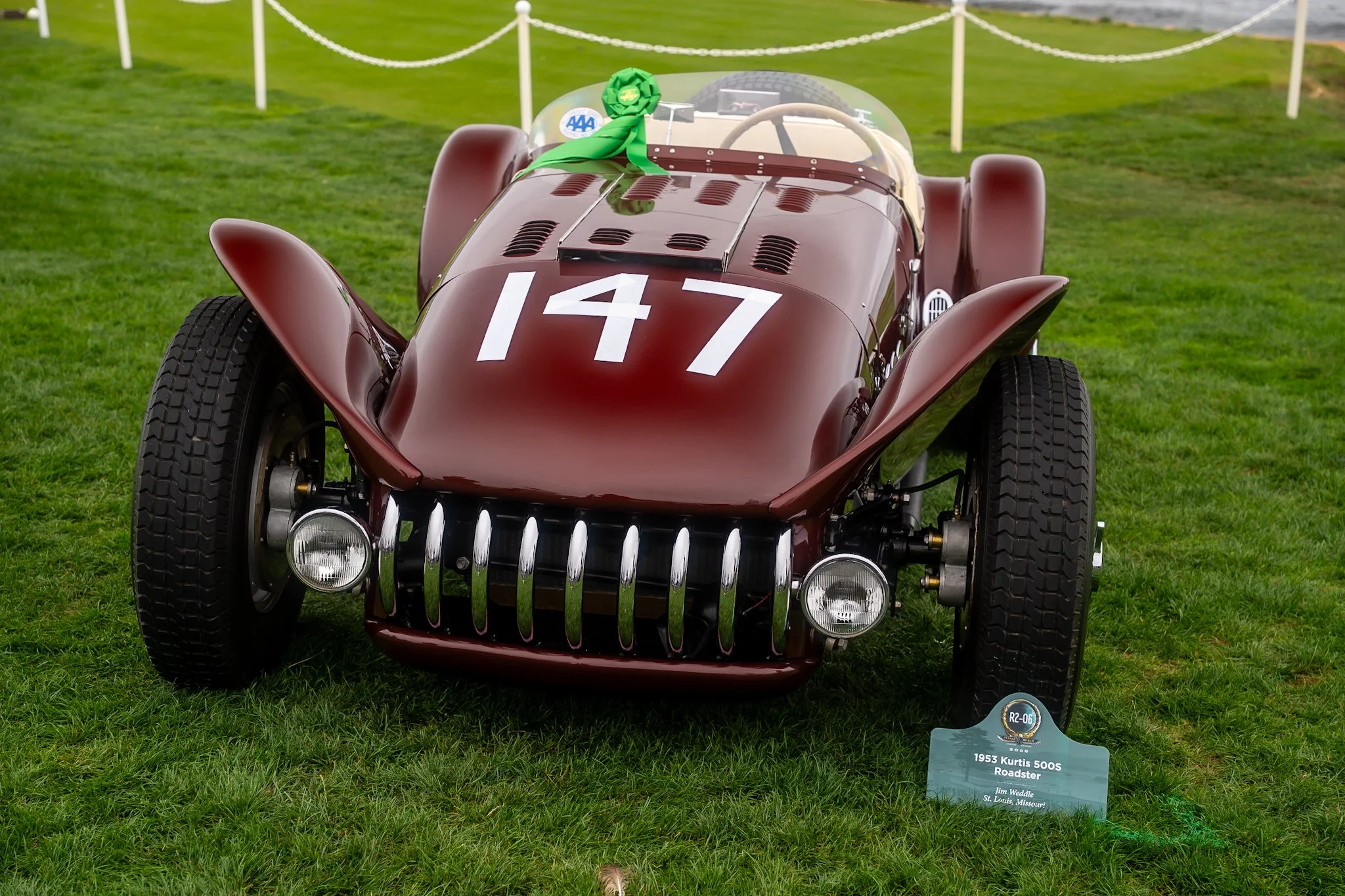
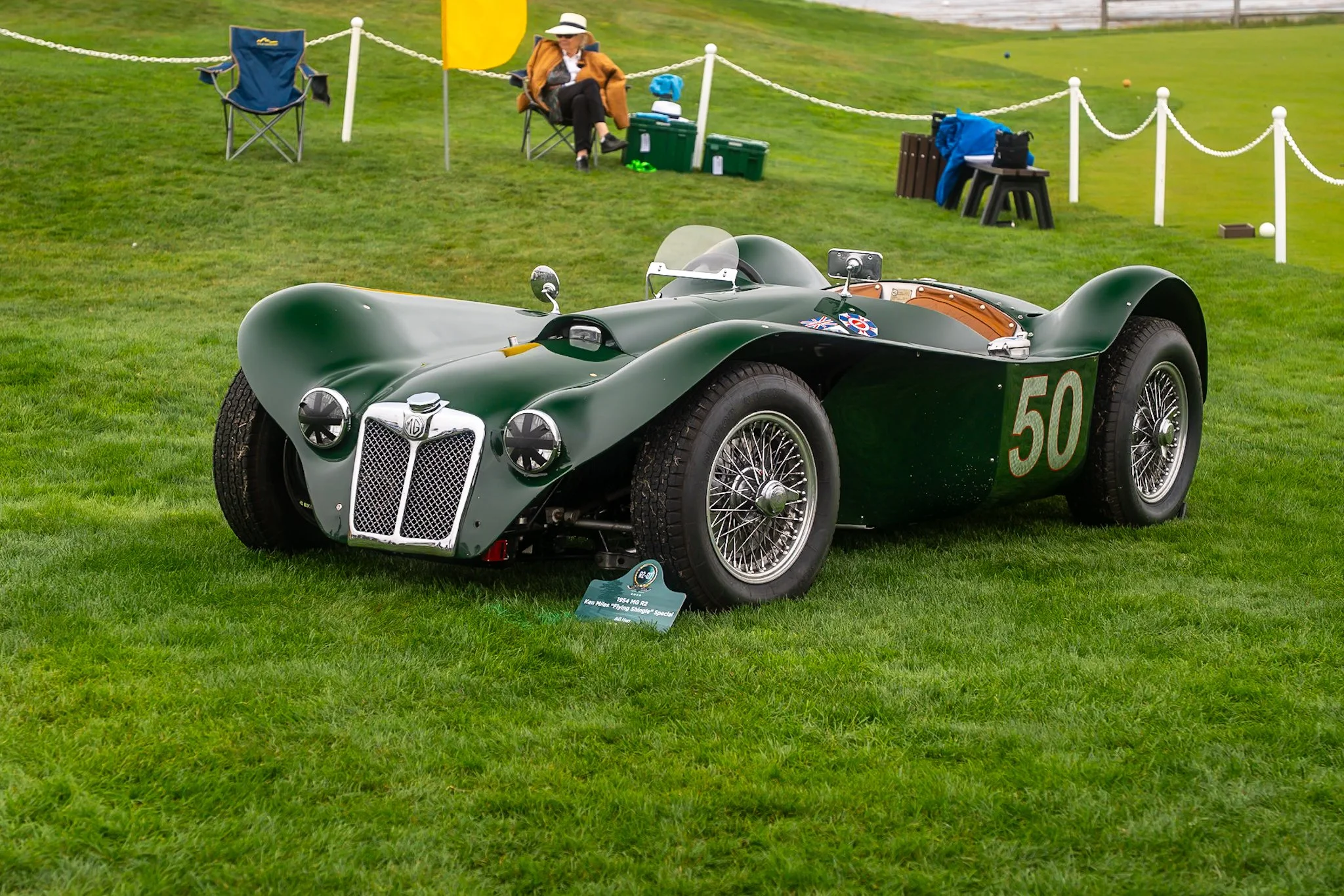
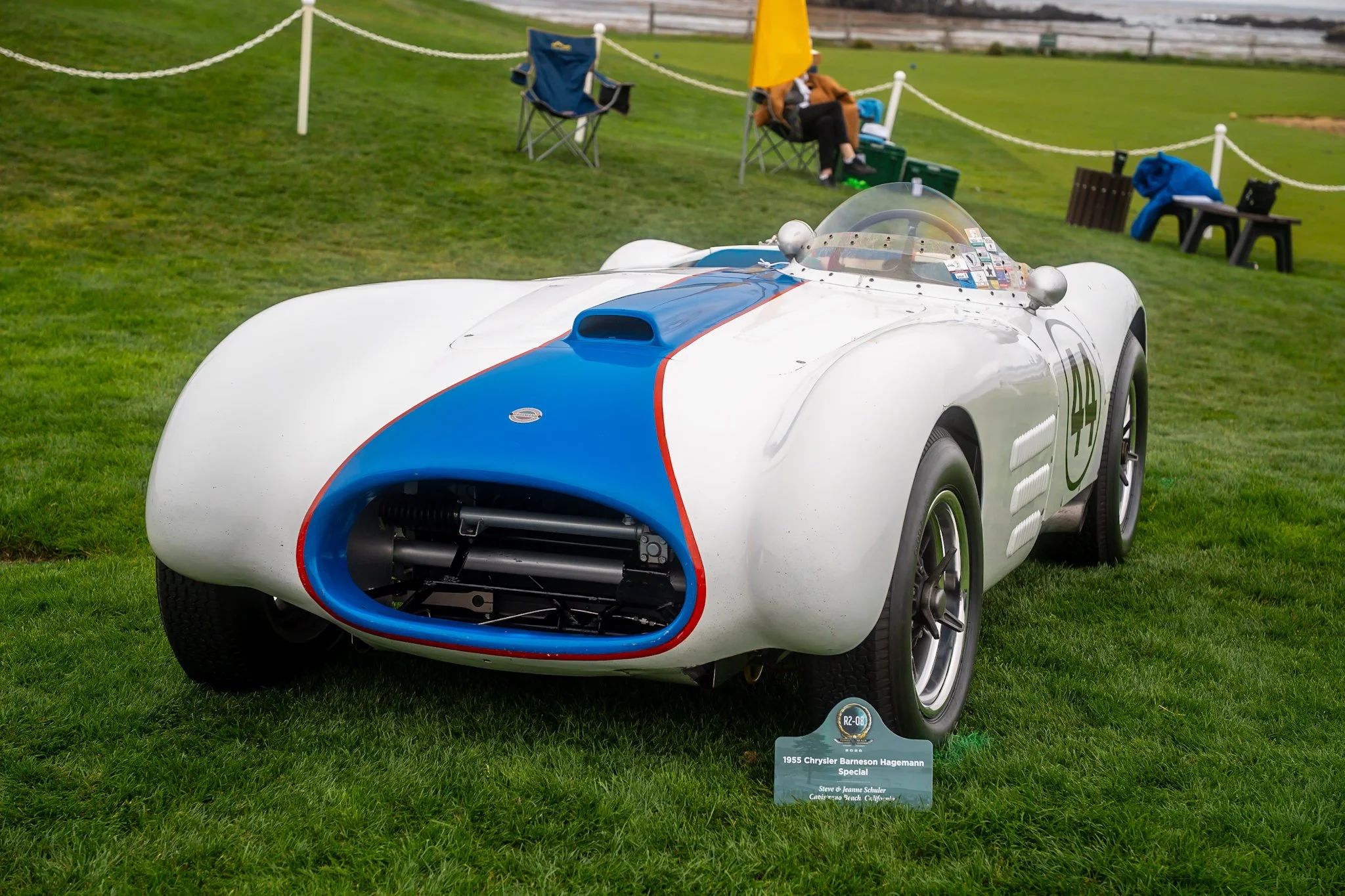
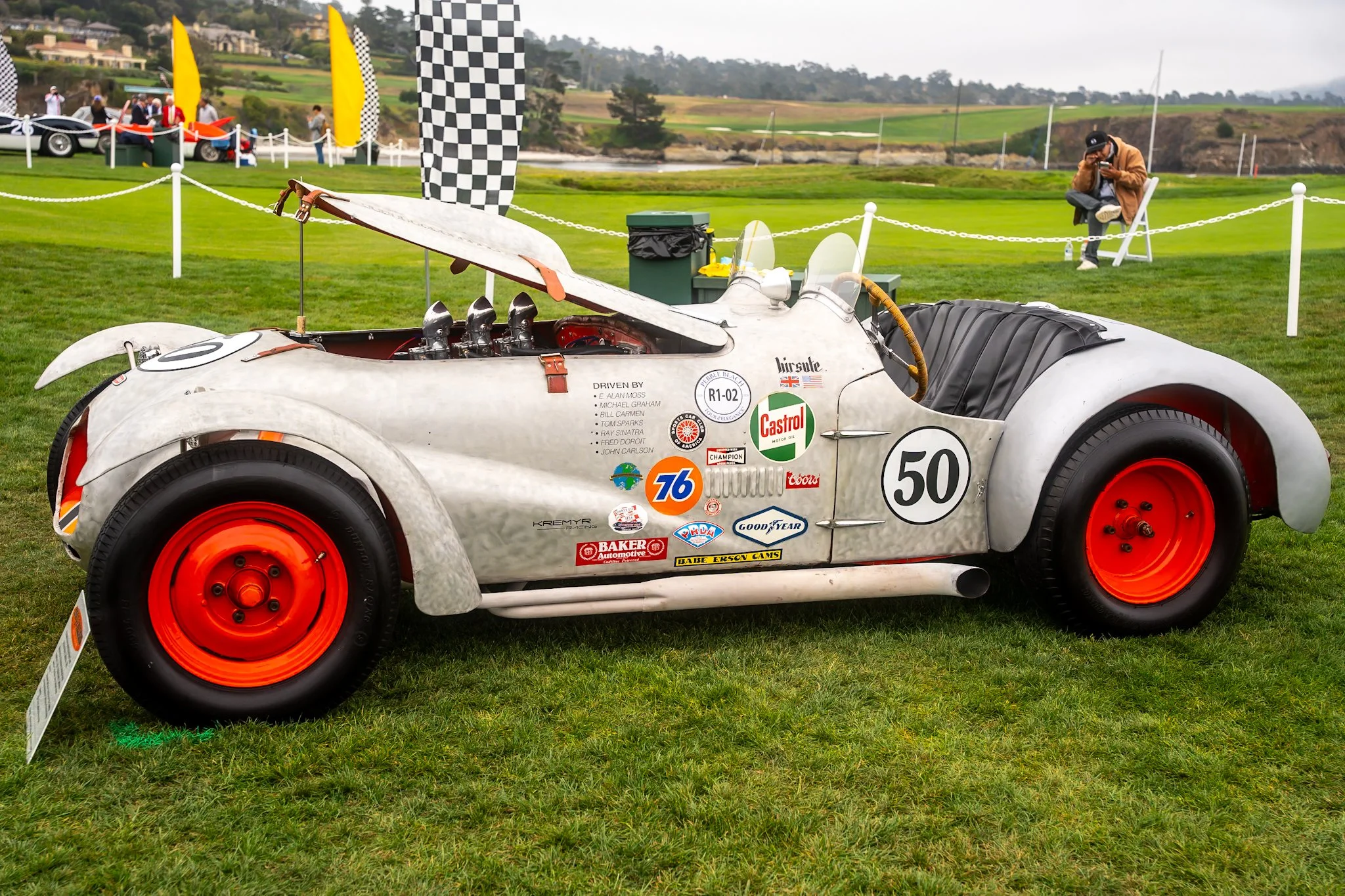
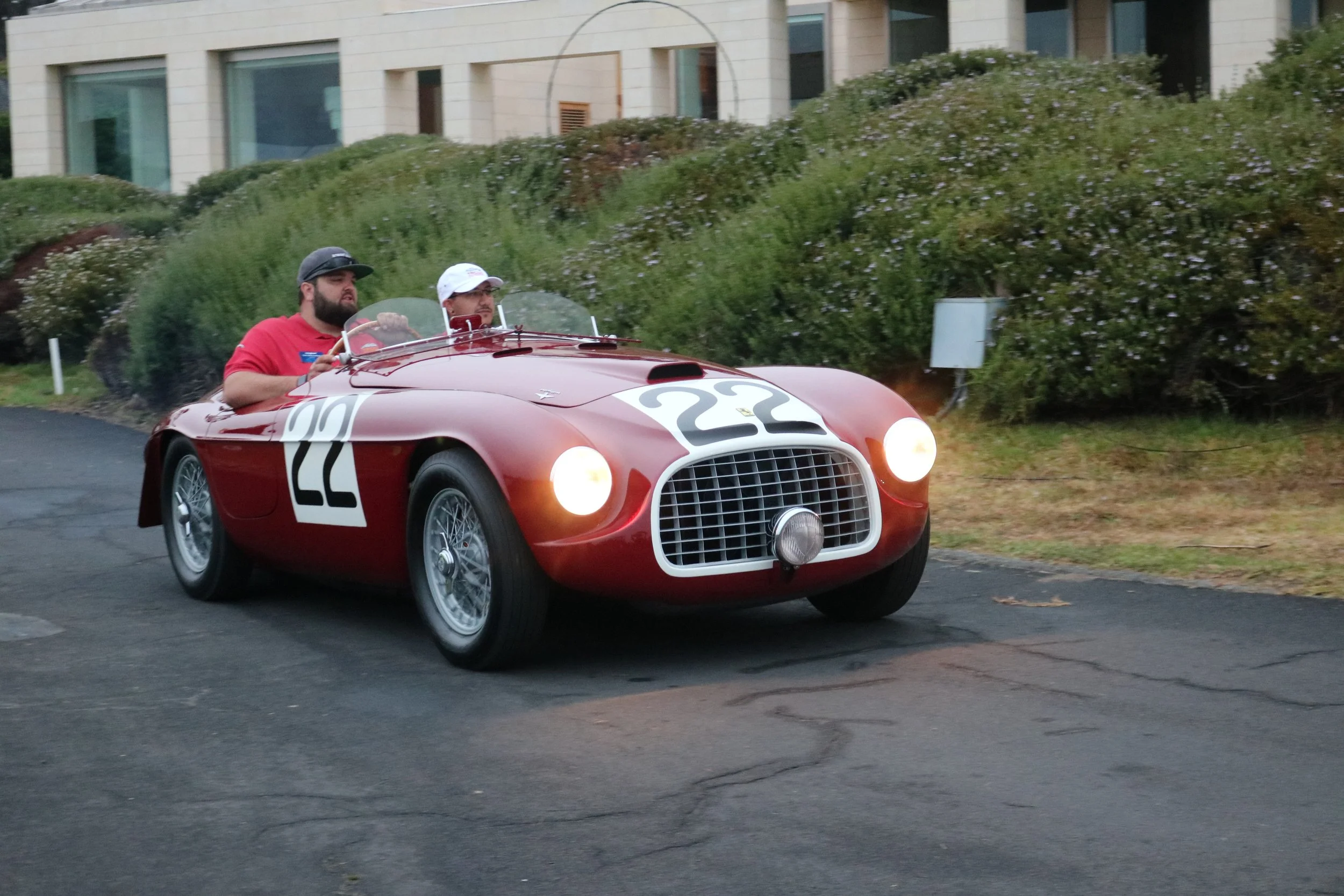
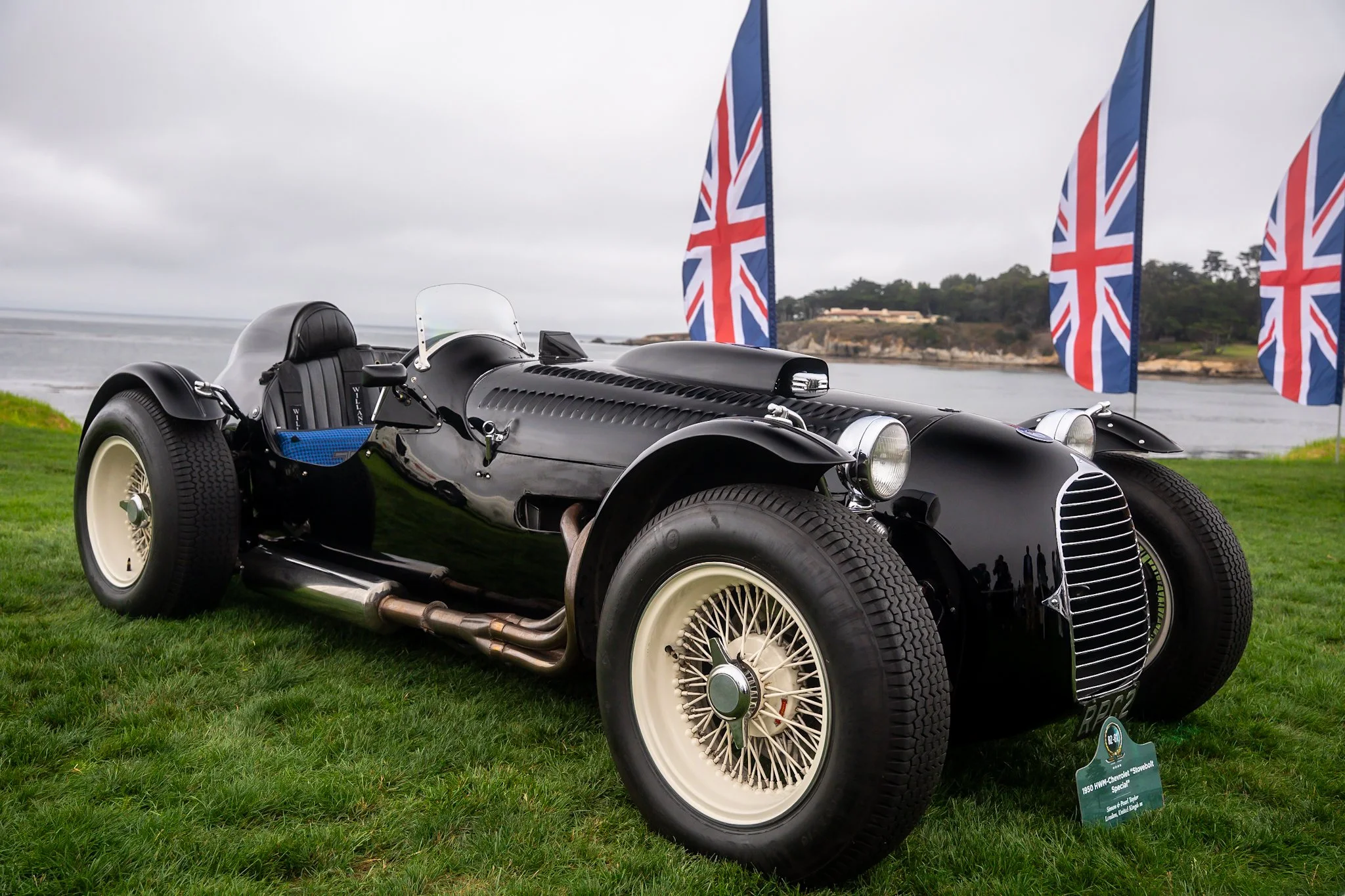
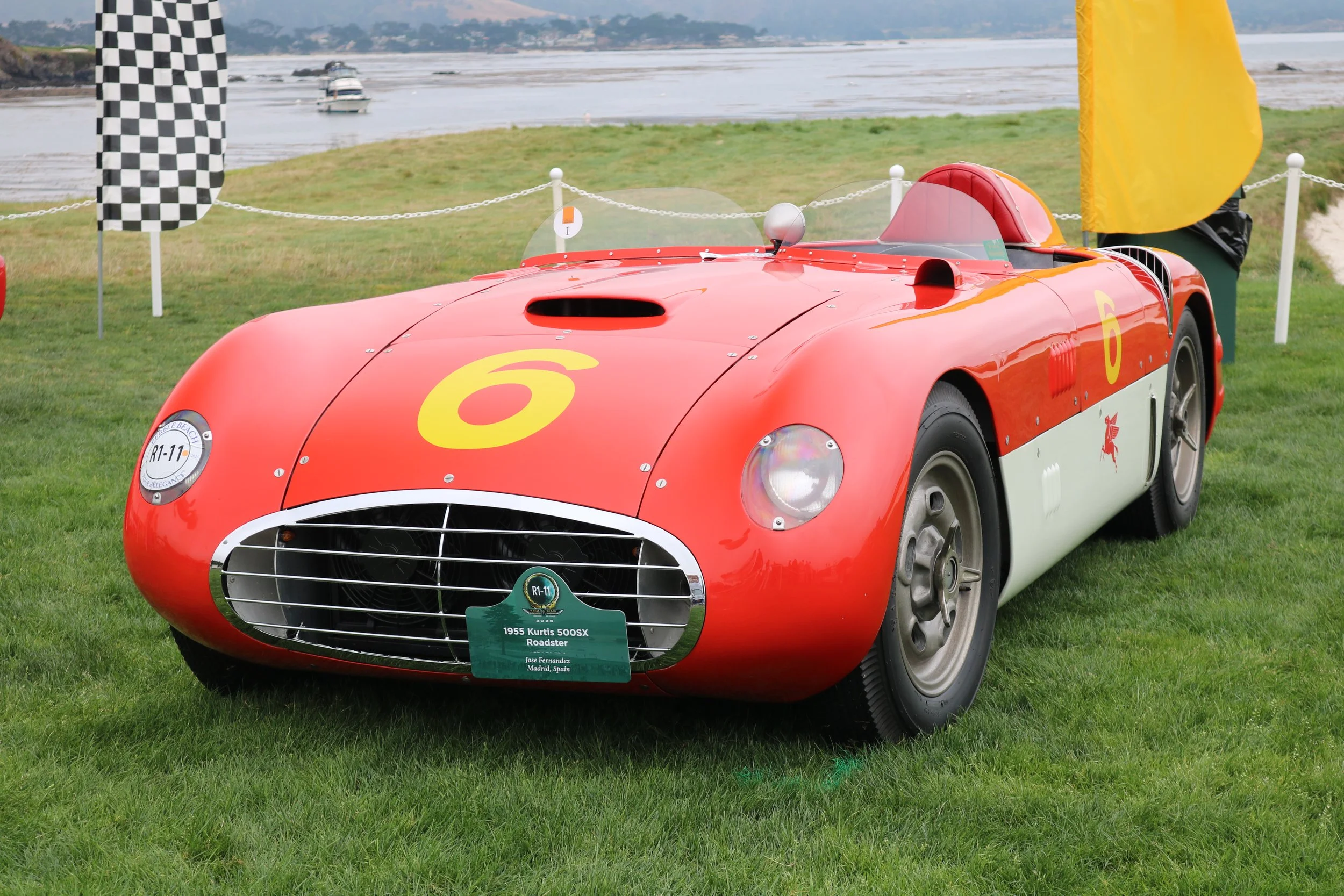
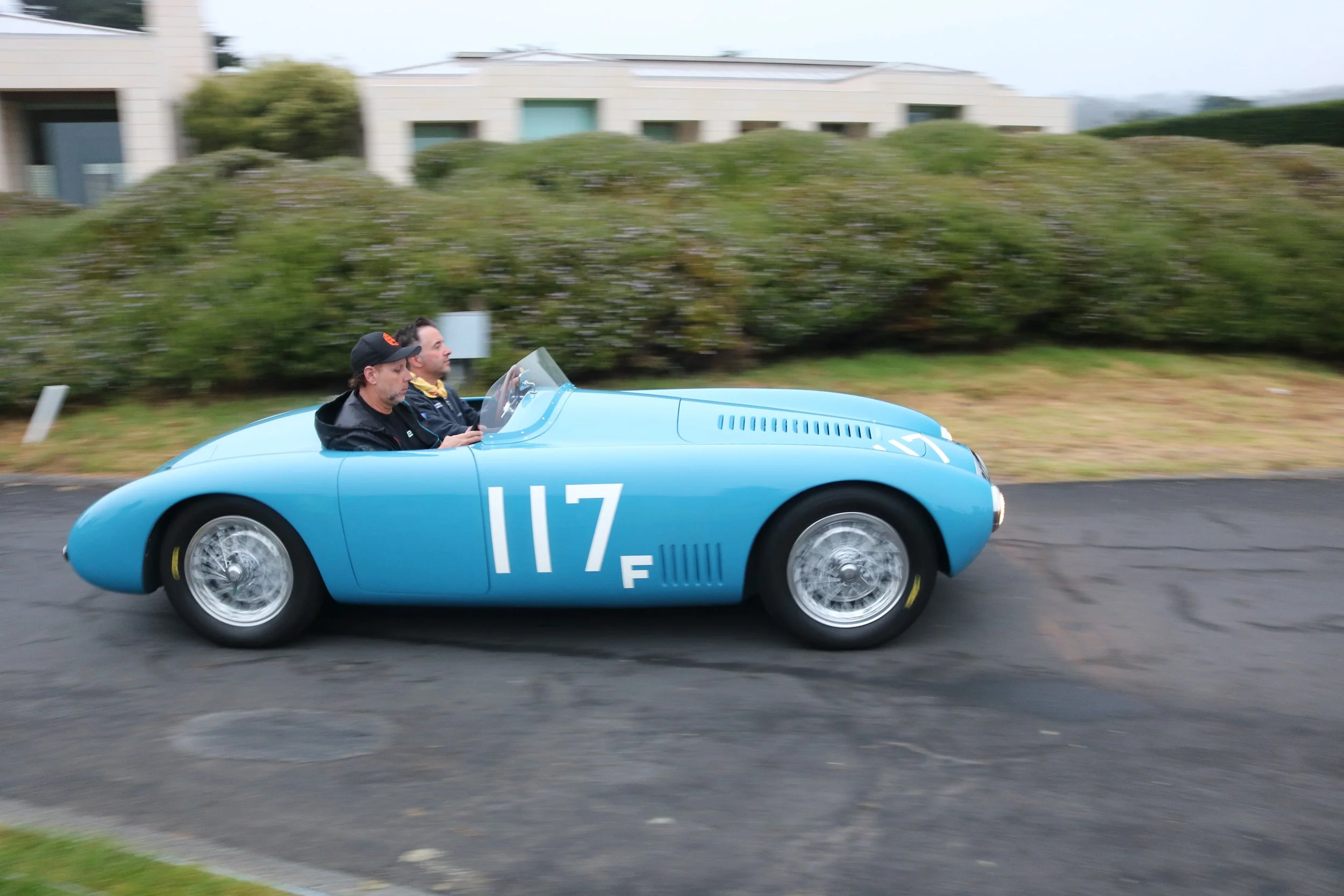
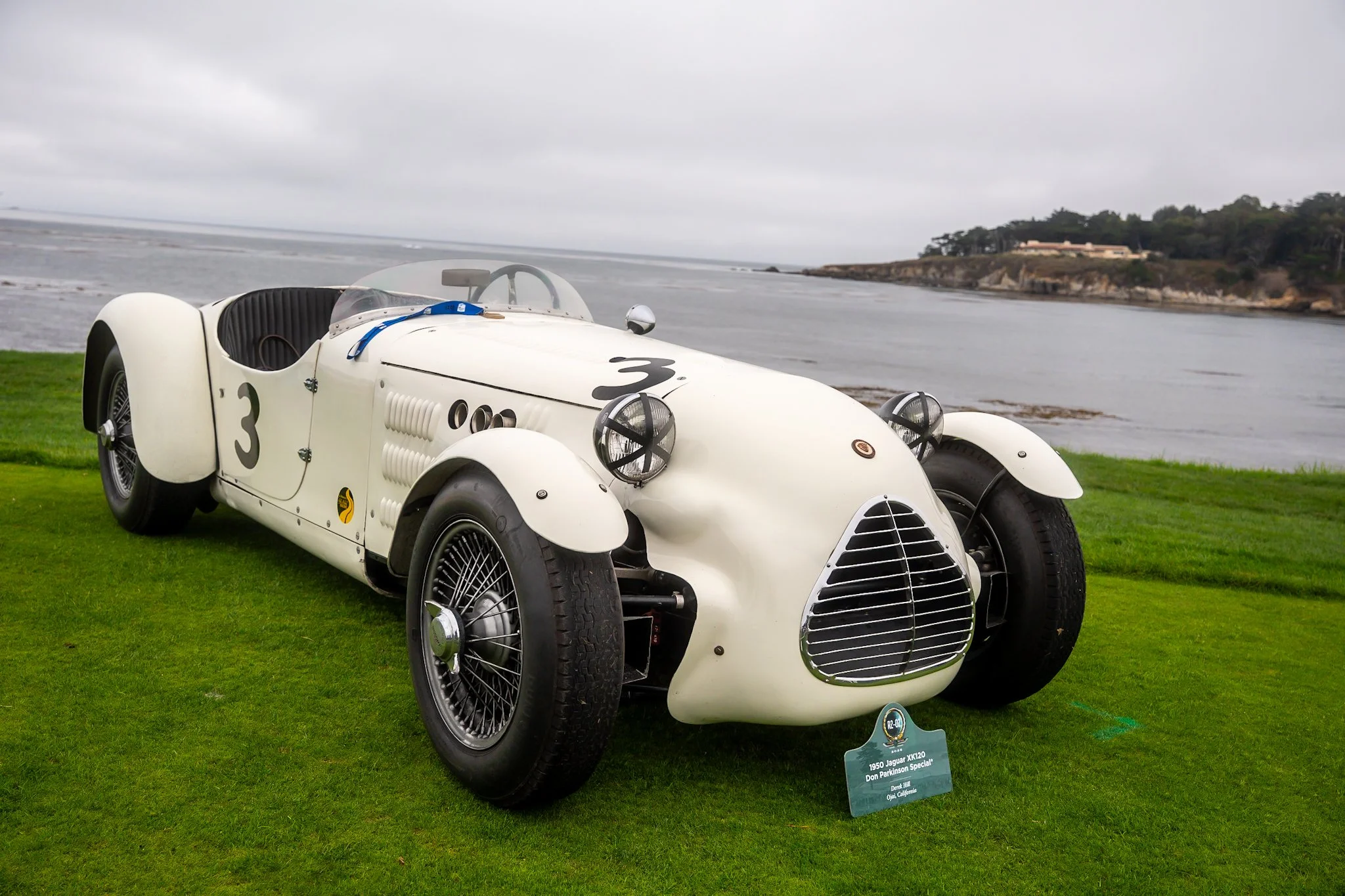
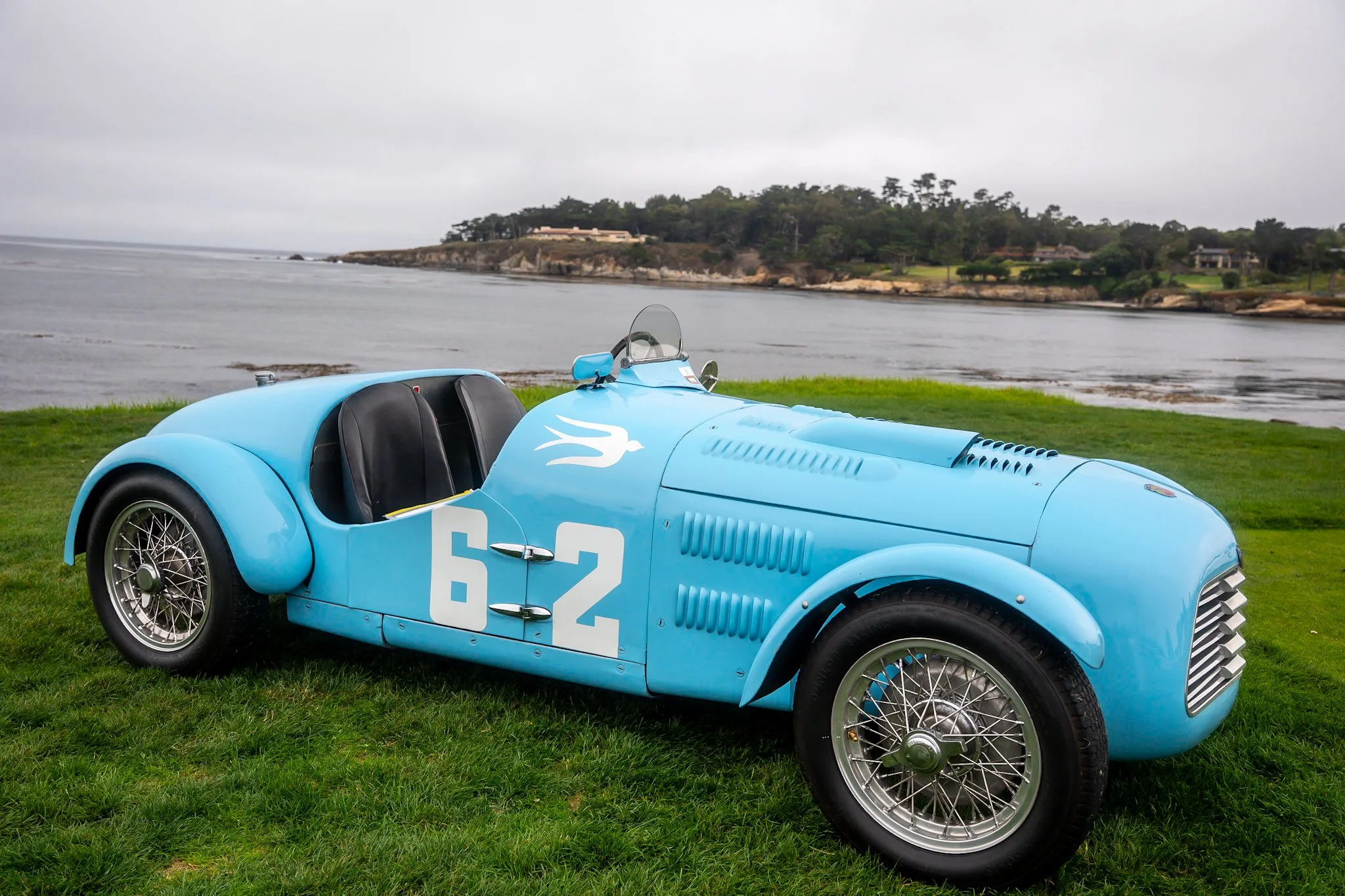
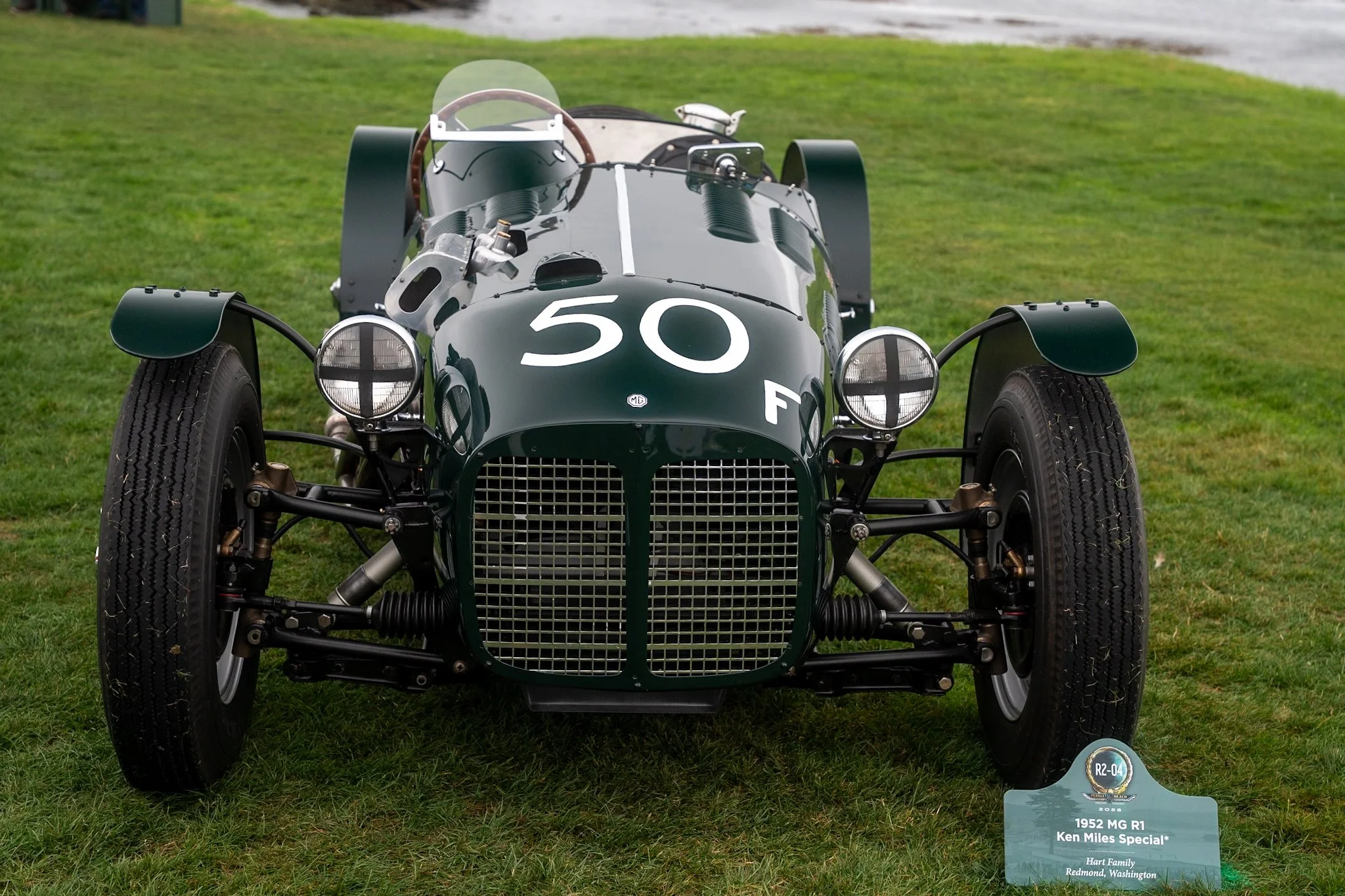
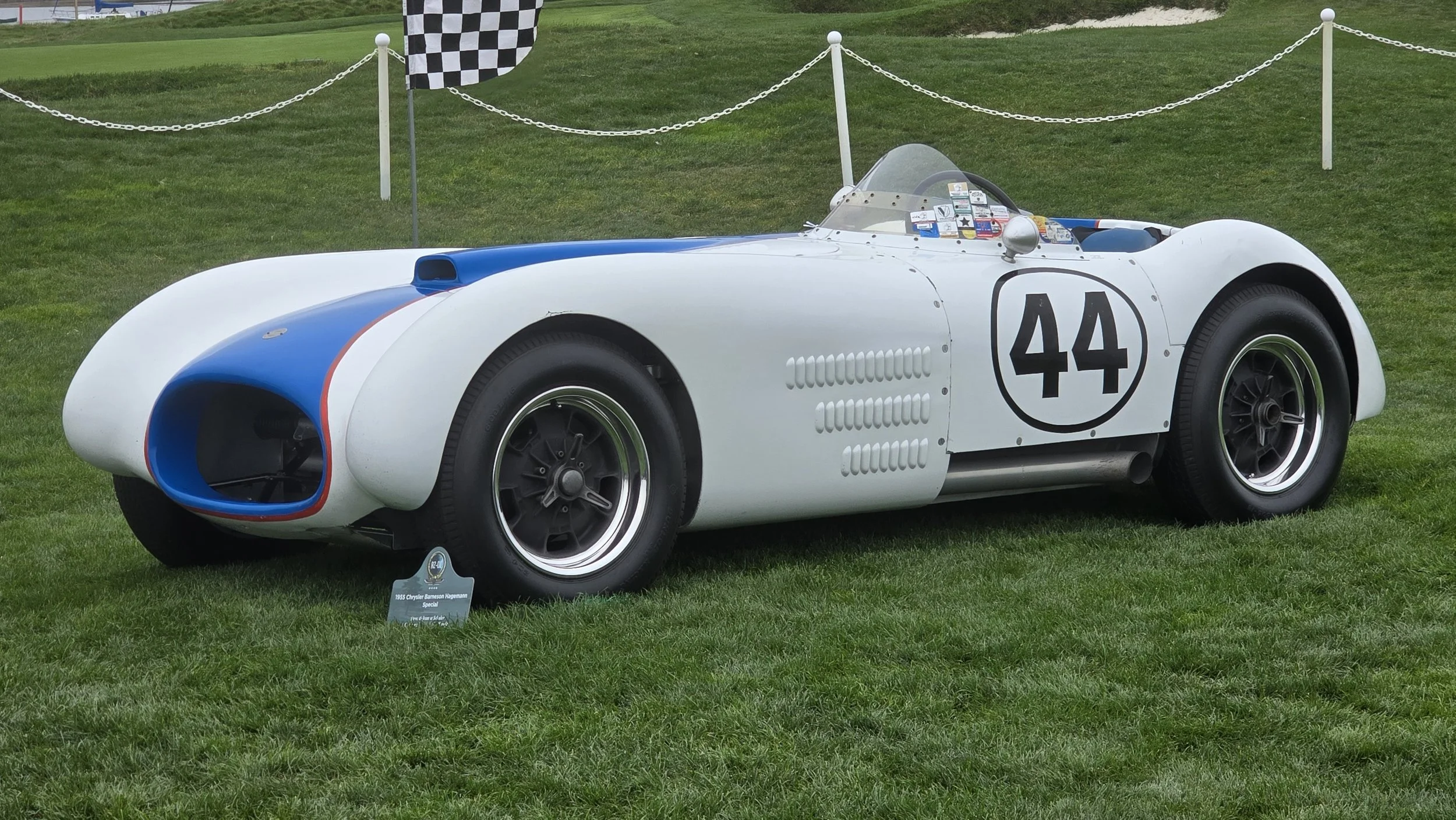
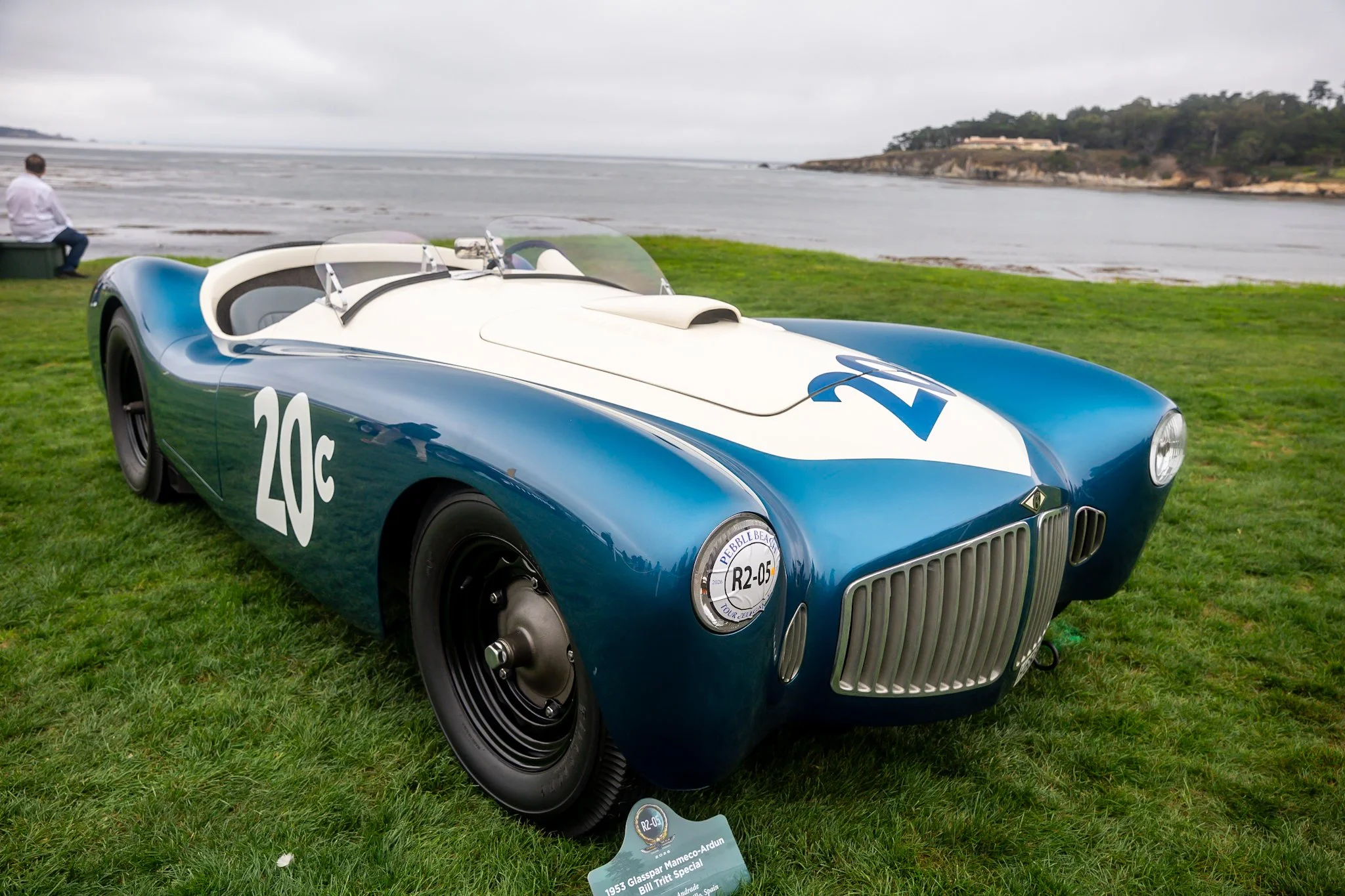
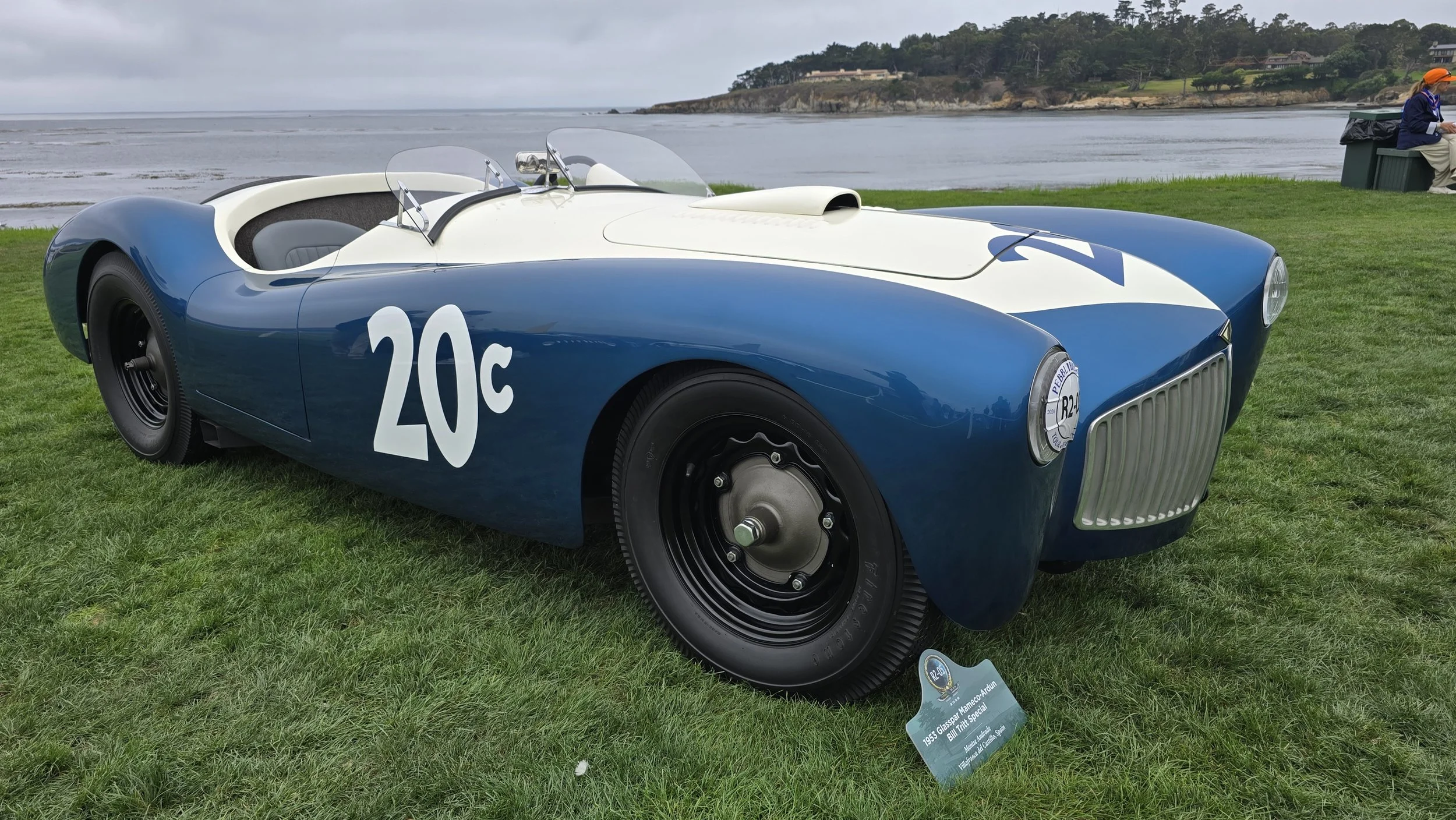
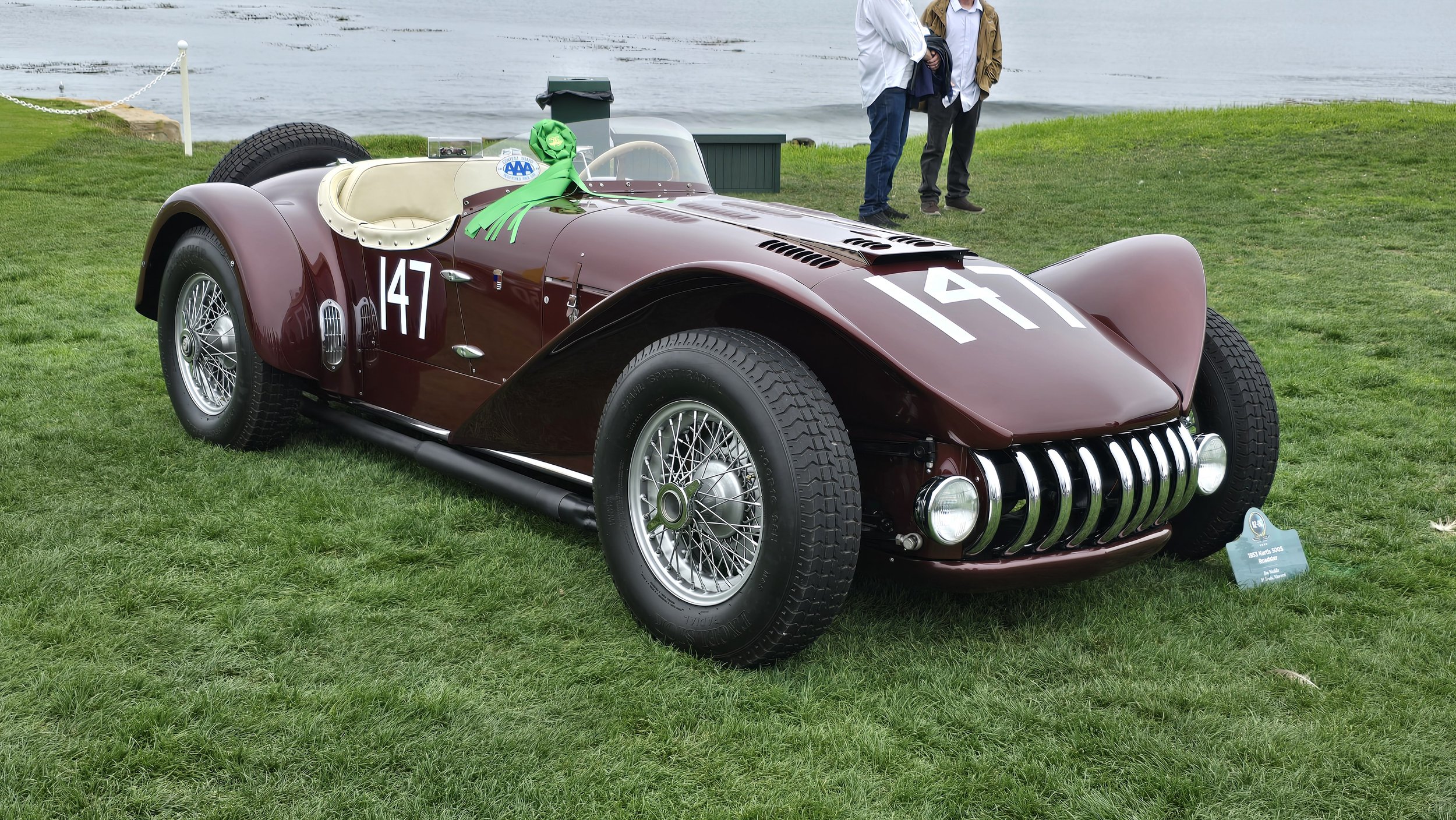
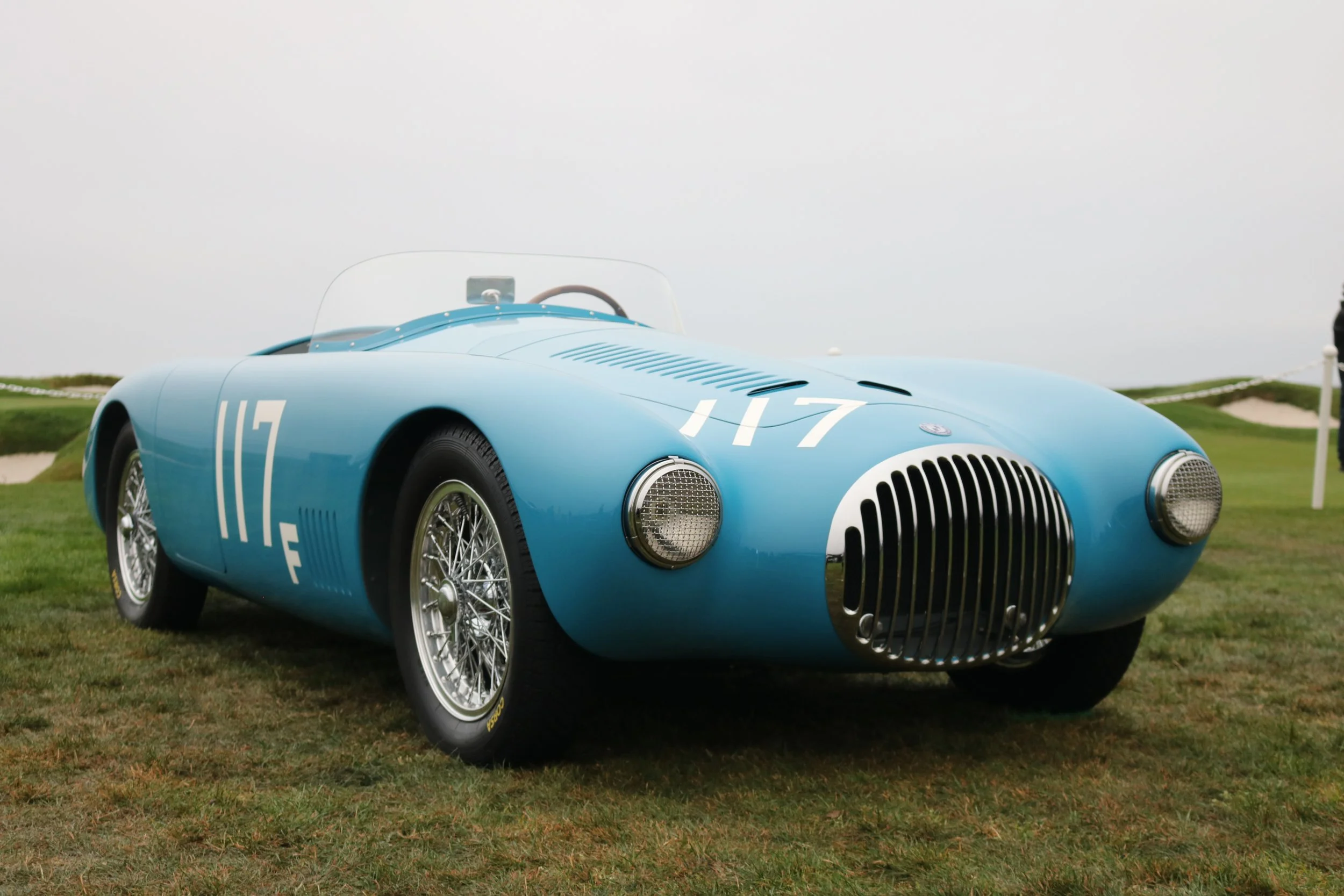
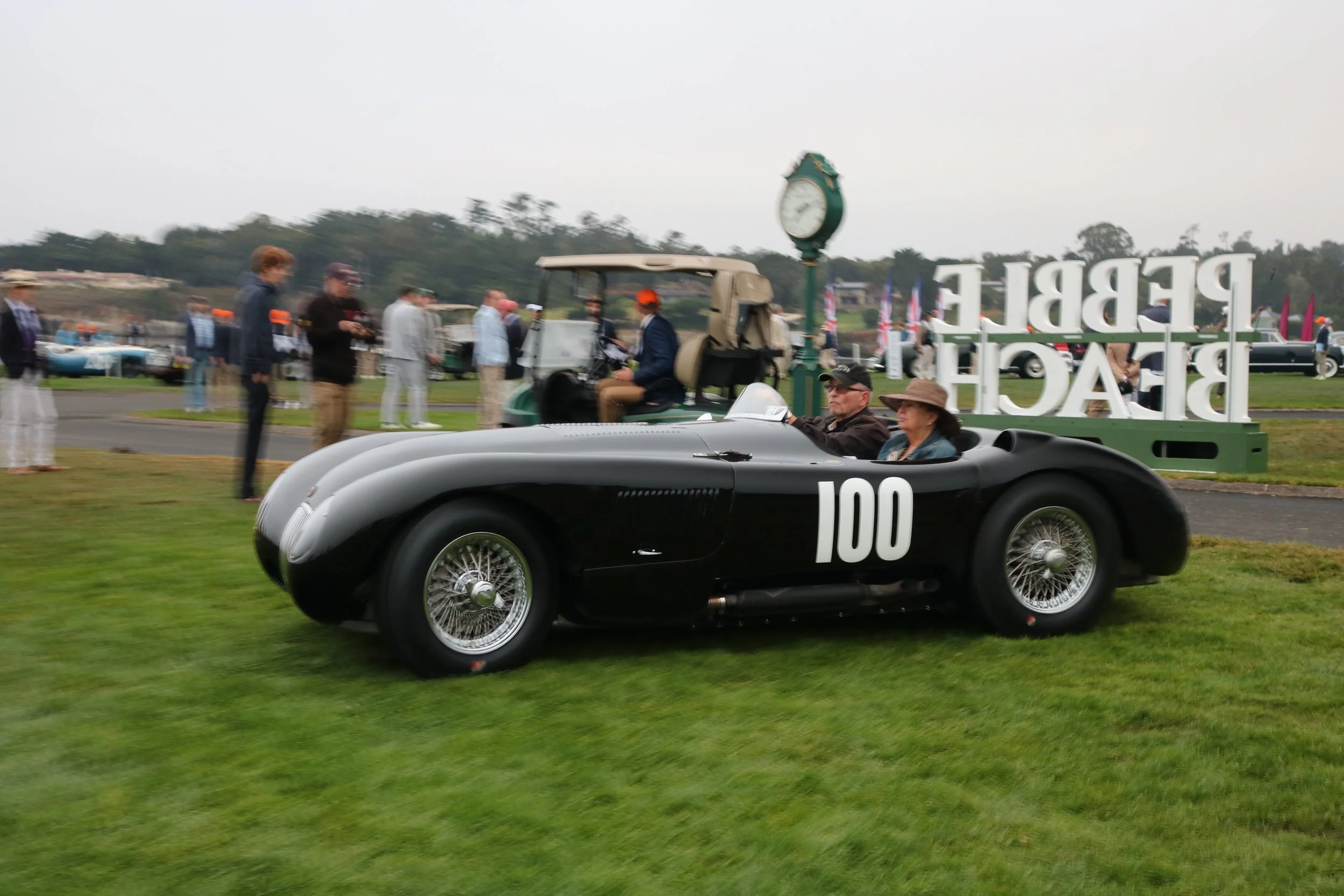
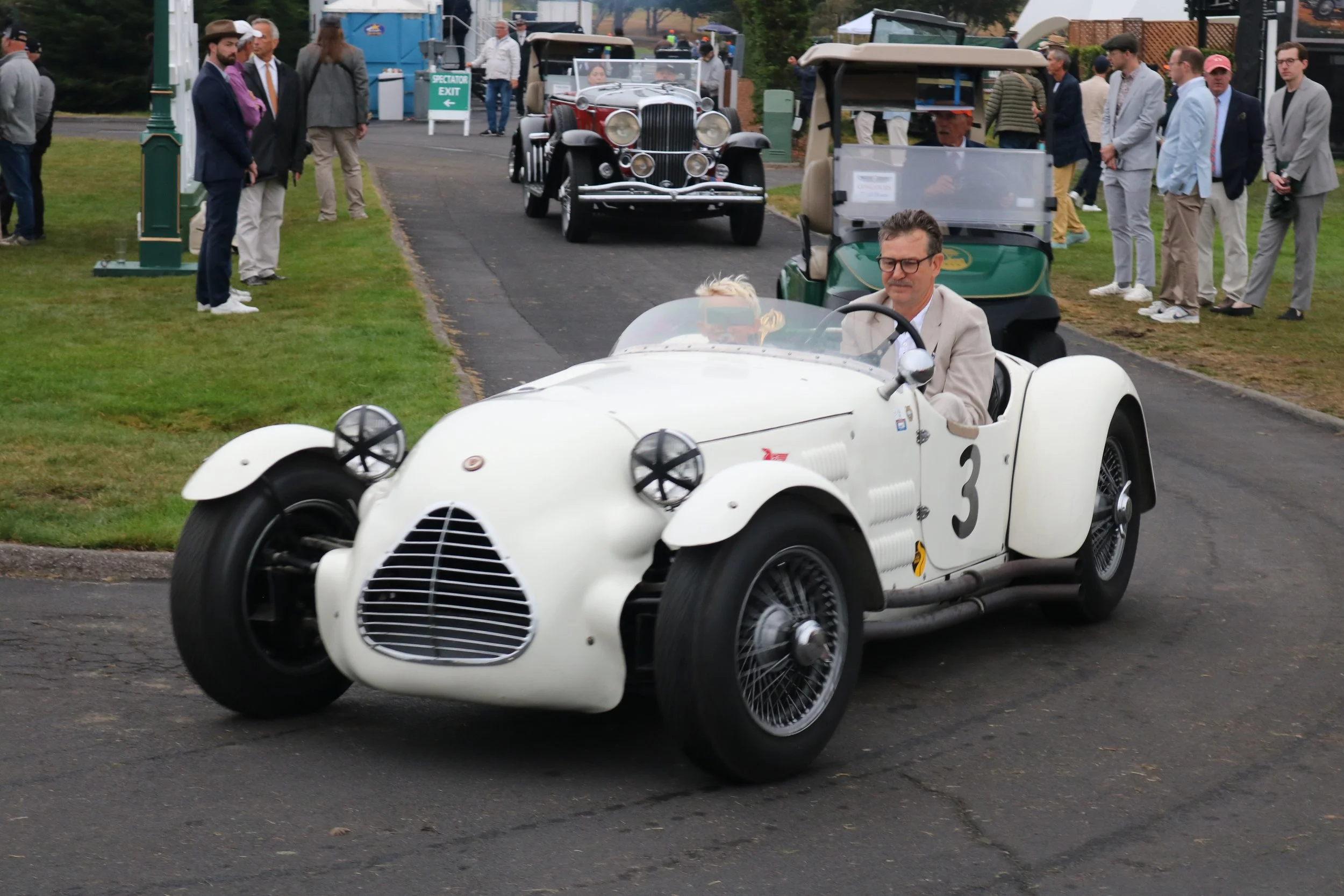
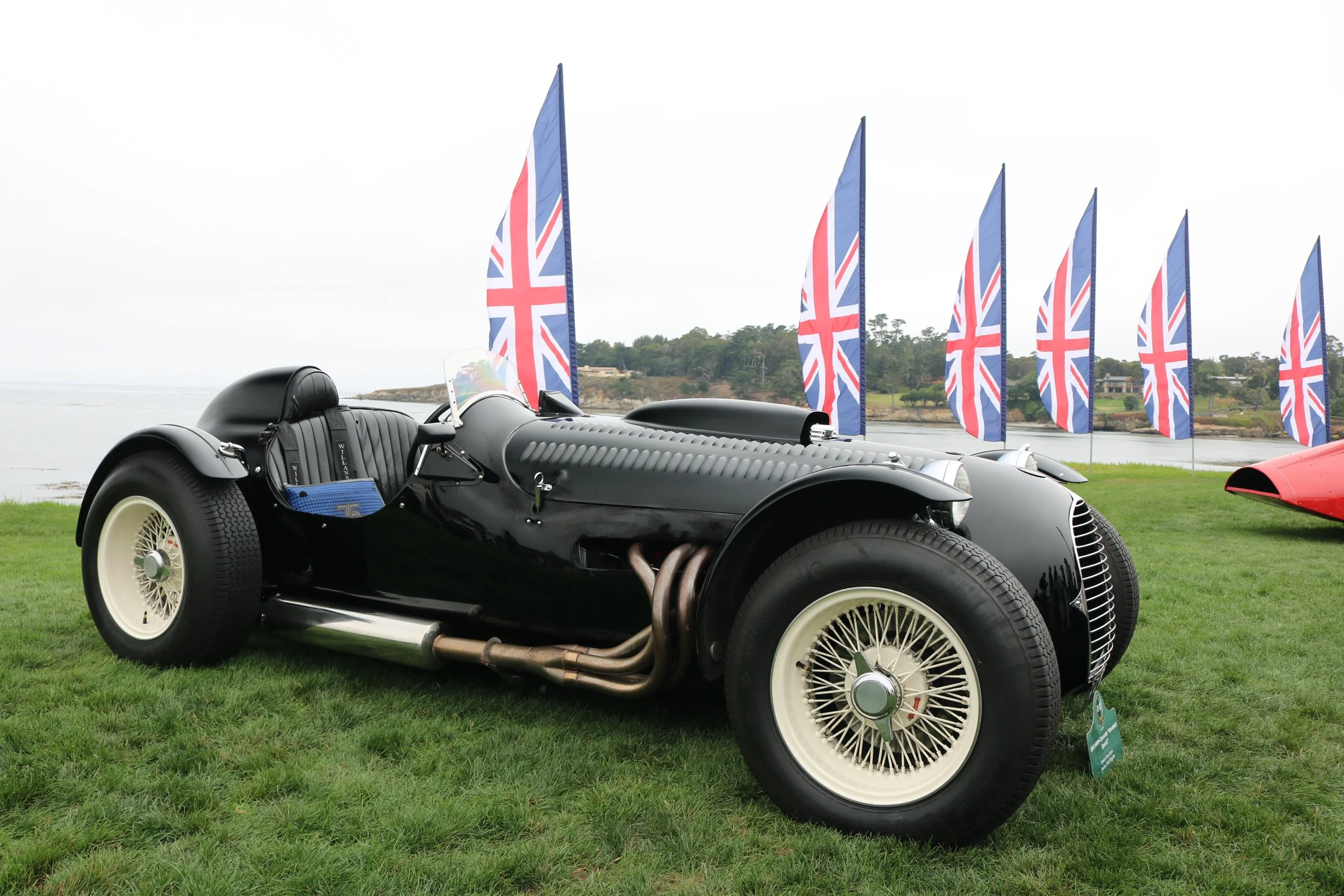
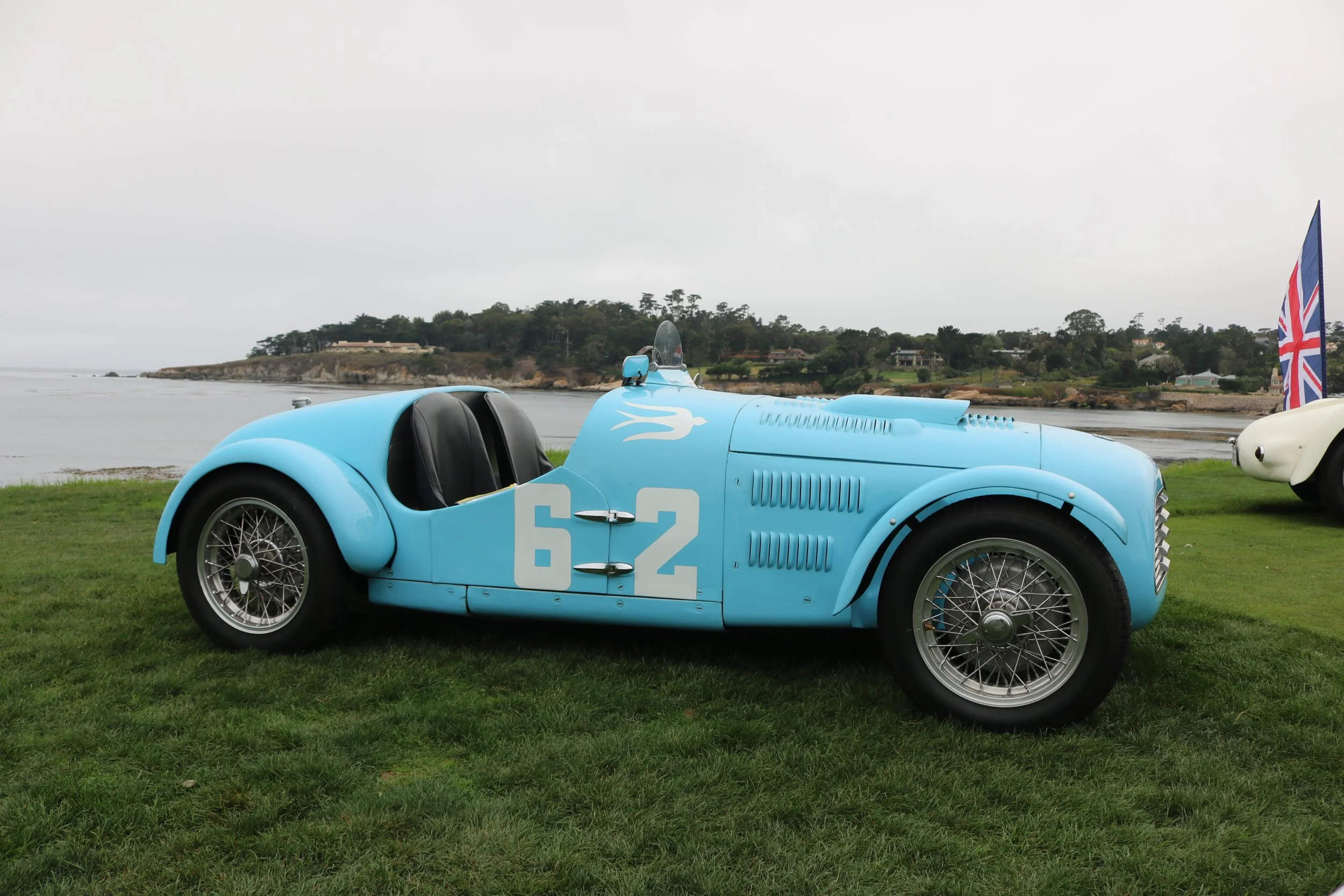
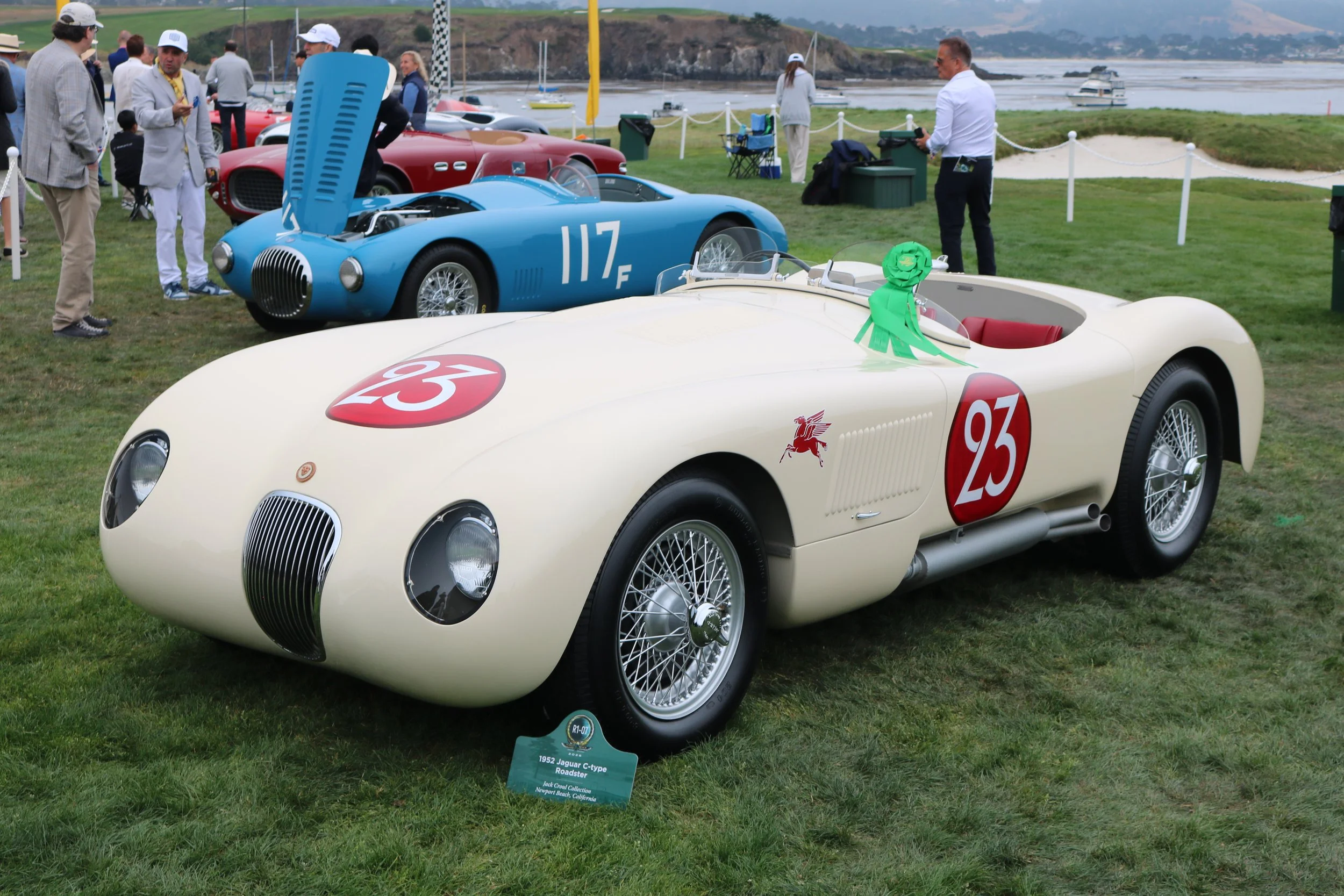
Among the standouts were (as mentioned above) Ken Miles’ MG-based R1 and R2, the latter better known as the “Flying Shingle,” as well as the wonderfully named Stovebolt Special, a modified HWM that Bill Pollack drove in the final Pebble Beach Road Race in 1956. The Stovebolt was particularly significant because it used an early Chevrolet V8 and experimental disc brakes, briefly leading Ferraris driven by the likes of Phil Hill and Carroll Shelby before ultimately finishing sixth. Seeing these cars sitting peacefully on the 18th fairway was a reminder that Pebble Beach was not always about immaculate paint and silent judging; once upon a time, many of the cars gathered here were being driven flat-out through the forest.
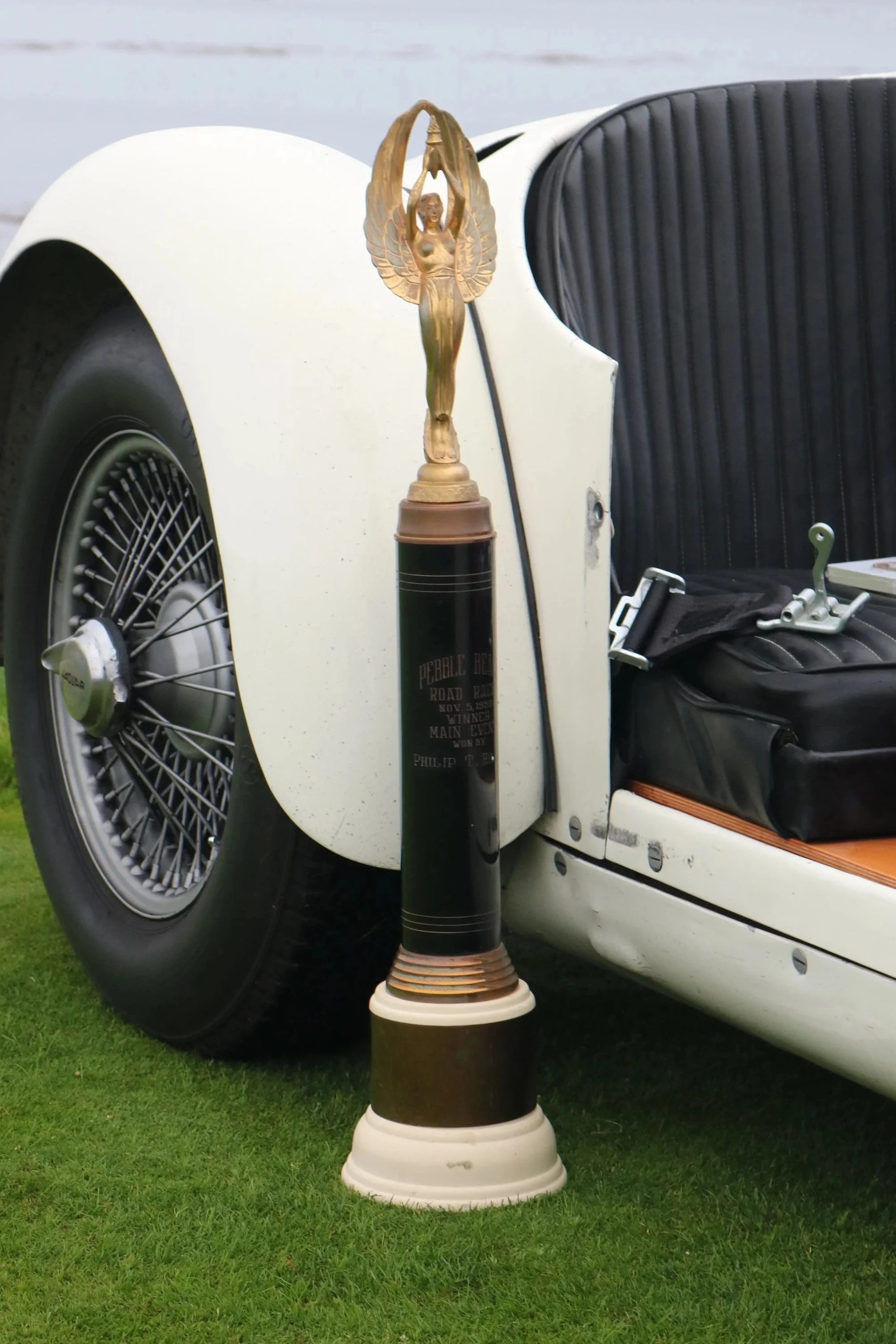
The other car of note, in the Pebble Beach Road Race Production group, was the very 1950 Jaguar XK120 Roadster that Phil Hill used to win the very first Pebble Beach Road Race on November 5th, 1950. On that note, the trophy awarded to Hill for that race was also present, paired with the 1950 Jaguar XK120 Don Parkinson Special that Hill co-drove with the car’s namesake.
A first…Japanese Motorsport Class
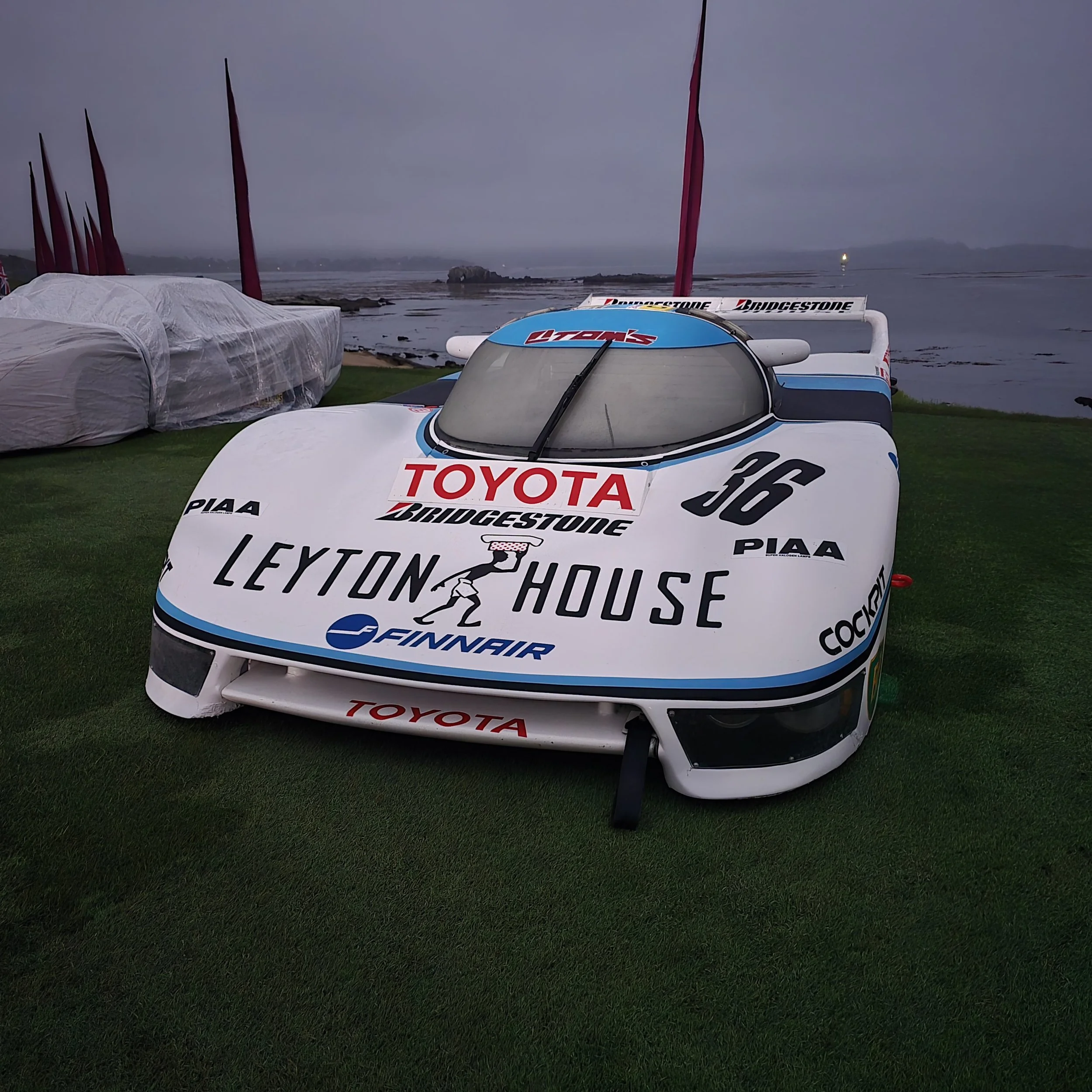
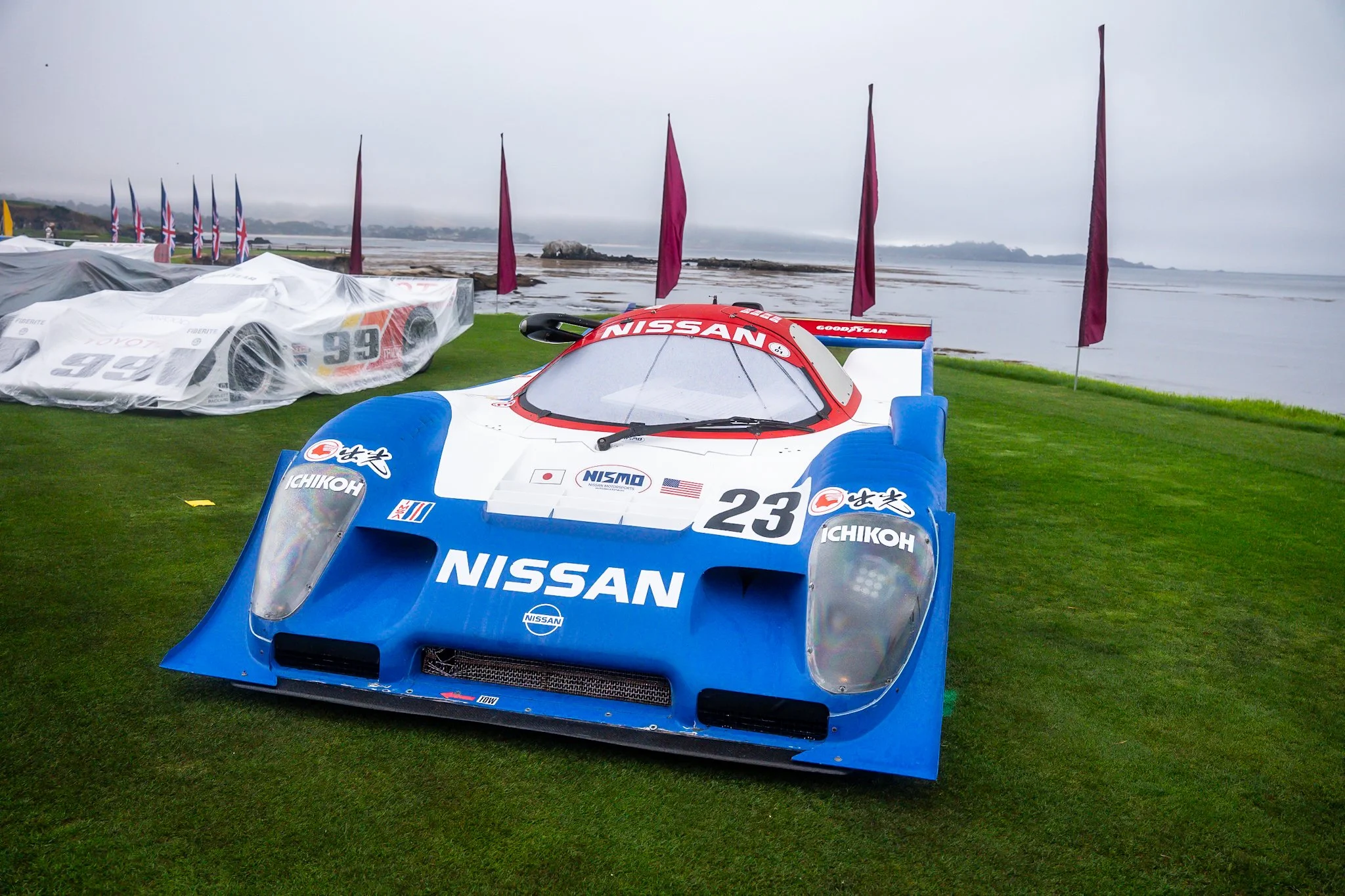
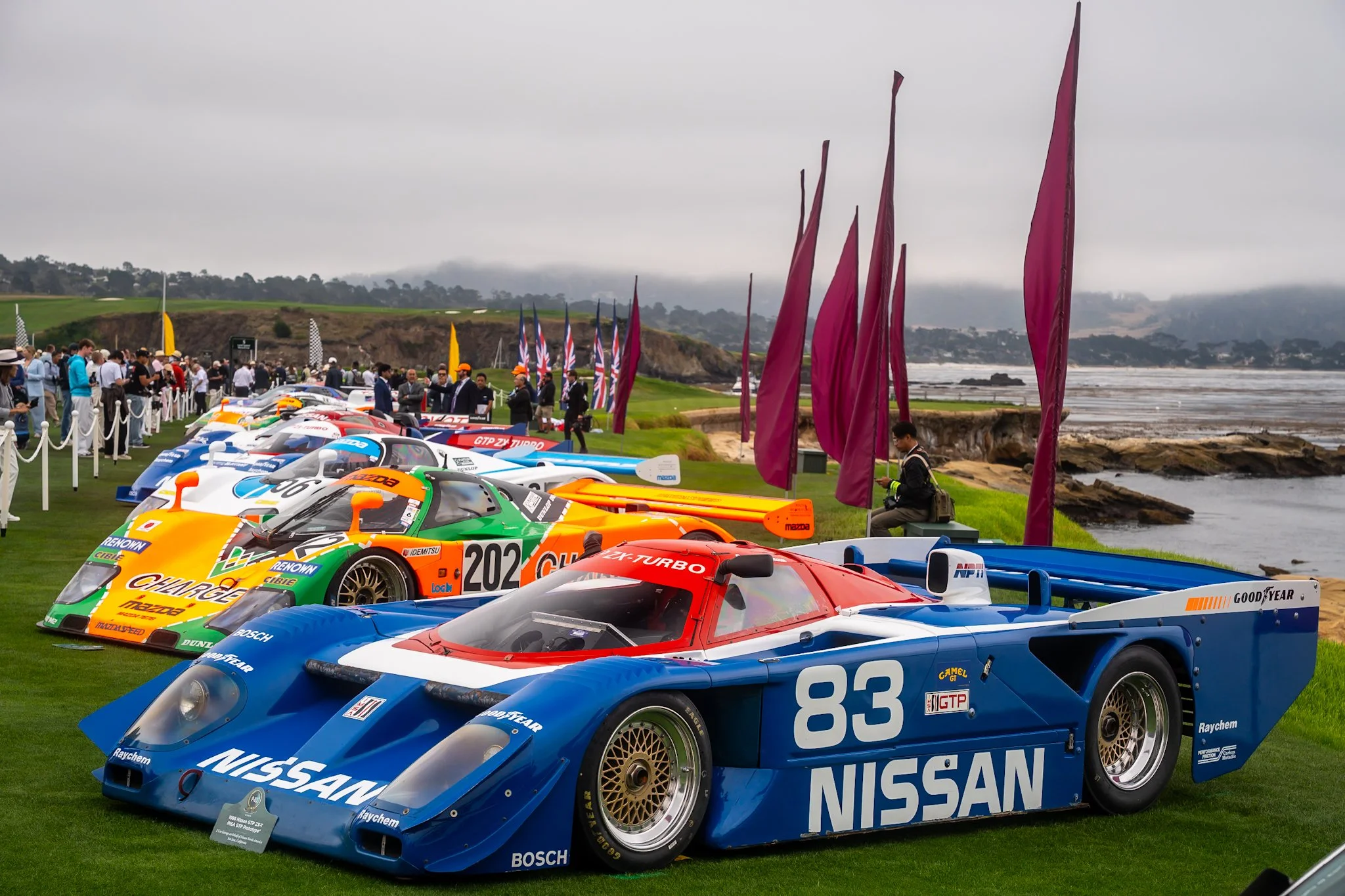
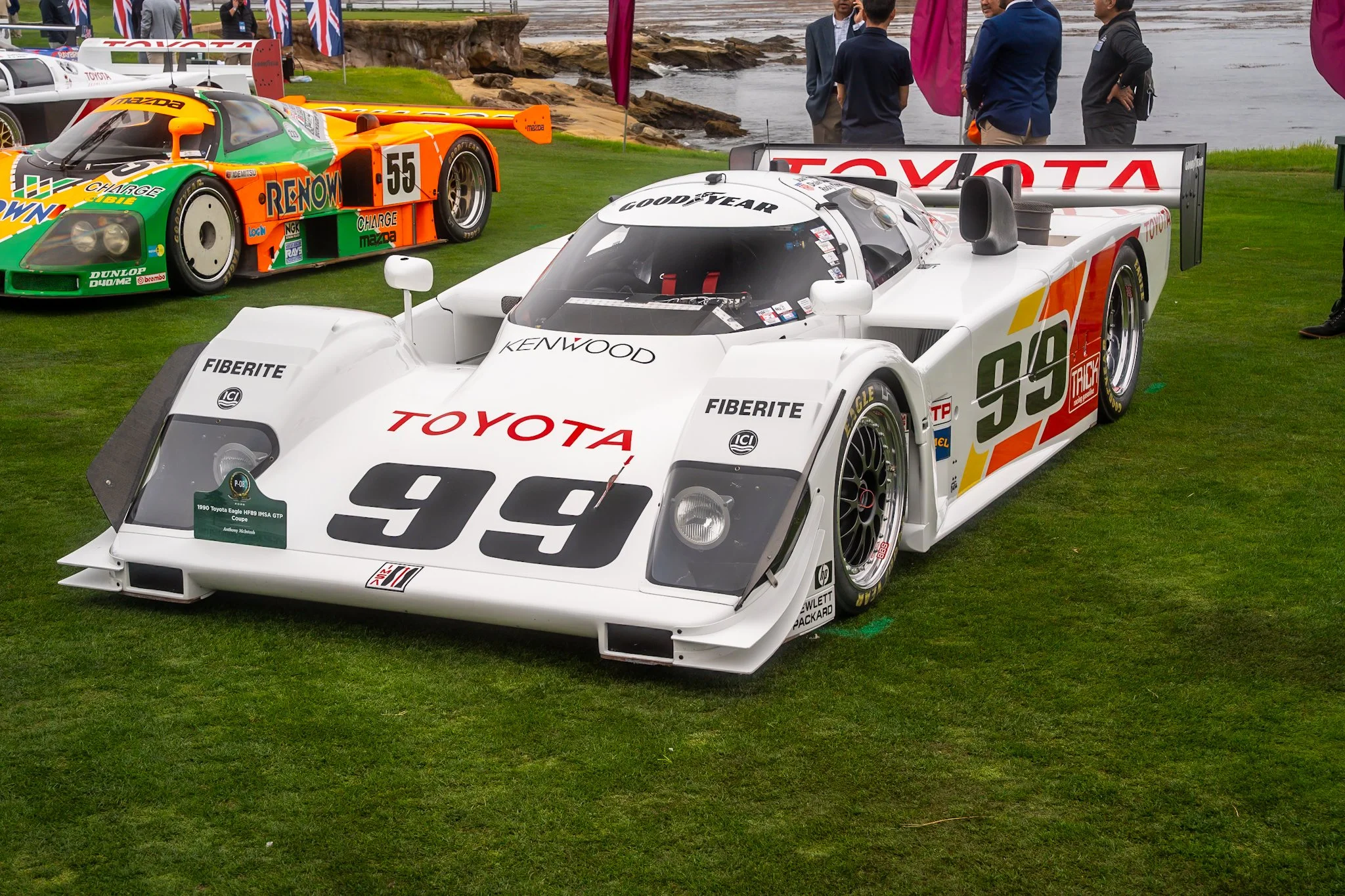
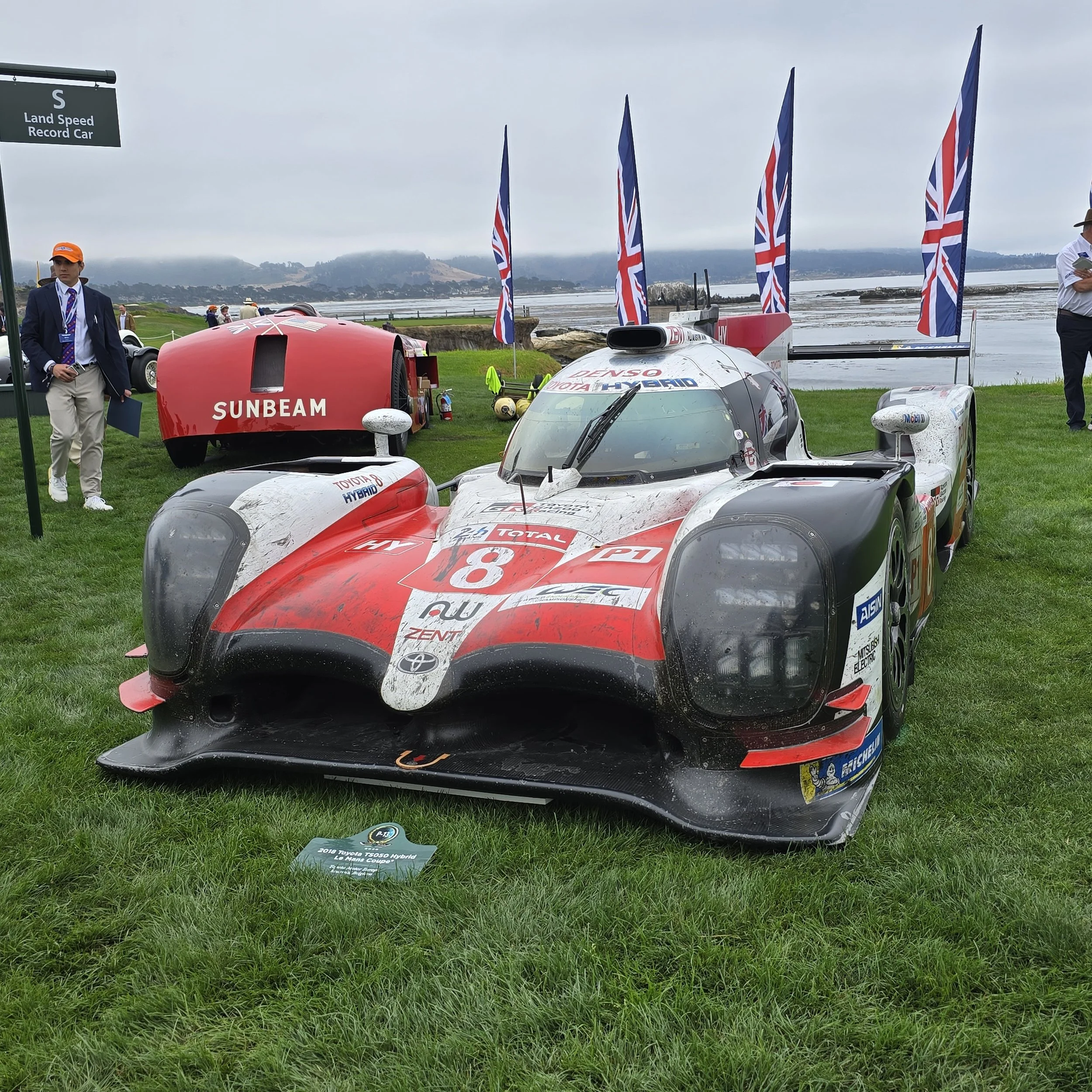
There was something genuinely new for Pebble Beach: its first Japanese Motorsport class. That field traced roughly three decades of Japanese endurance racing, beginning with the 1985 Toyota 85C-L and running through Mazda, Honda and Nissan competition machinery to the Toyota TS050 Hybrid. For an event once overwhelmingly associated with European coachwork and American classics, dedicating a full class to Japanese racing represented an important expansion of what Pebble Beach considers historically significant.
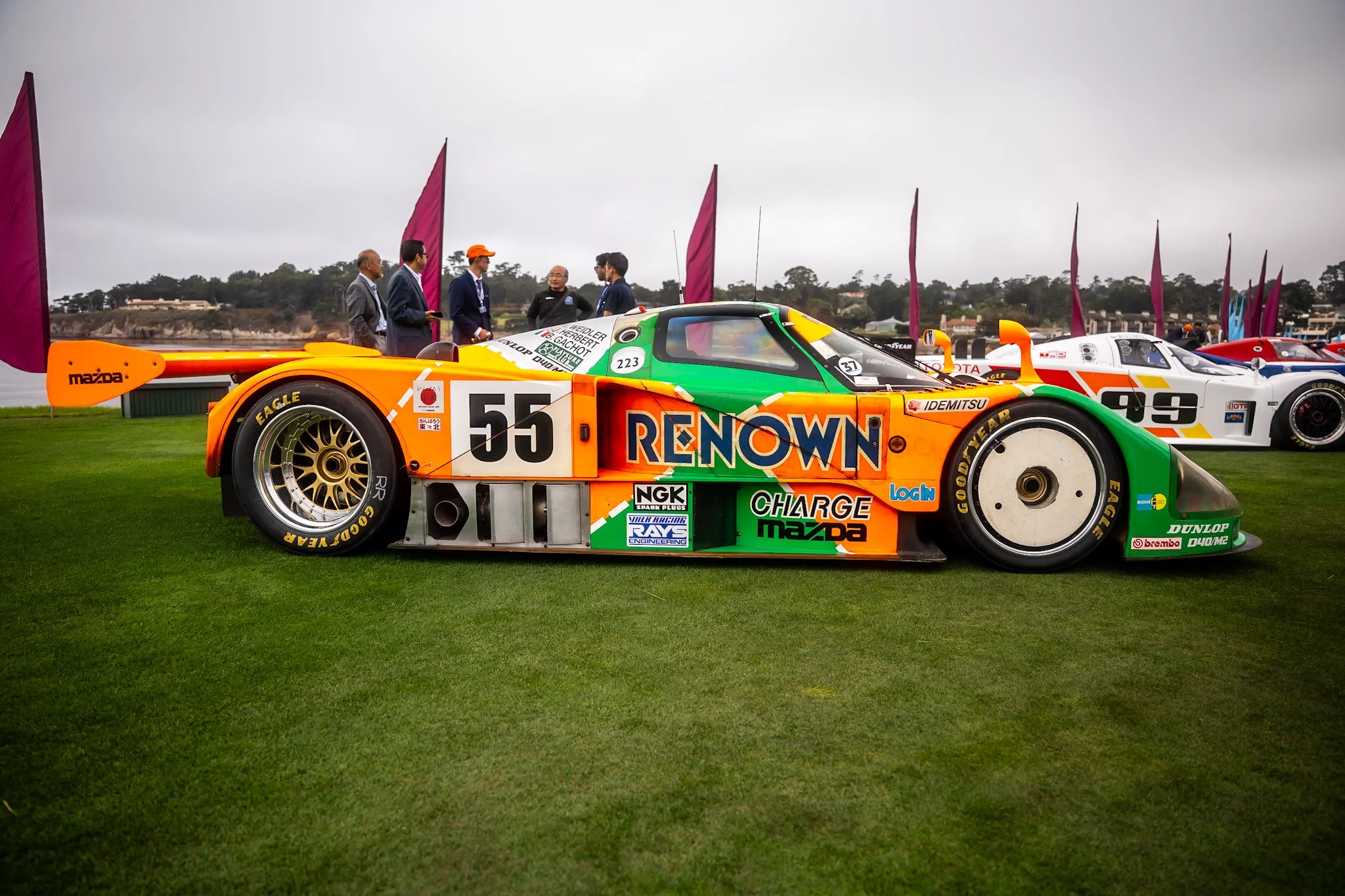
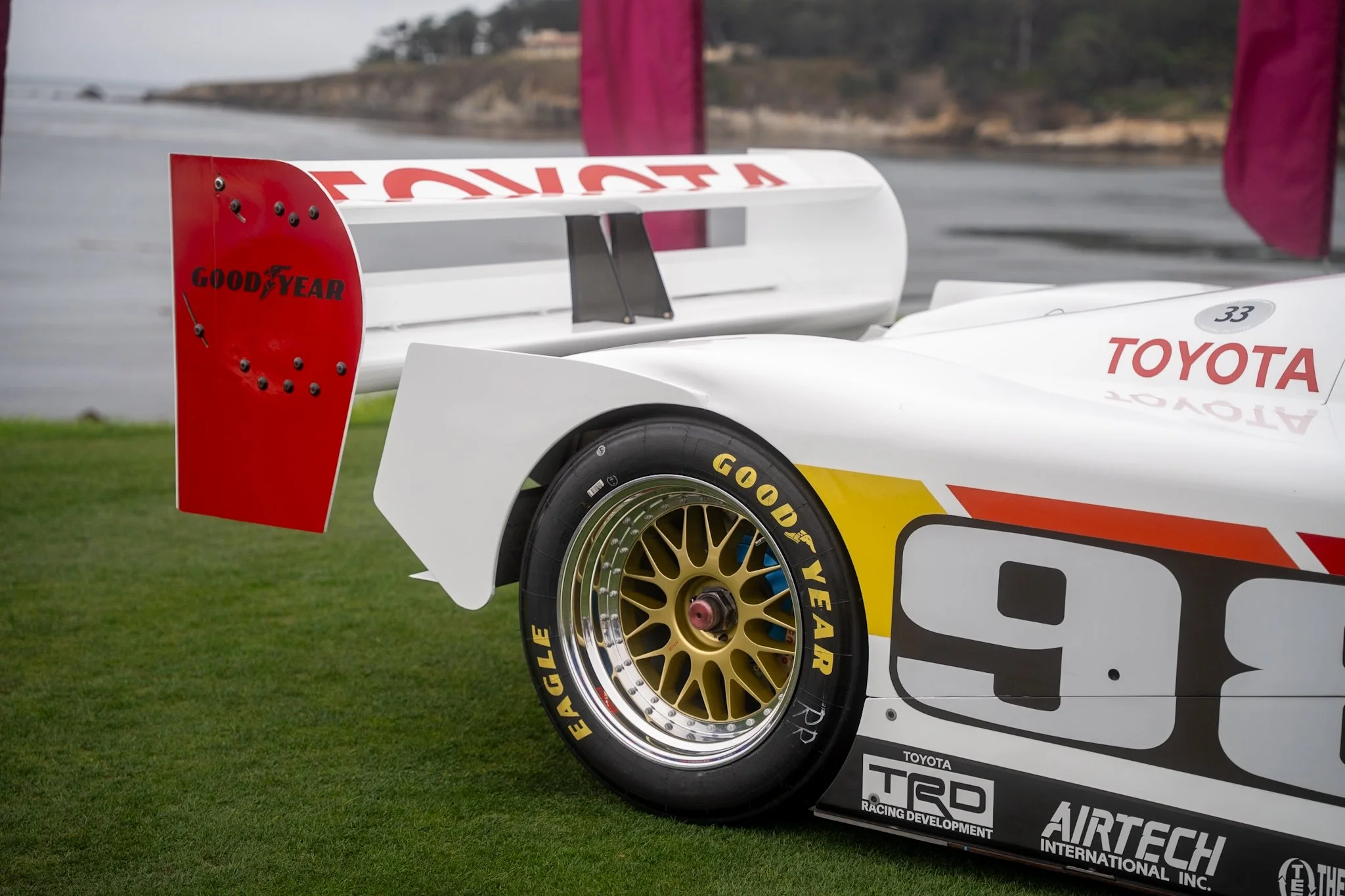
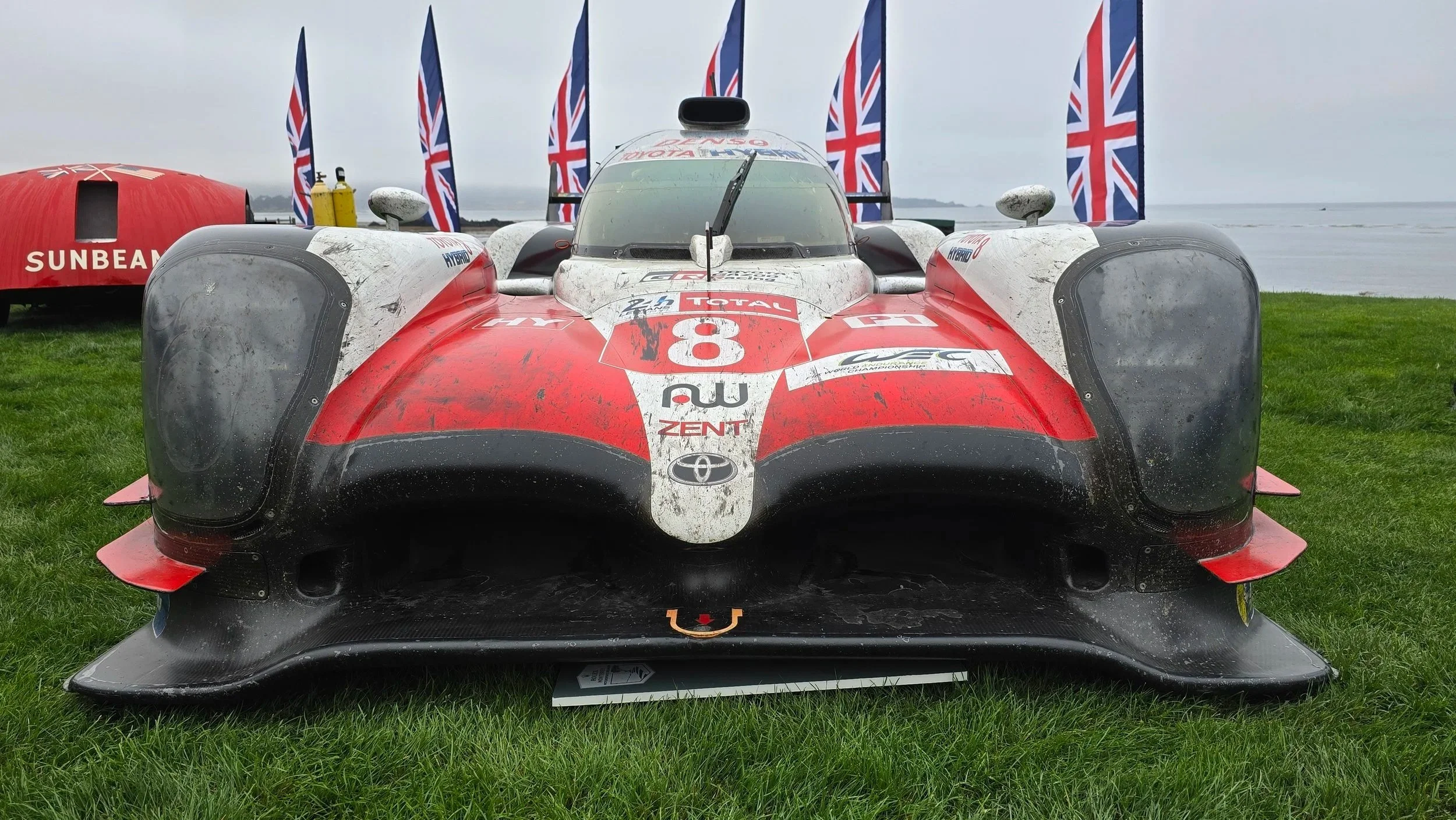
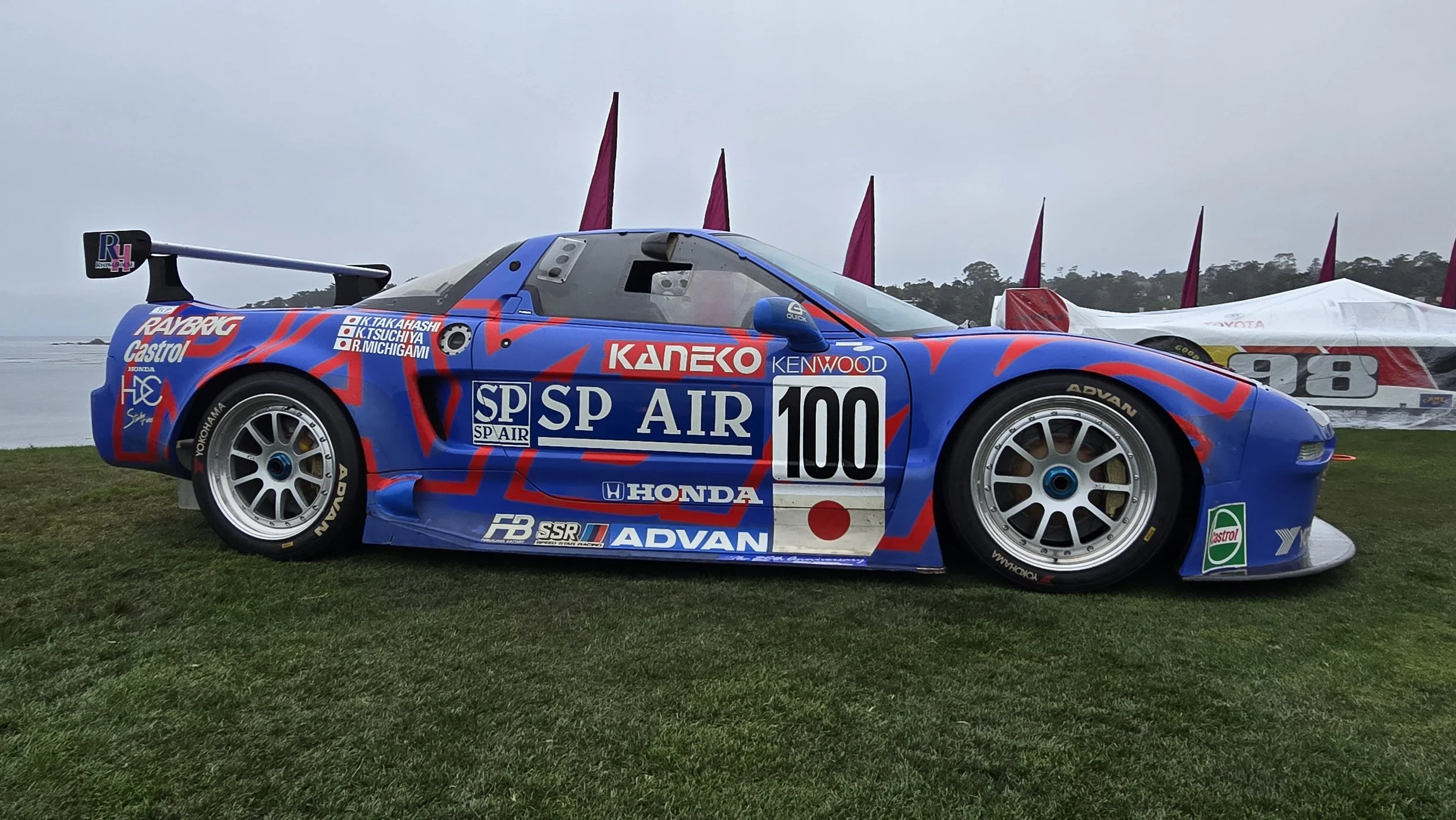
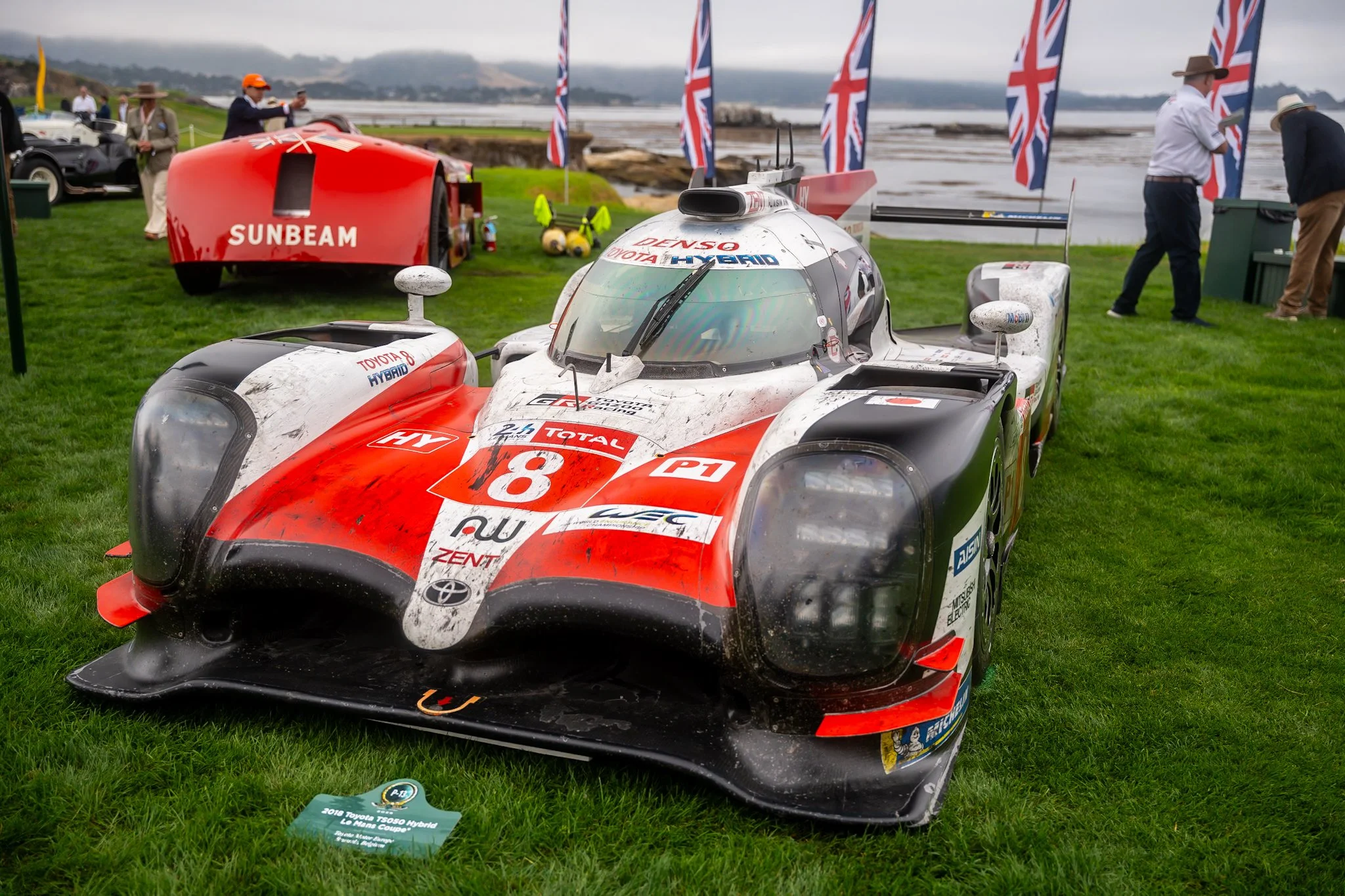
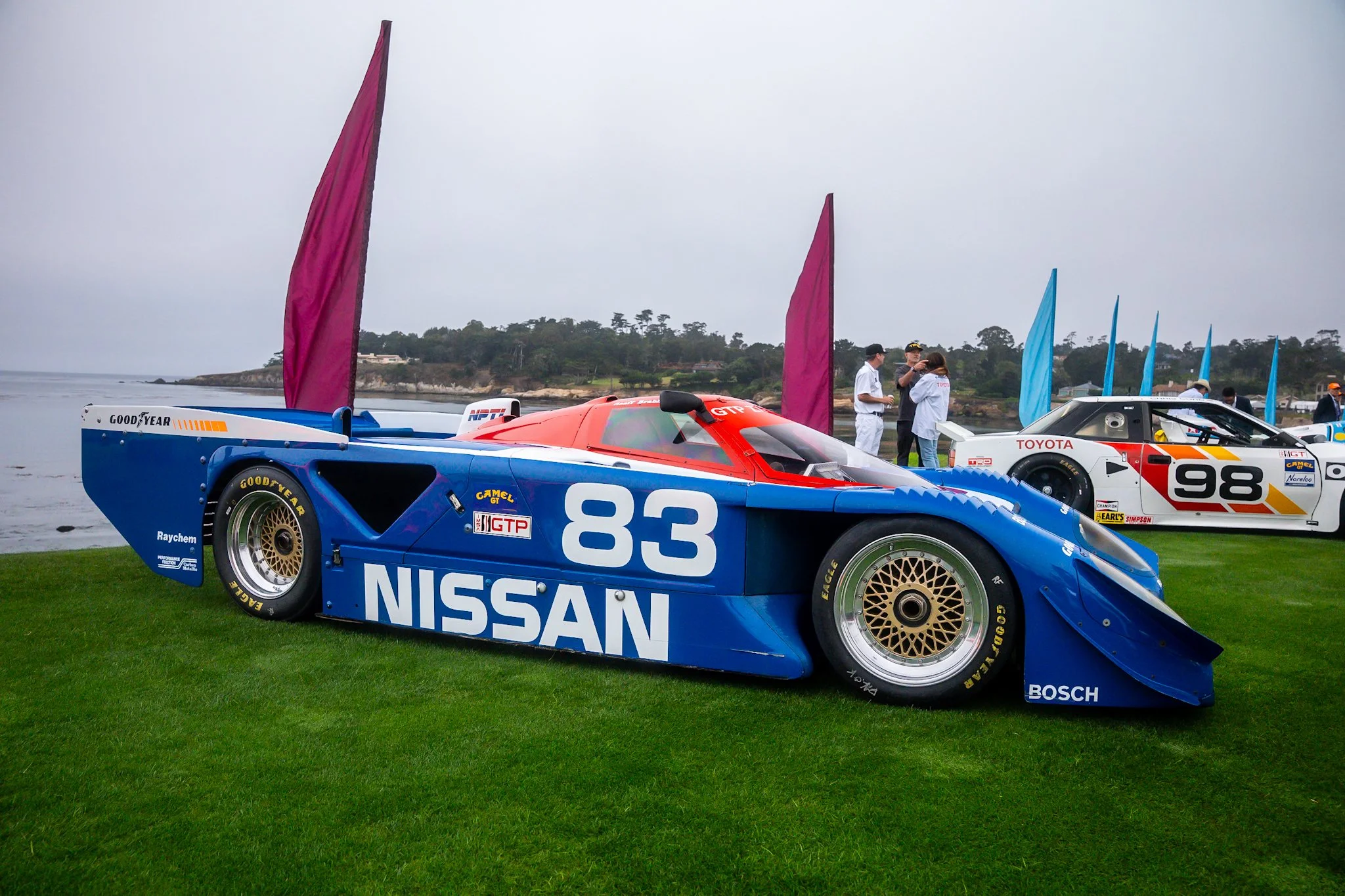
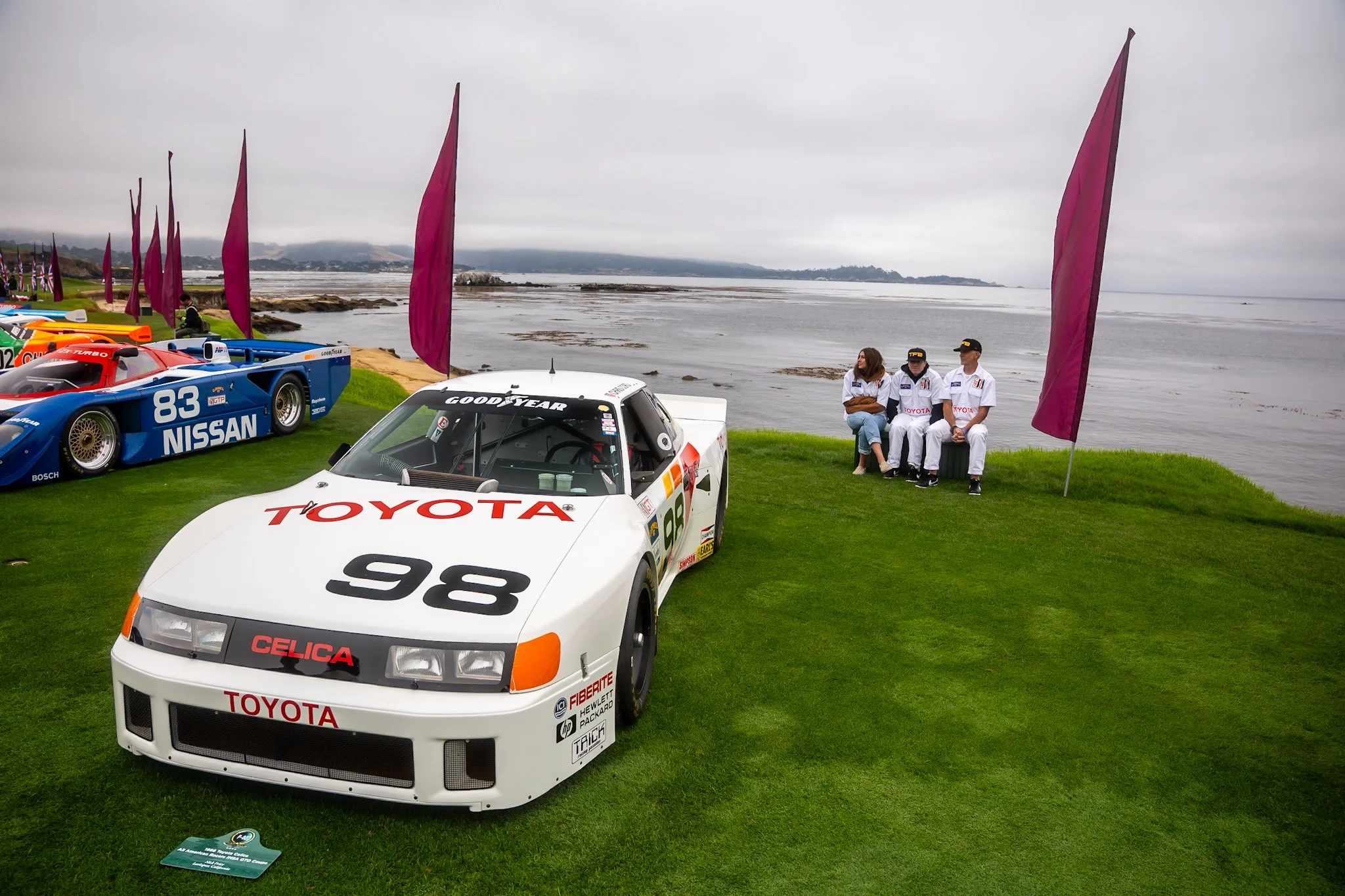
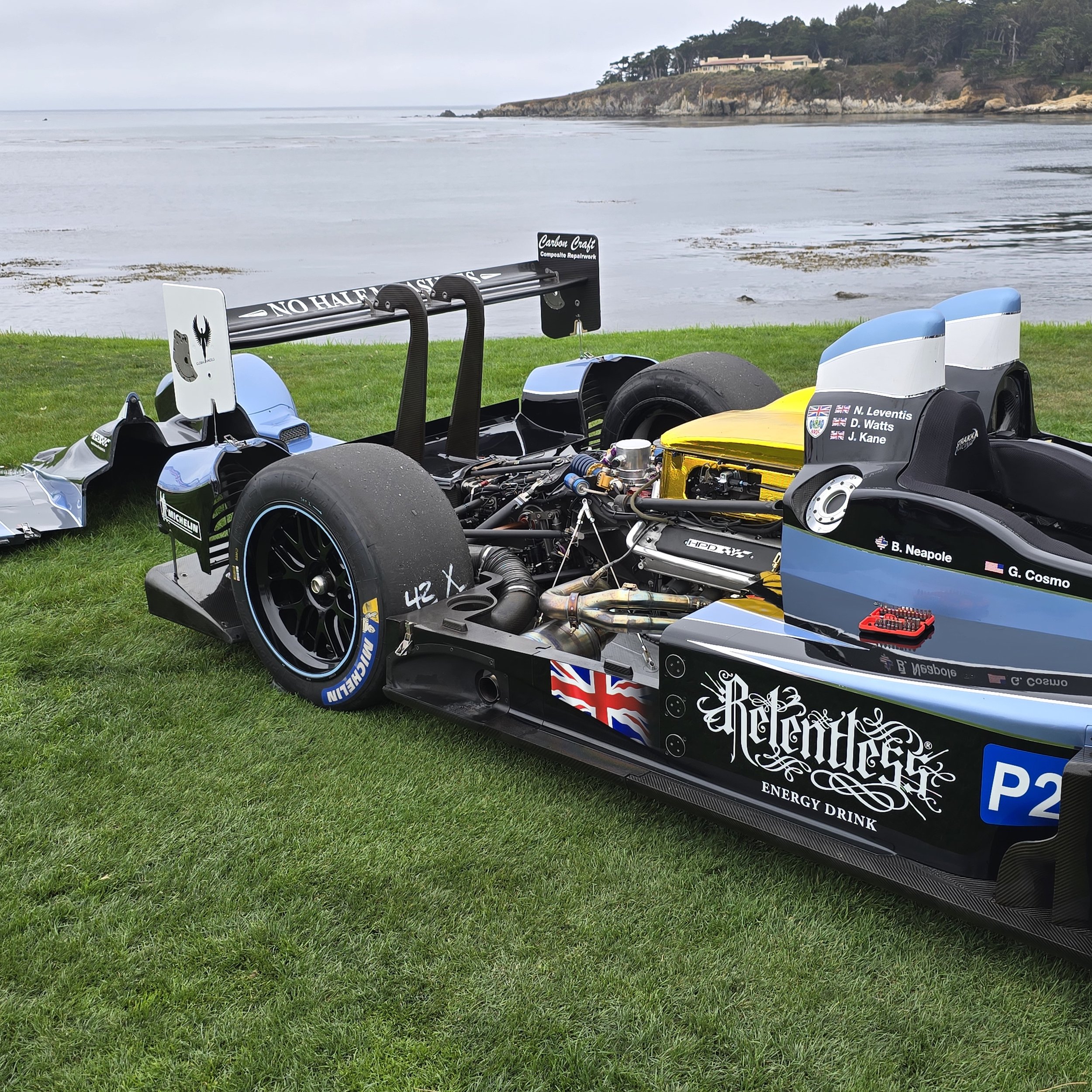
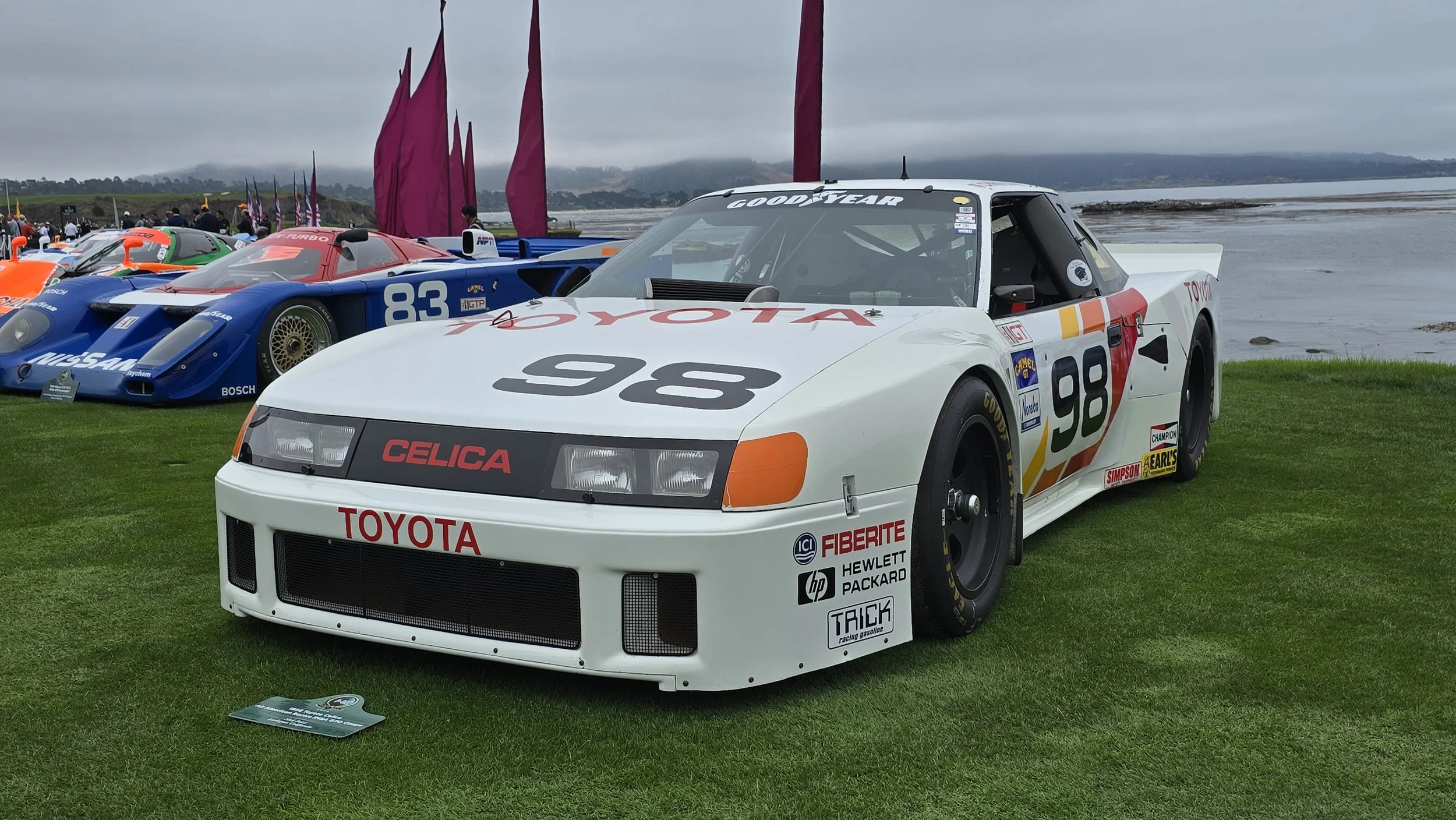
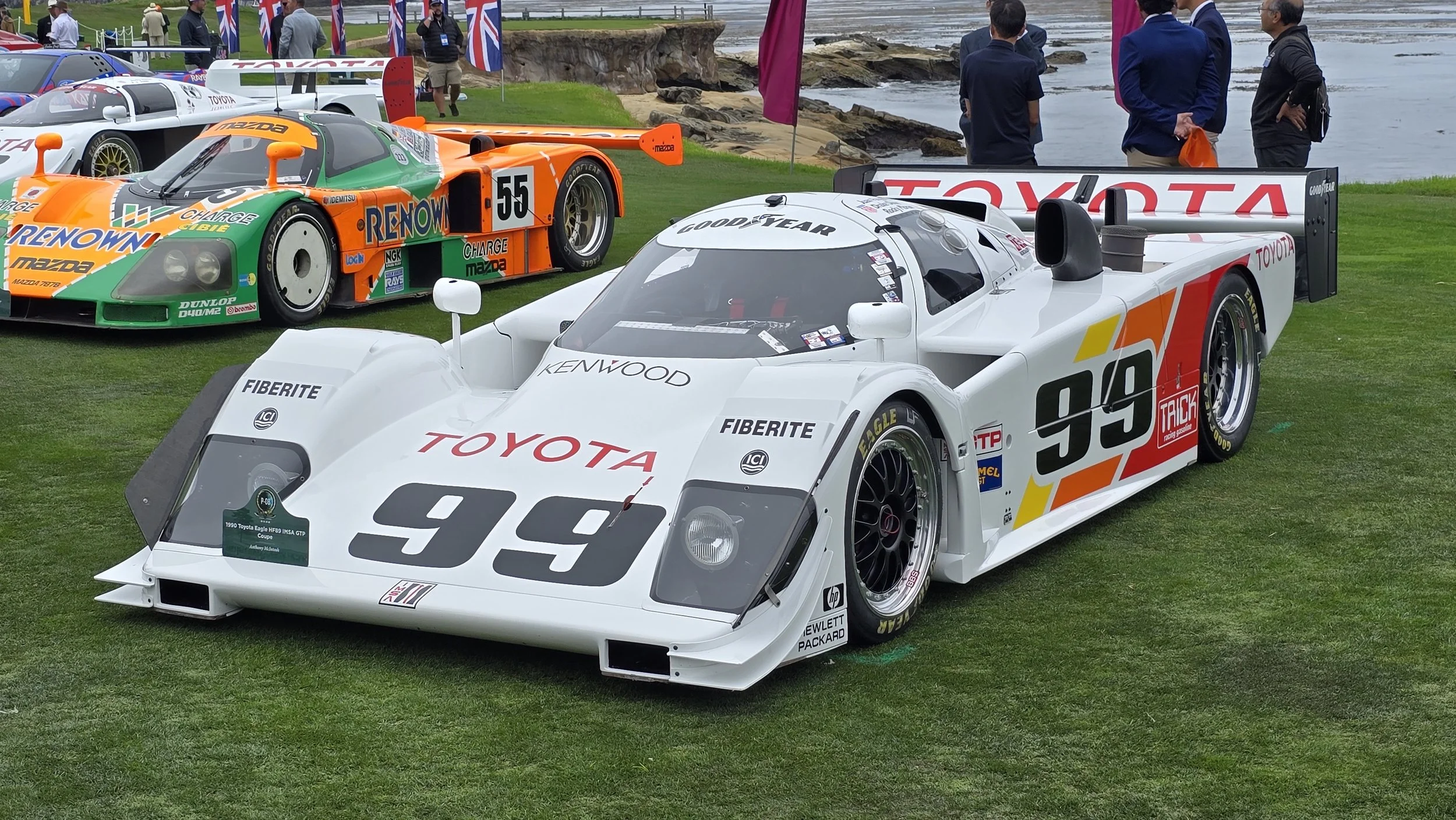
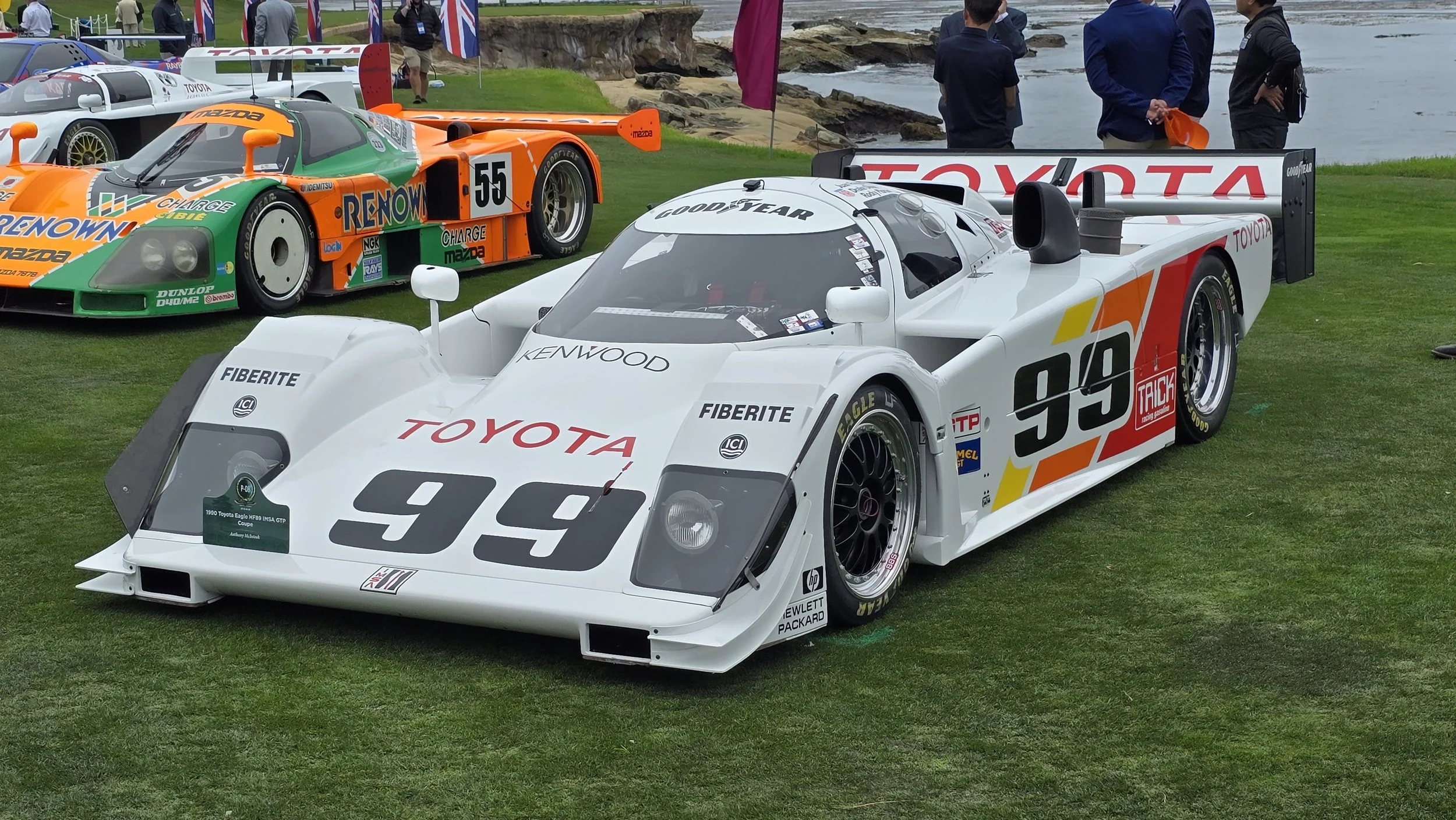
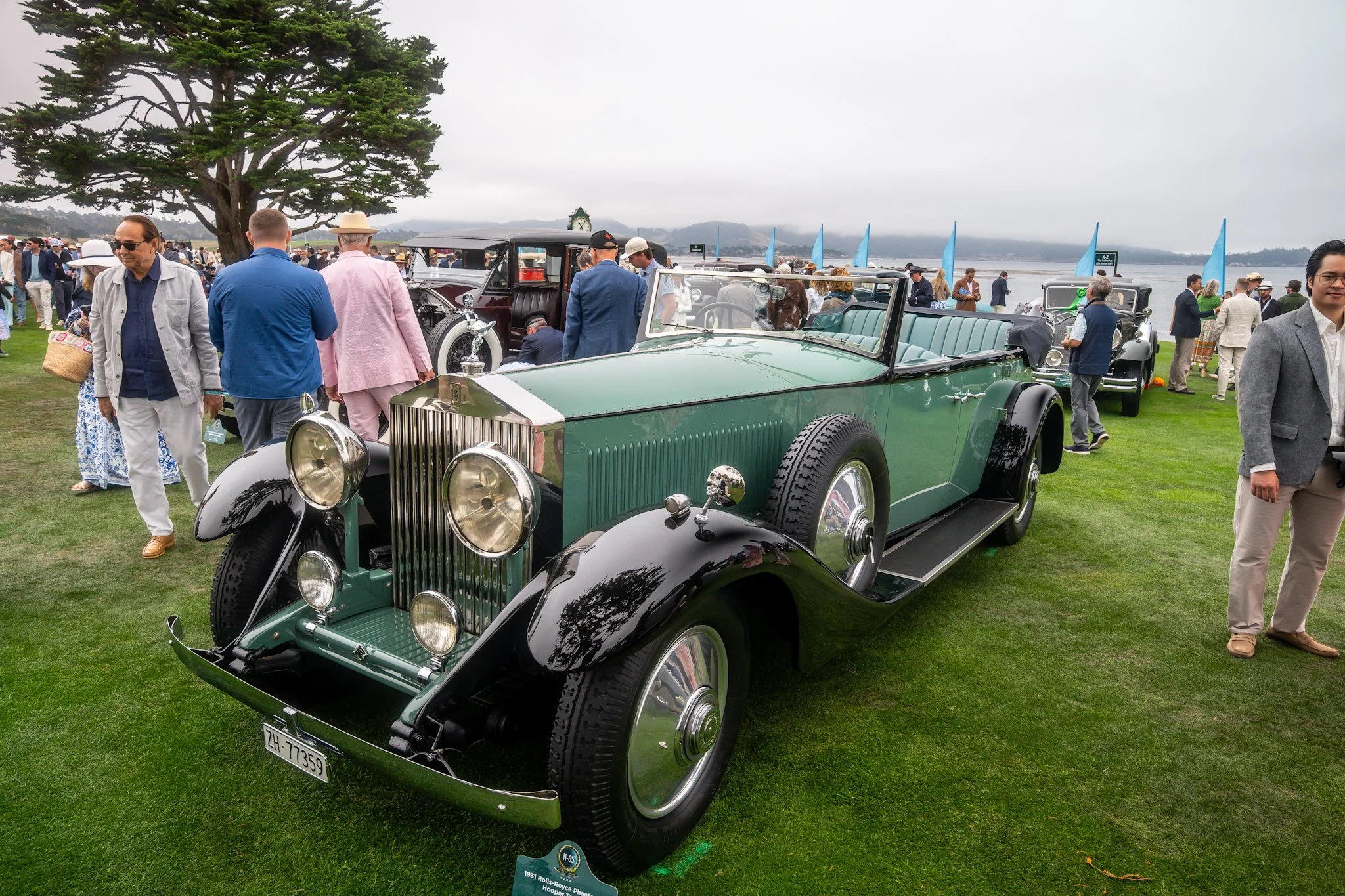
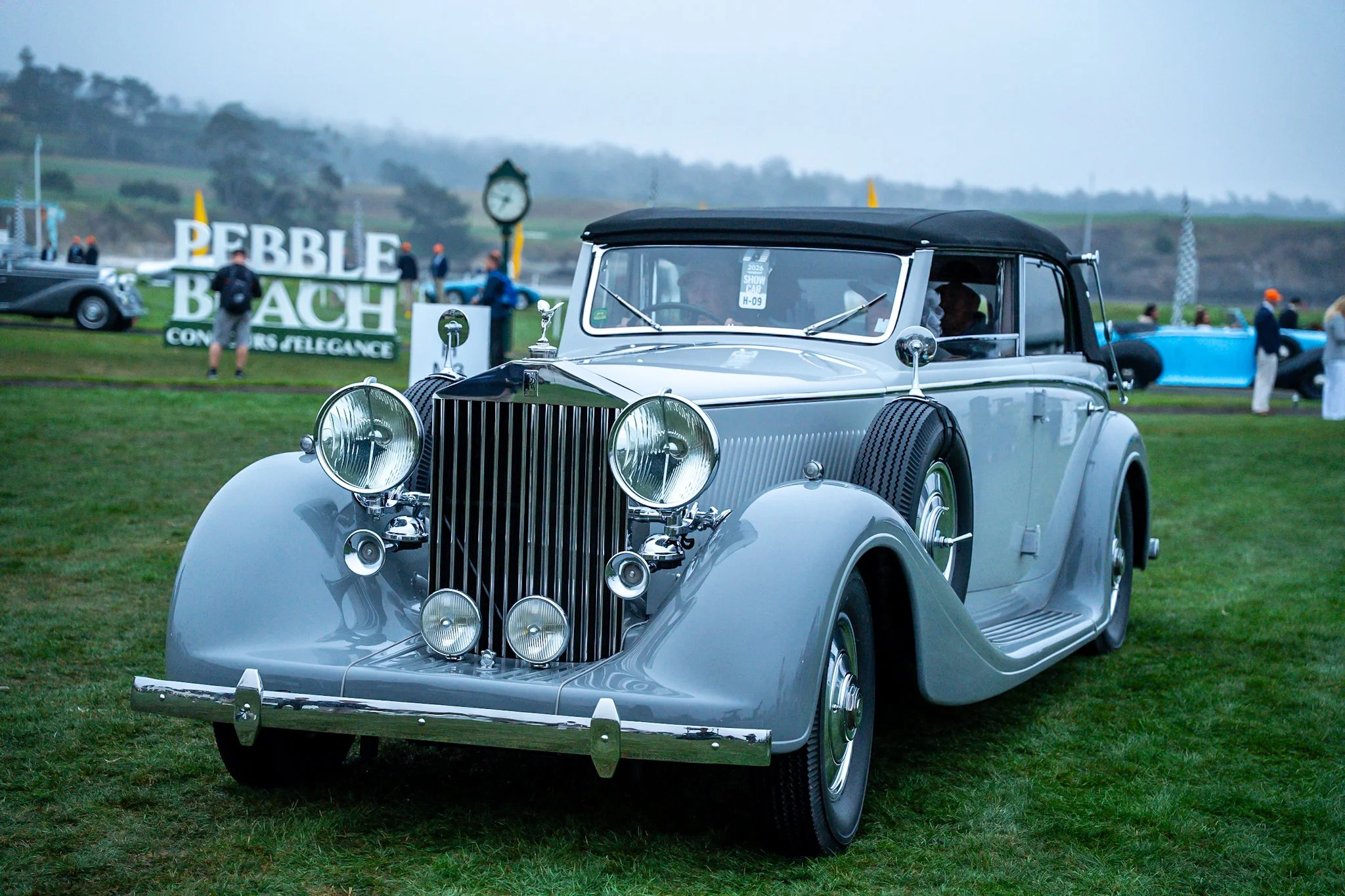
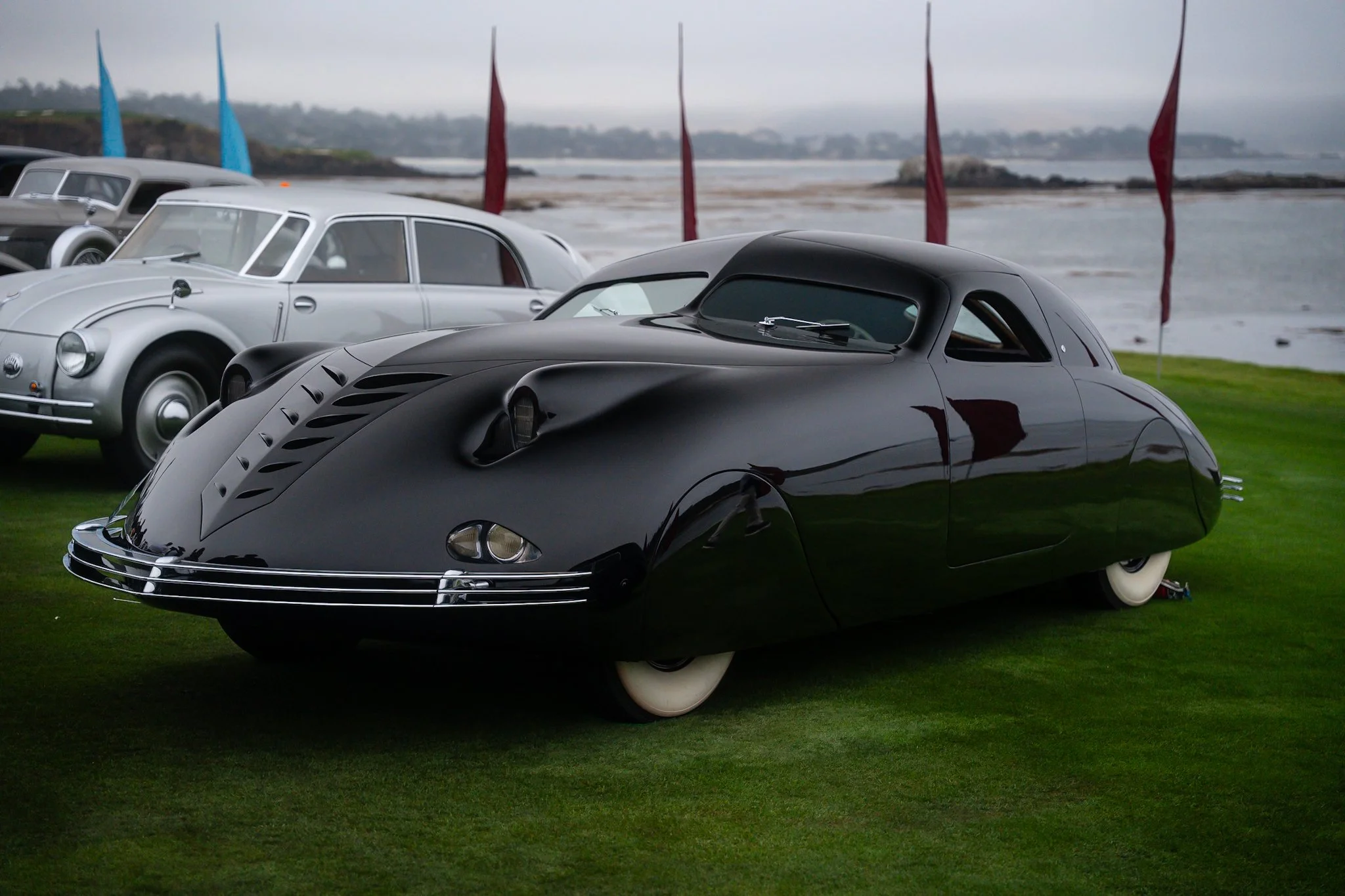
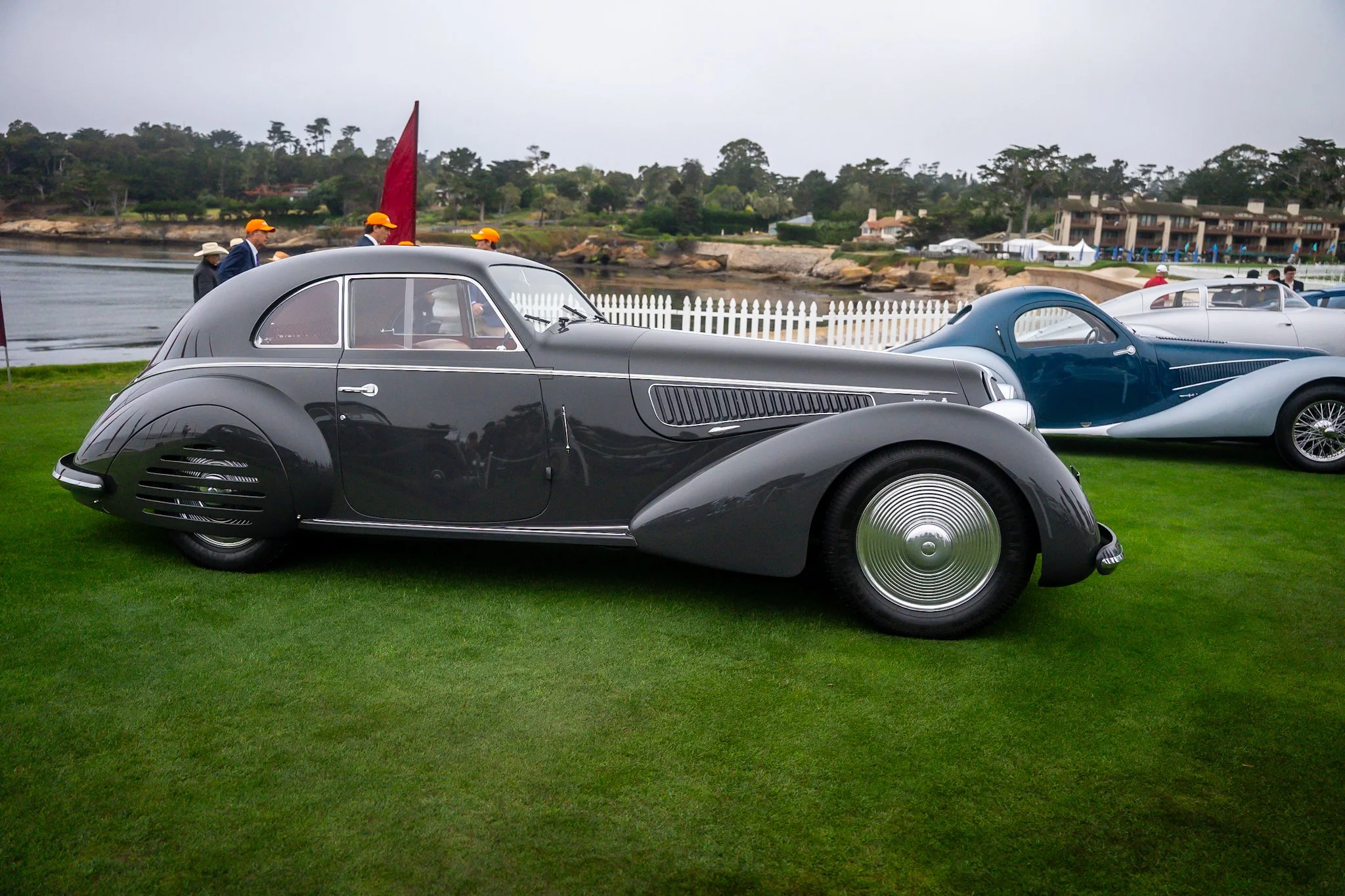
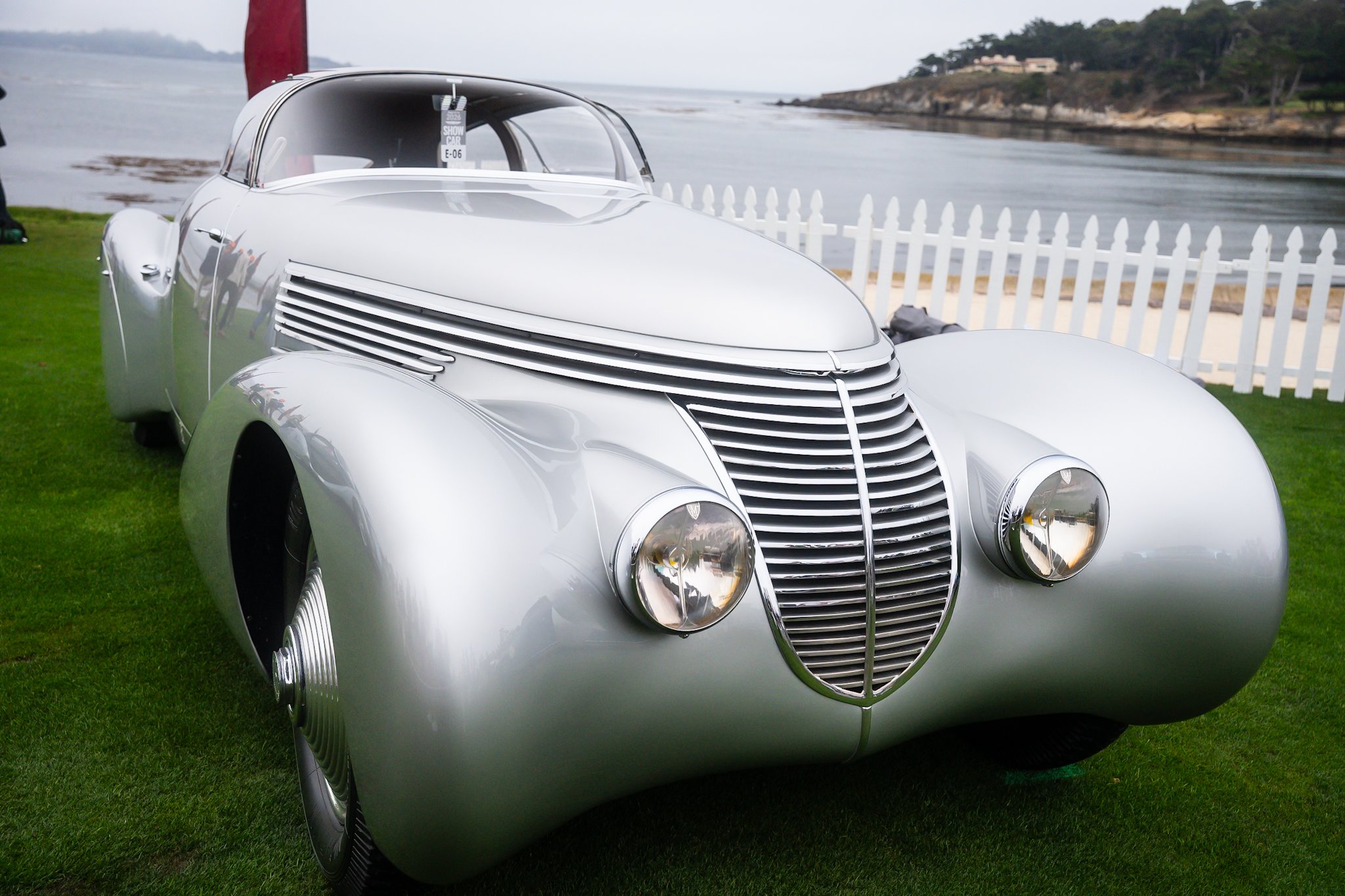
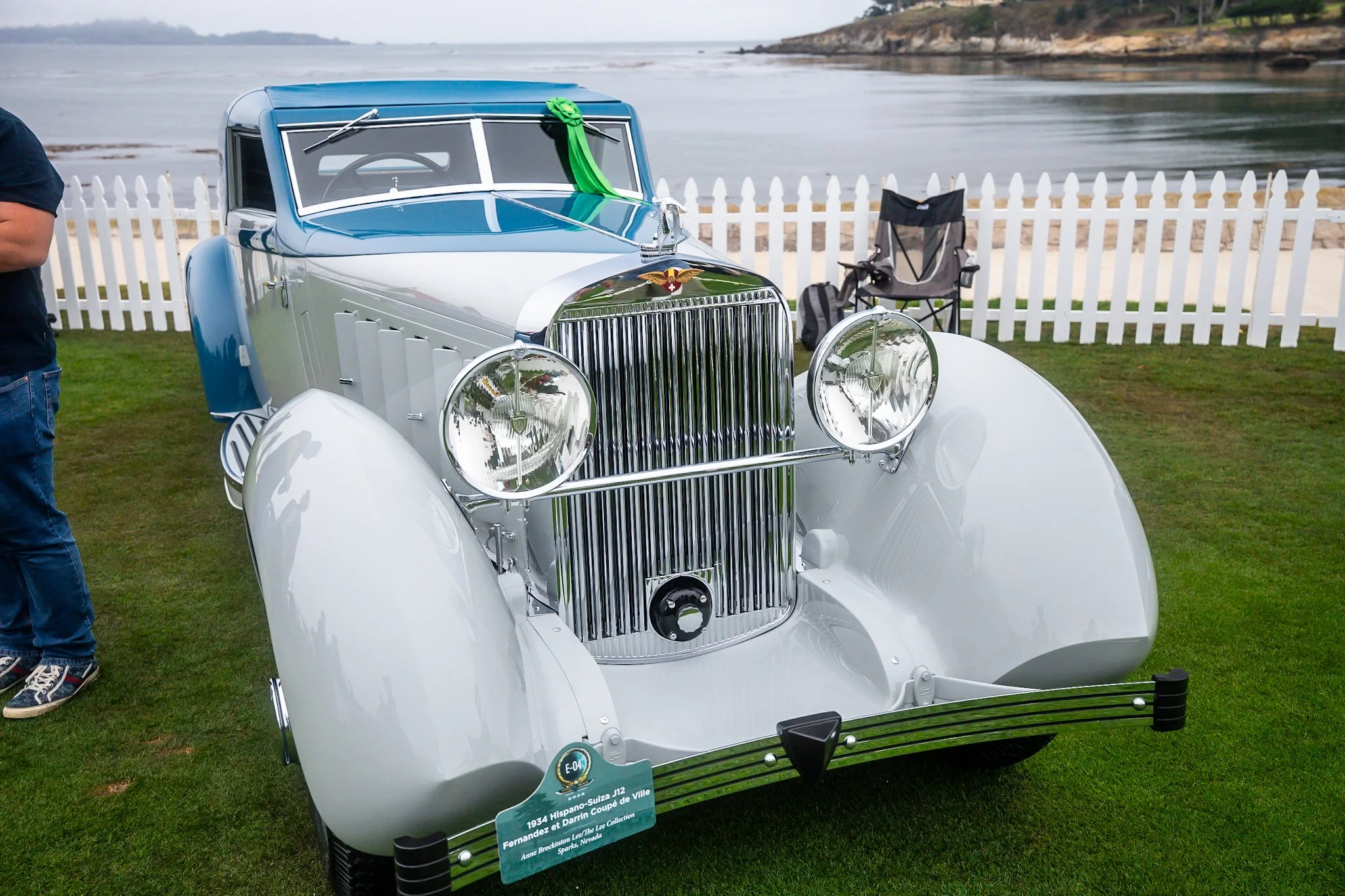
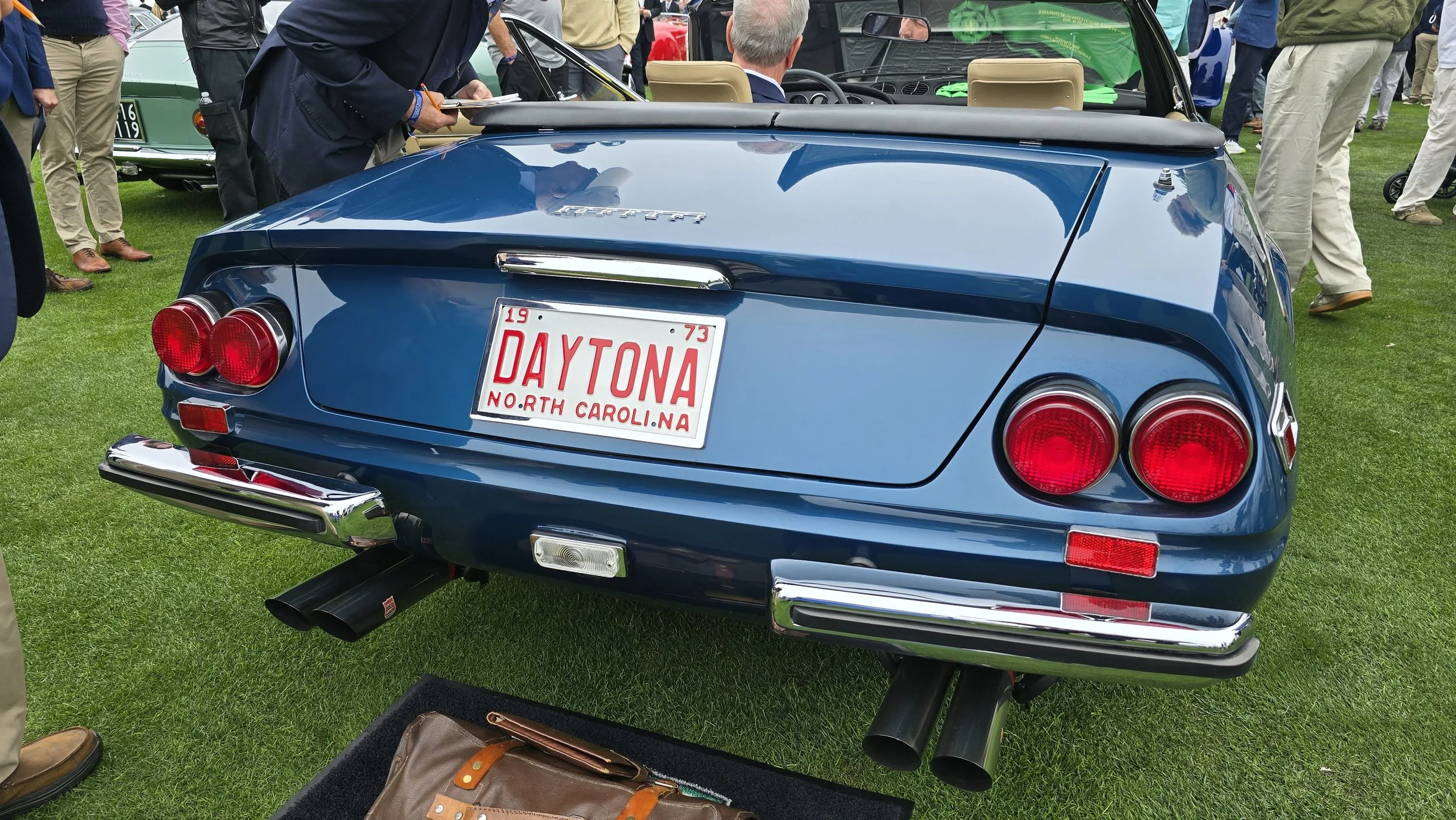
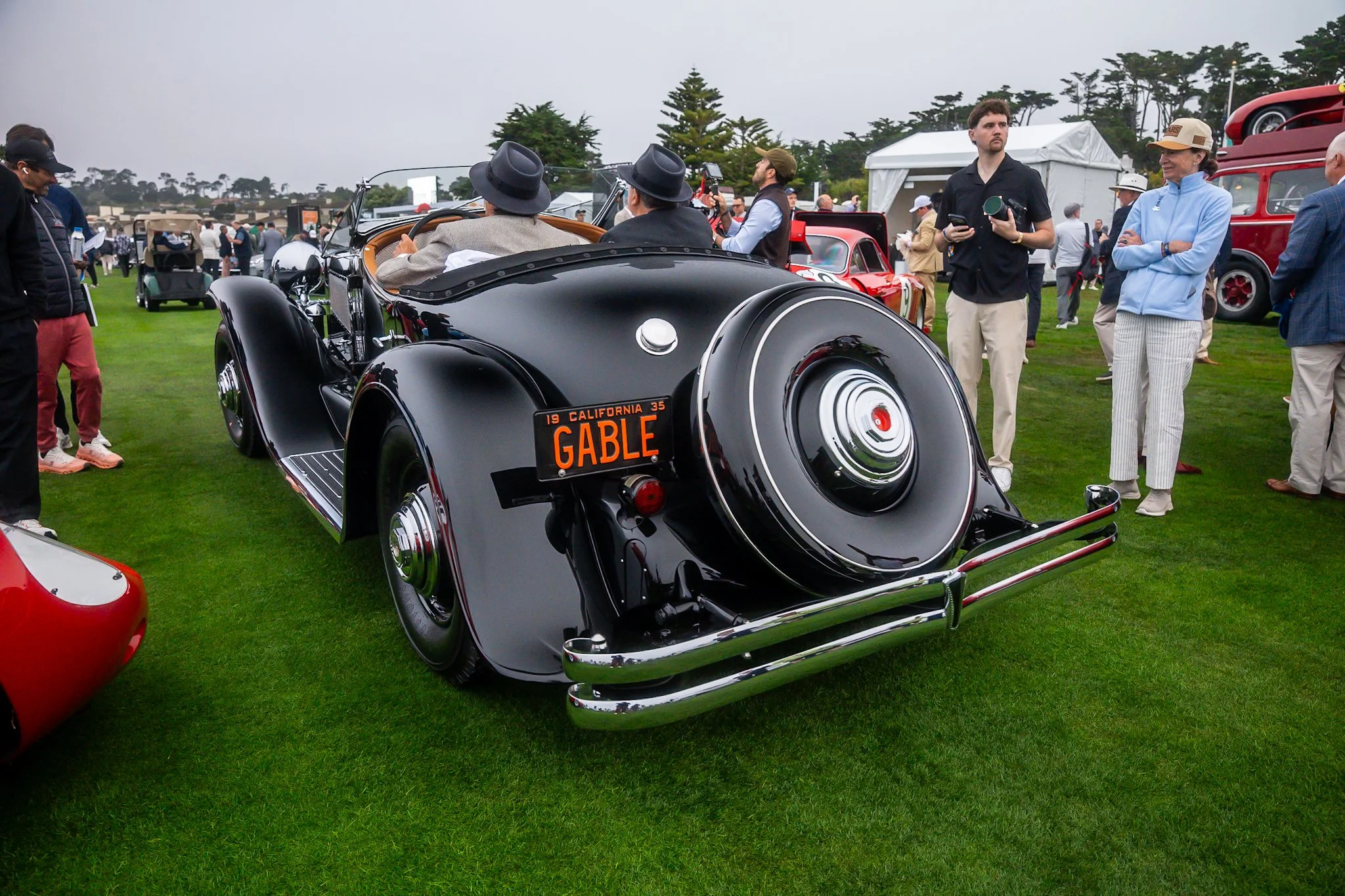
The complete field of 29 classes ranged even further, encompassing Duesenberg, Packard, prewar Rolls-Royce, royal automobiles of India, postwar sports racers, preservation cars, historic Jaguars and a Land Speed Record category. When all the judging was finished, the 2026 Best of Show went to Harry Yeaggy’s 1935 Duesenberg SSJ Special Speedster, an appropriately spectacular winner for the 75th Concours. Sadly, neither of us caught a whole-car picture of the winner. As one of us has a fetish for vanity plates, we did catch a pic of the winner’s license plate, “Gable,” referring to the car’s original owner, Hollywood legend and Oscar Award winner, Clark Gable.
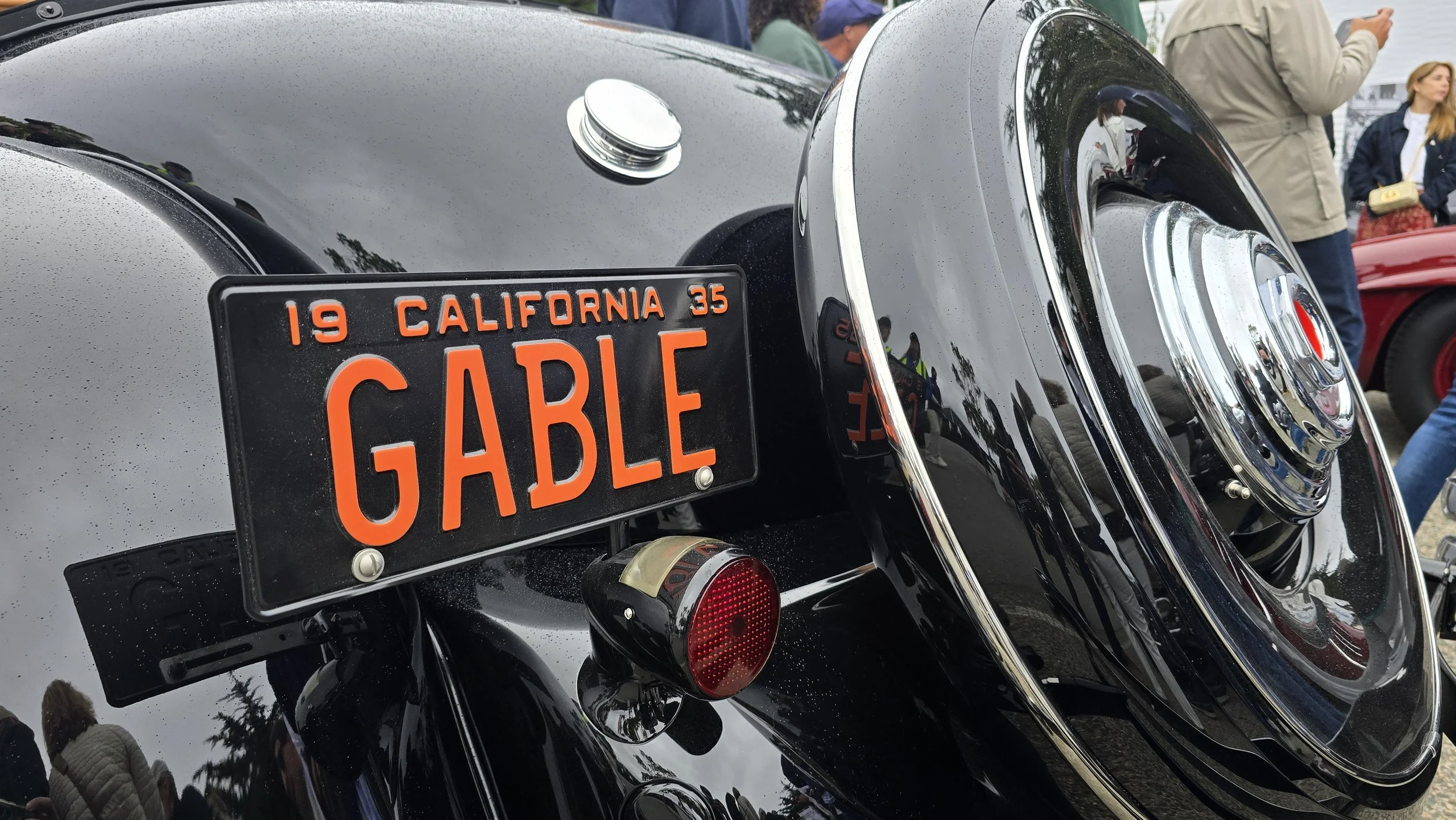
The plate, for what it’s worth…
Our tastes run a bit more contemporary, and though the SSJ Special Speedster was quite beautiful, it sadly didn’t make either of our camera roles. That’s totally our flub, and one we’ll not repeat if the good people at the Concours have us back again next year. It’s almost impossible to catch decent images of all the cars on the lawn. This year there were almost 220 entries…. Or so we thought. On final review we found the shot that we didn’t even know we had taken.
The elephant in the room…
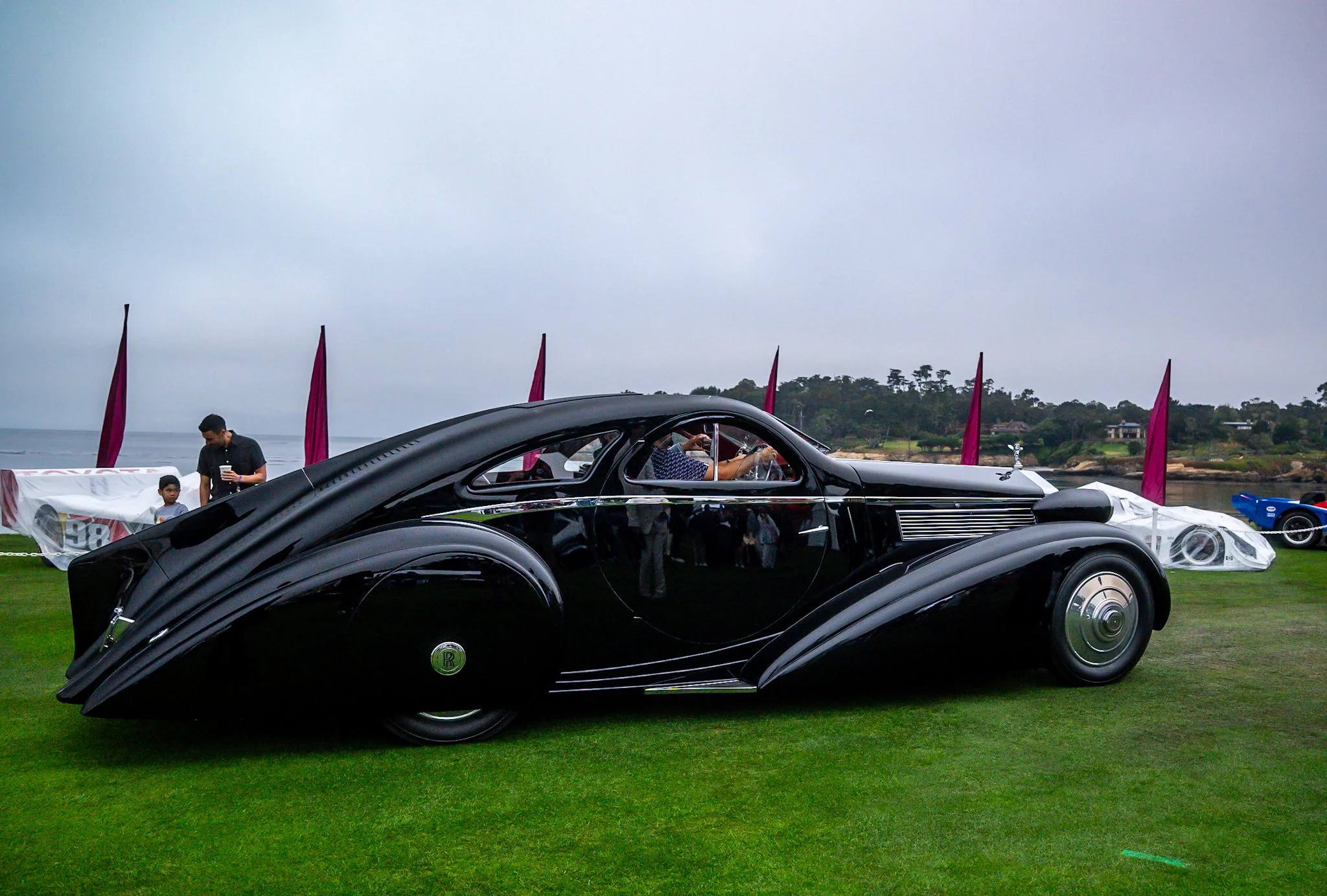
To be honest. There was one entrant that caught our attention event as it rolled in under the dawn light in the morning. A car that we thought should have been best in show, though it was only displayed and not judged in a competitive class.
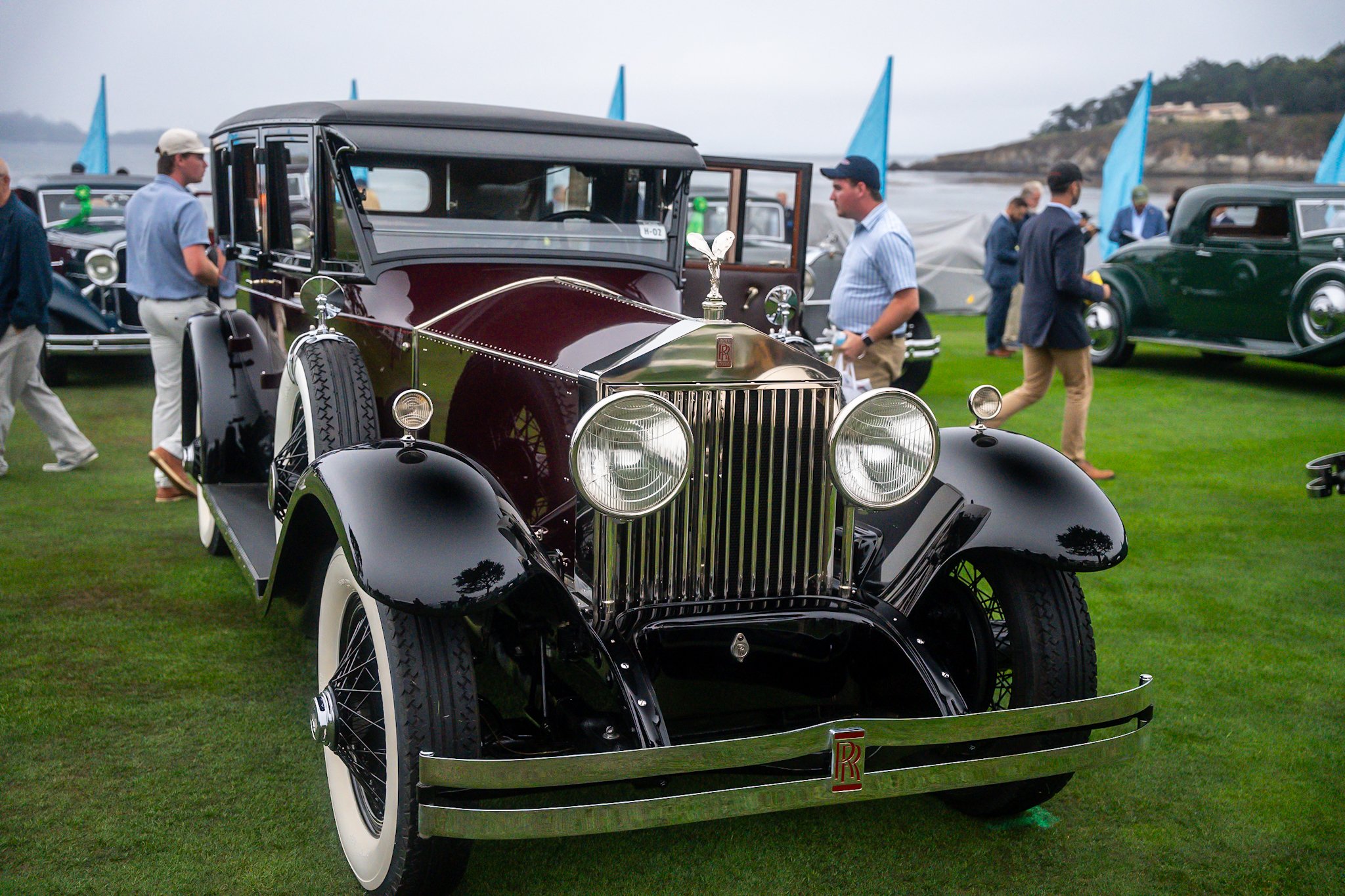
The 1925 Rolls-Royce Phantom I Jonckheere Aerodynamic Coupé is one of those cars that makes even Pebble Beach’s most exotic machinery look restrained. Built on an early Phantom I chassis but dramatically rebodied by Belgian coachbuilder Jonckheere roughly a decade later, the car is instantly recognizable by its enormous flowing body, sweeping fenders and extraordinary circular doors—features that earned it the nickname “Round Door Rolls.” Beneath it all is the Phantom I’s 7.7-liter straight-six, introduced in 1925 as Rolls-Royce’s successor to the legendary Silver Ghost. Today the car resides in the Petersen Automotive Museum collection and remains one of the most visually audacious Rolls-Royces ever created: part luxury automobile, part streamliner and part rolling architectural experiment. It’s big, bold, beautiful, and a car we’ve wanted to see in person for many years.
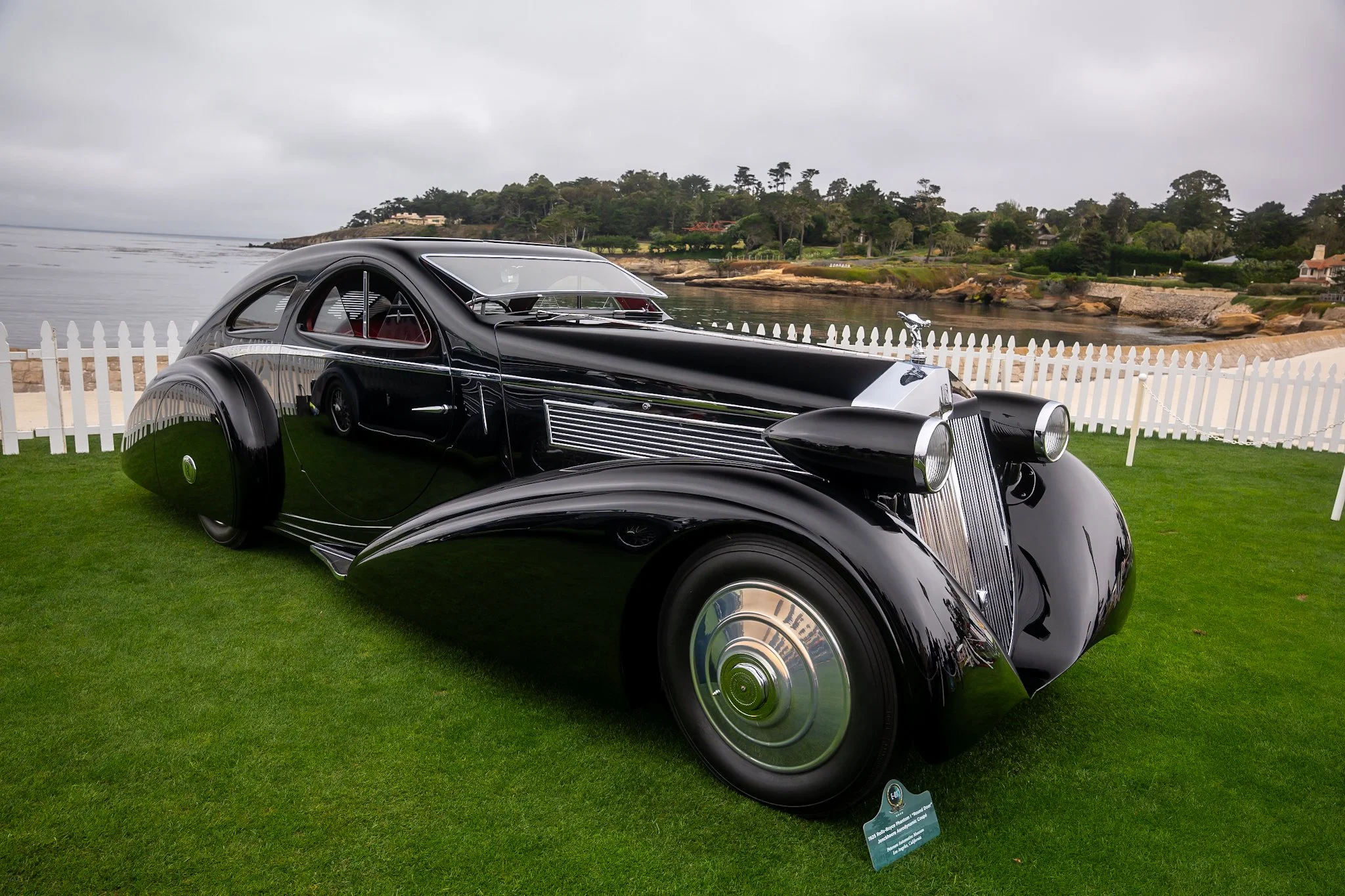
1925 Rolls-Royce Phantom I Jonckheere Aerodynamic Coupé
The other elephant in the room…
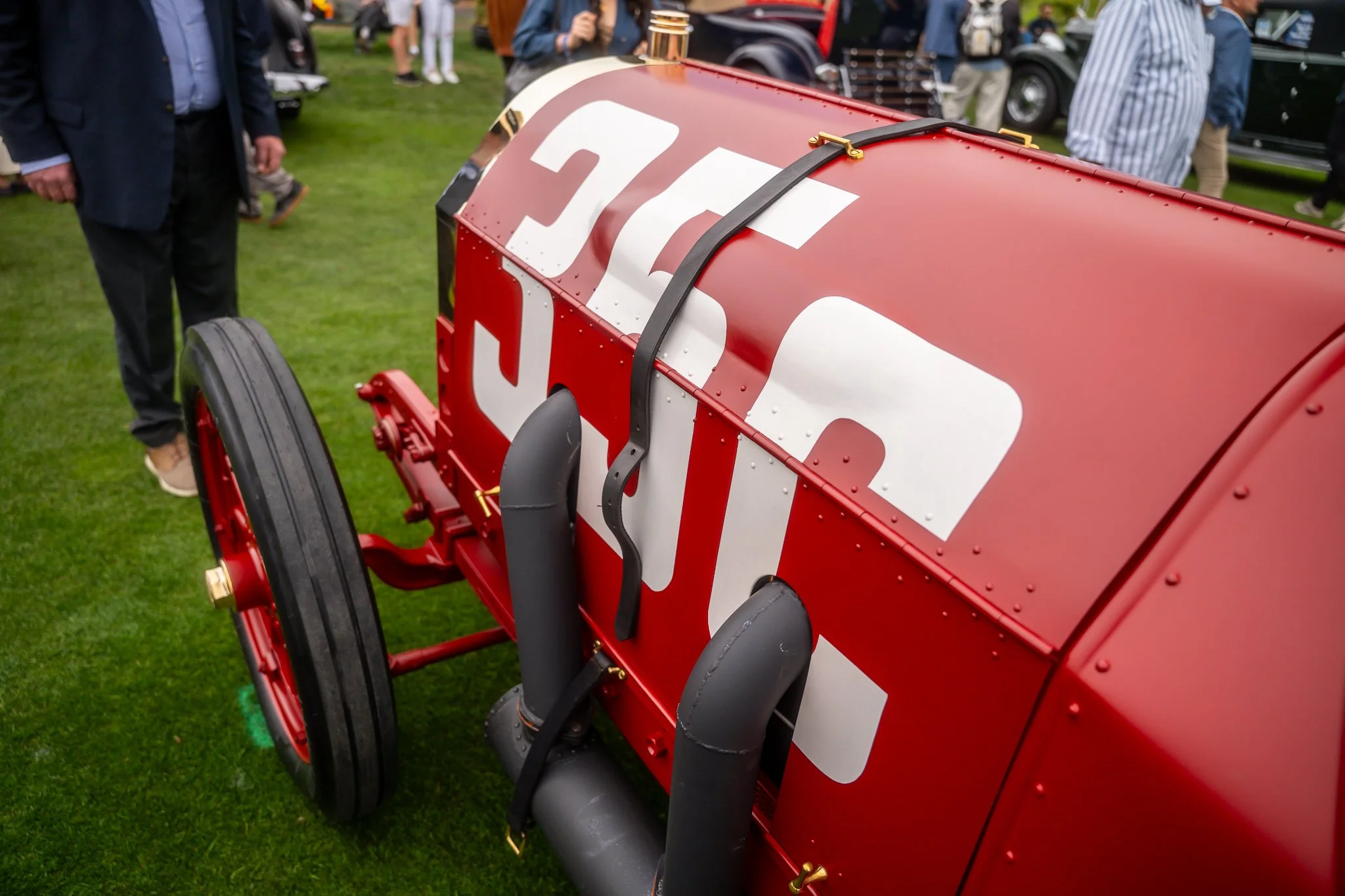
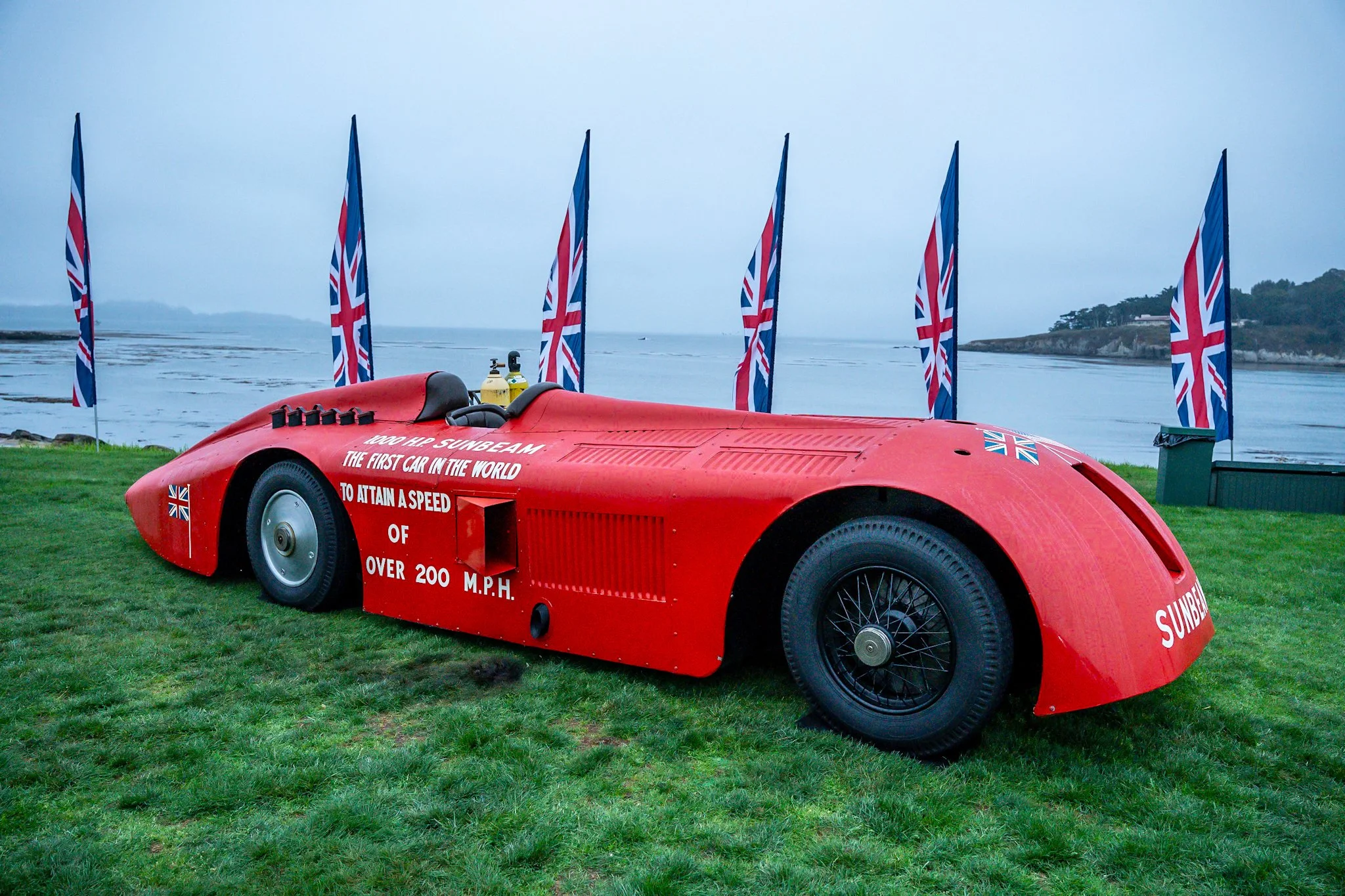
And speaking of elephants, there was another behemoth on hand that had everyone fascintaed was the Sunbeam 1,000 HP. Built around two of Sunbeam's powerful 22.4-liter Matabele aero engines, one in front of the cockpit and one in back, the car proved revolutionary when it emerged less than two years after Malcolm Campbell first broke the 150 mph barrier in a Sunbeam 350 HP. Driven by Henry Segrave on the sands of Daytona Beach on March 29, 1927, the "Slug" recorded a two-way average speed of 203.79 mph, becoming the first machine on Earth to exceed 200 mph.
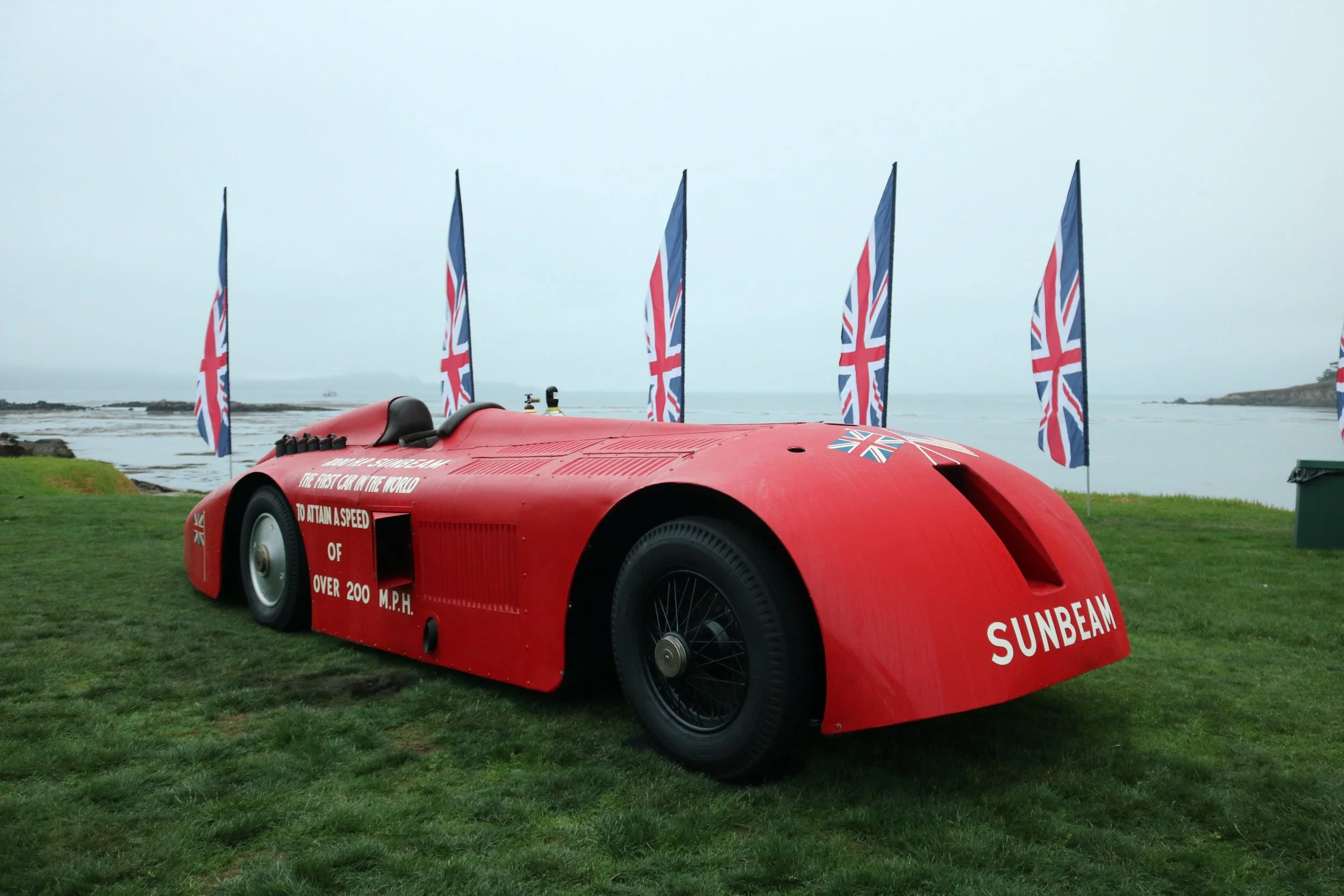
The history-making twin-engined Sunbeam was fully restored by staff at the National Motor Museum at Beaulieu in Hampshire, UK, as part of a fundraising effort to support the museum, and was greeted warmly by the Pebble Beach crowd, with no mistaking the sound of the powerplants as they roared to life after decades of silence. Two members of the museum's workshop team who worked on the restoration, Senior Engineer Ian Stanfield and apprentice Aaron Burton, joined the car at Pebble Beach, and the Sunbeam is now touring the United States before a planned centennial run at Daytona Beach in 2027 to mark 100 years since its record-breaking run.
Return of the BATS
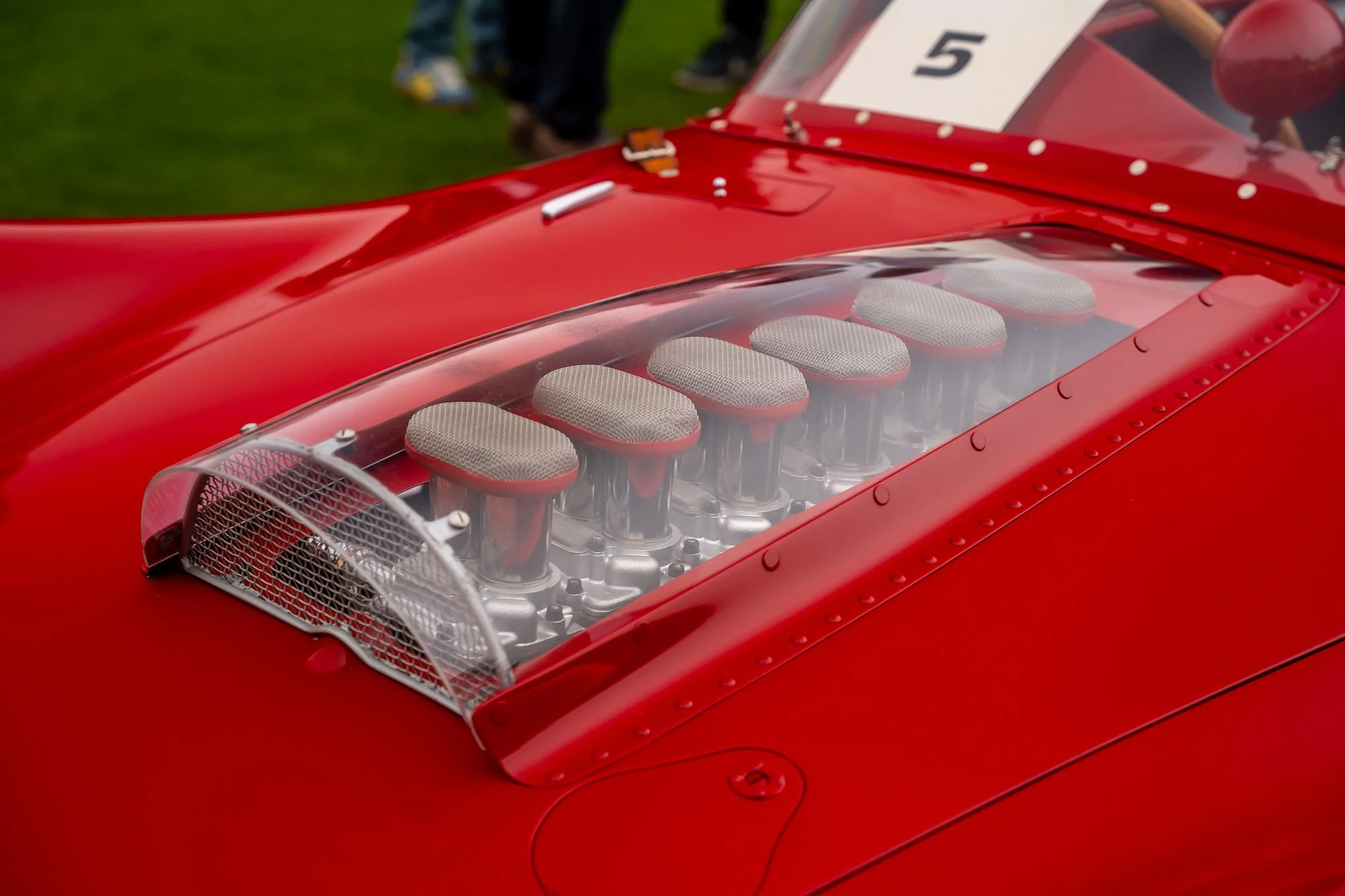
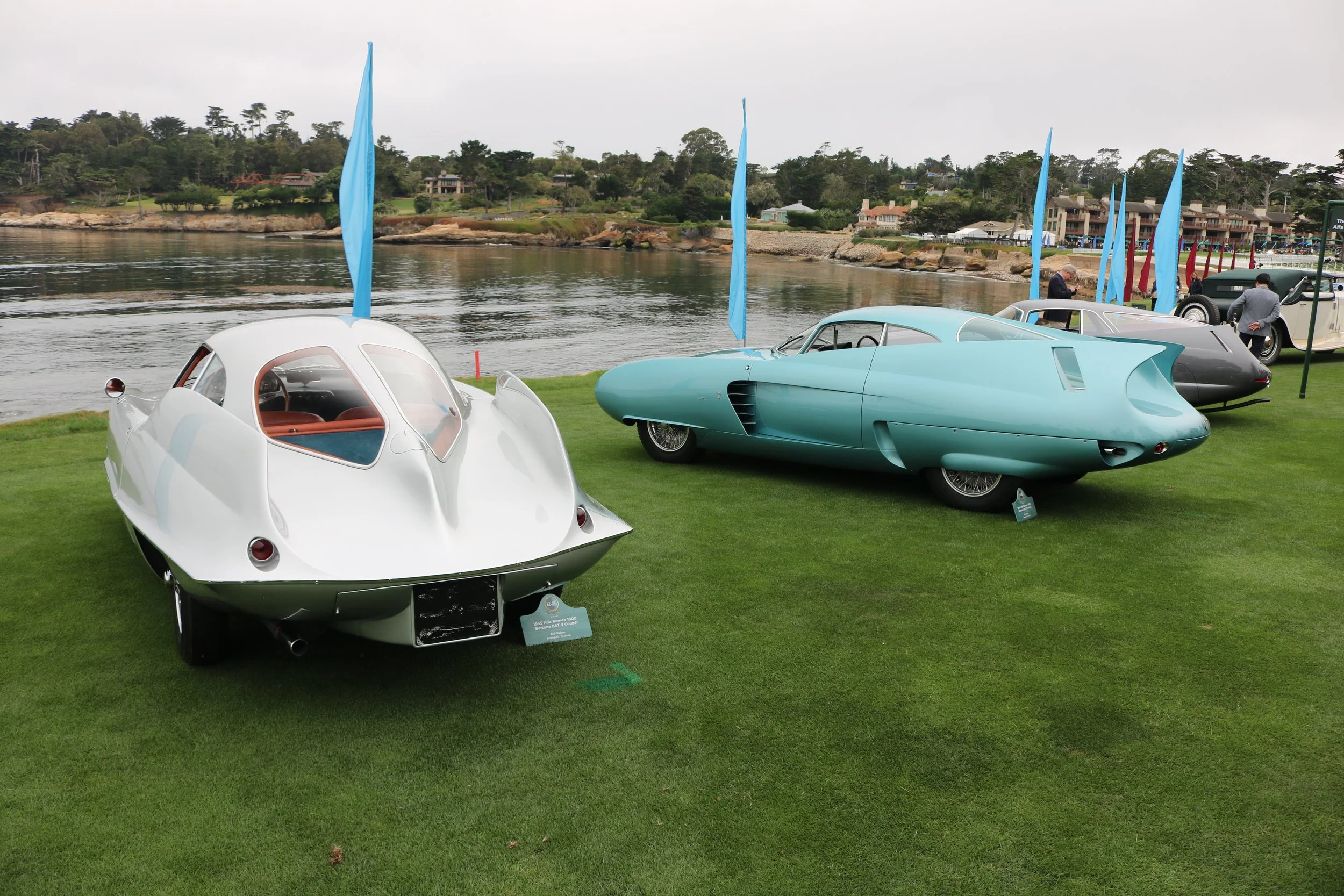
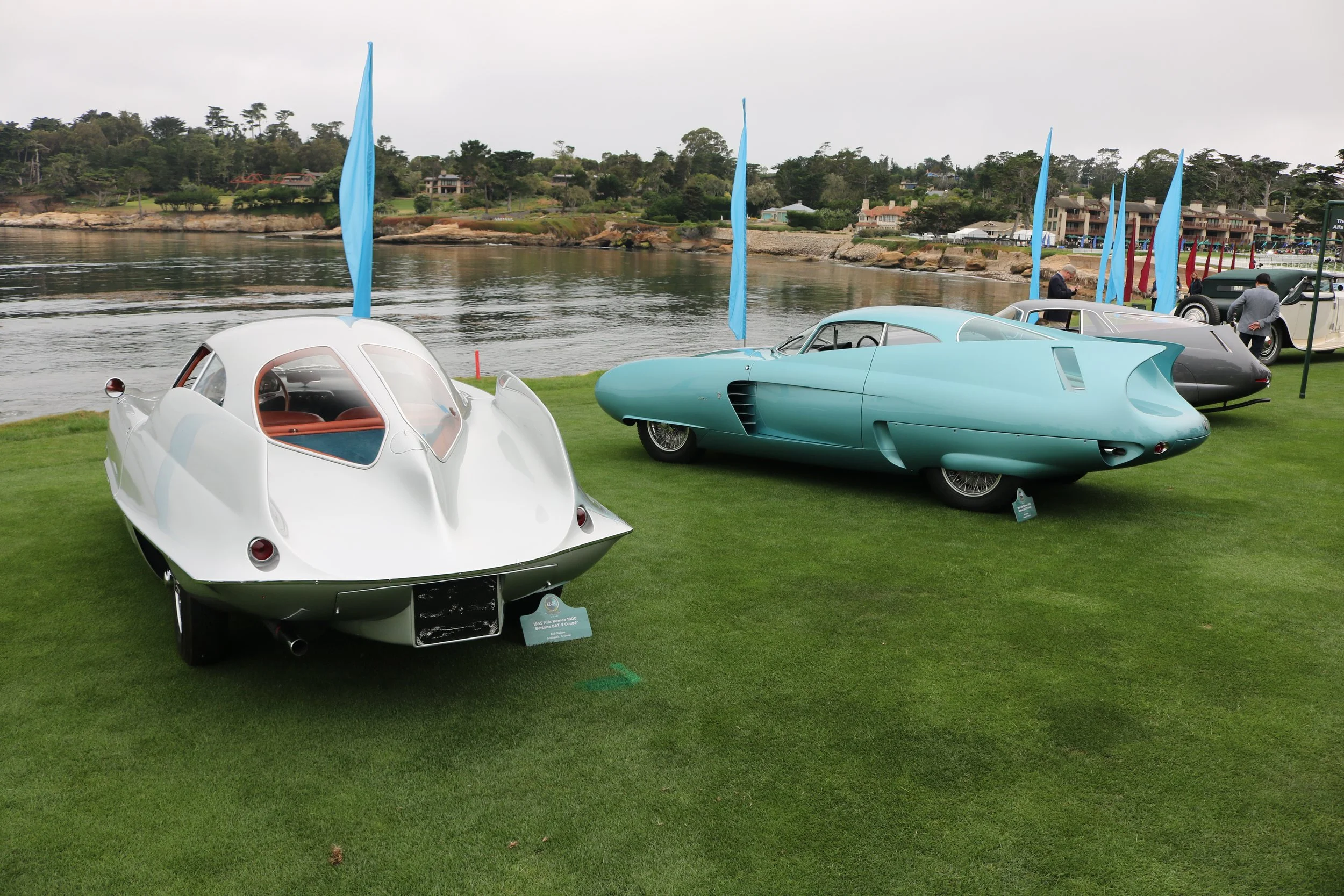
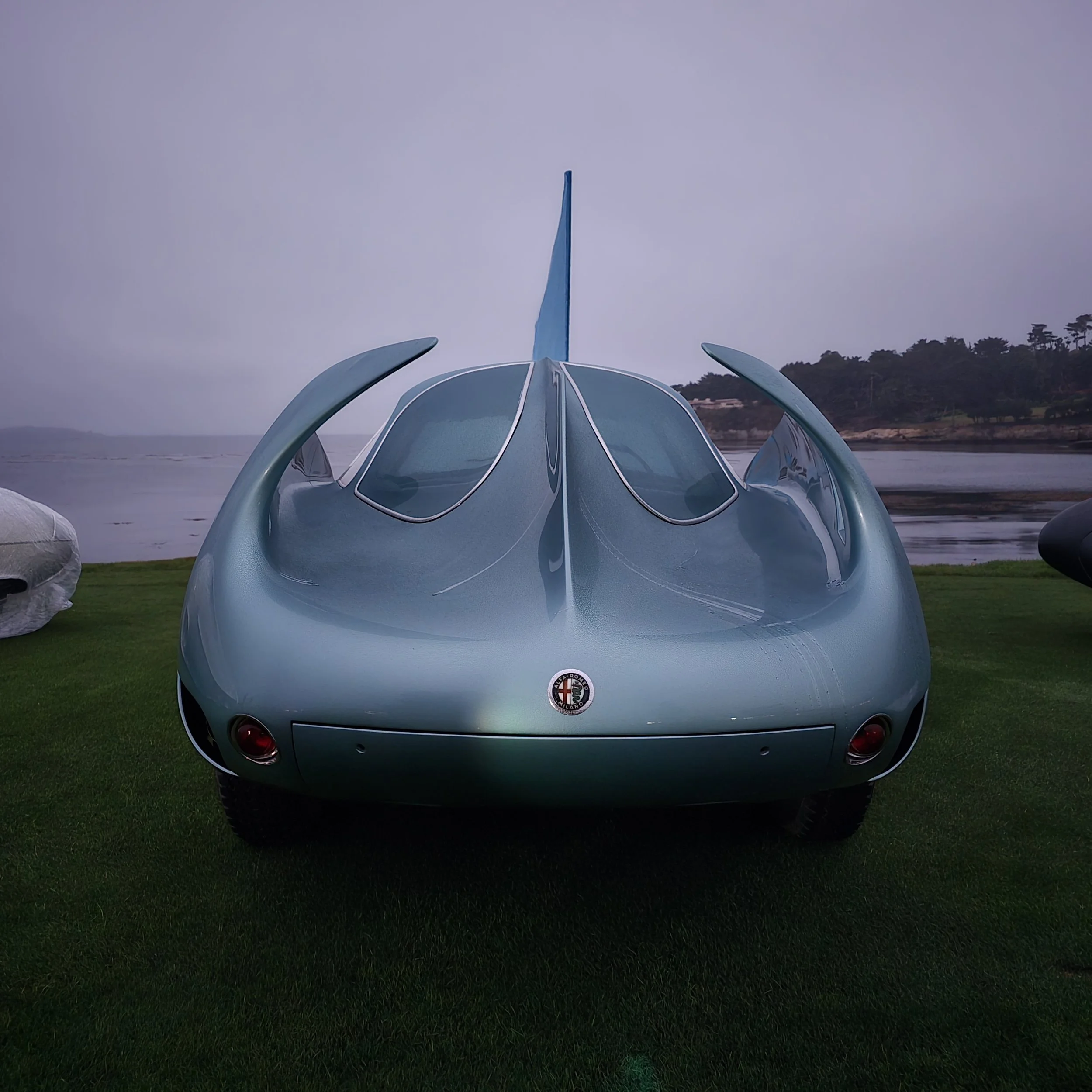
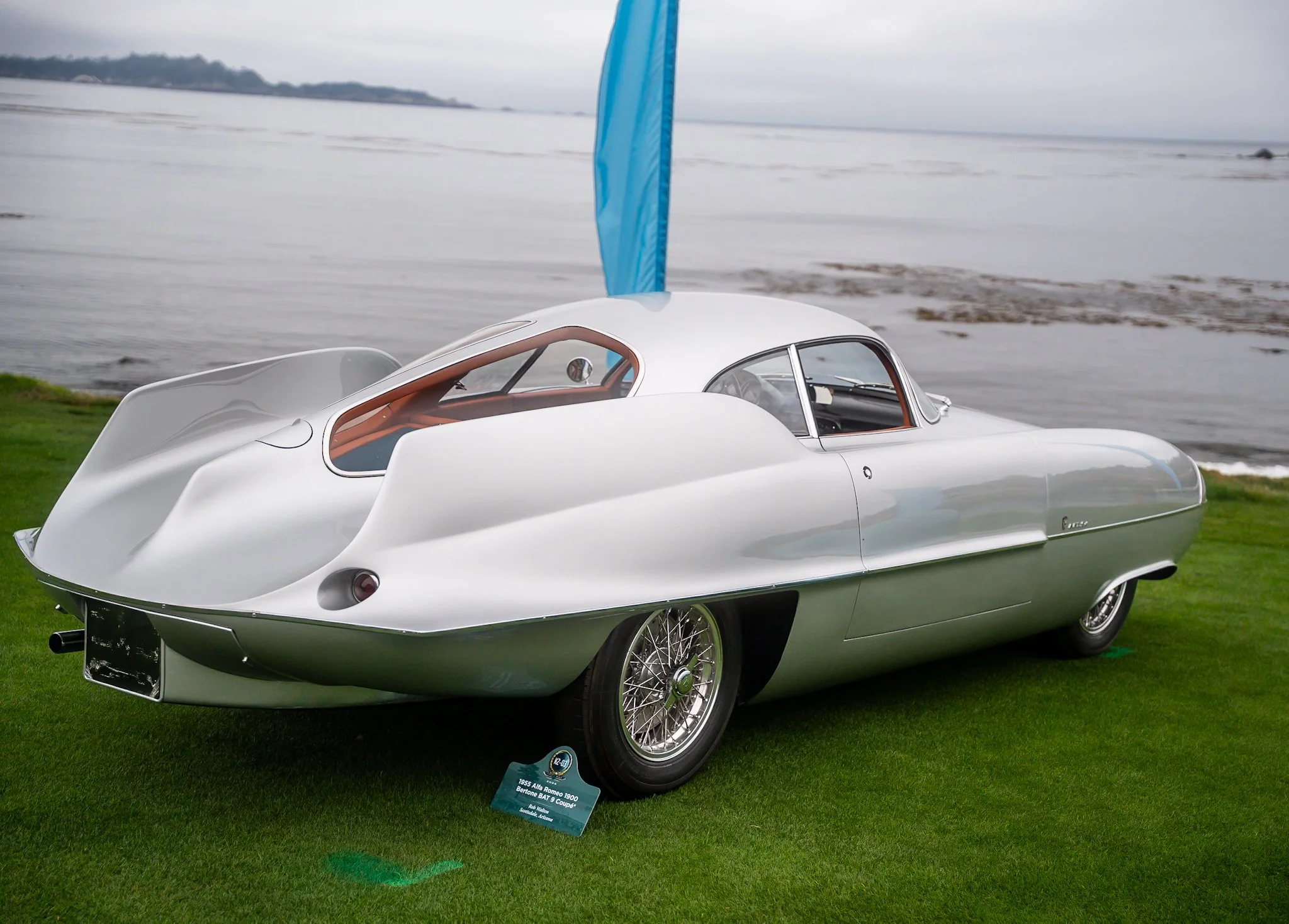
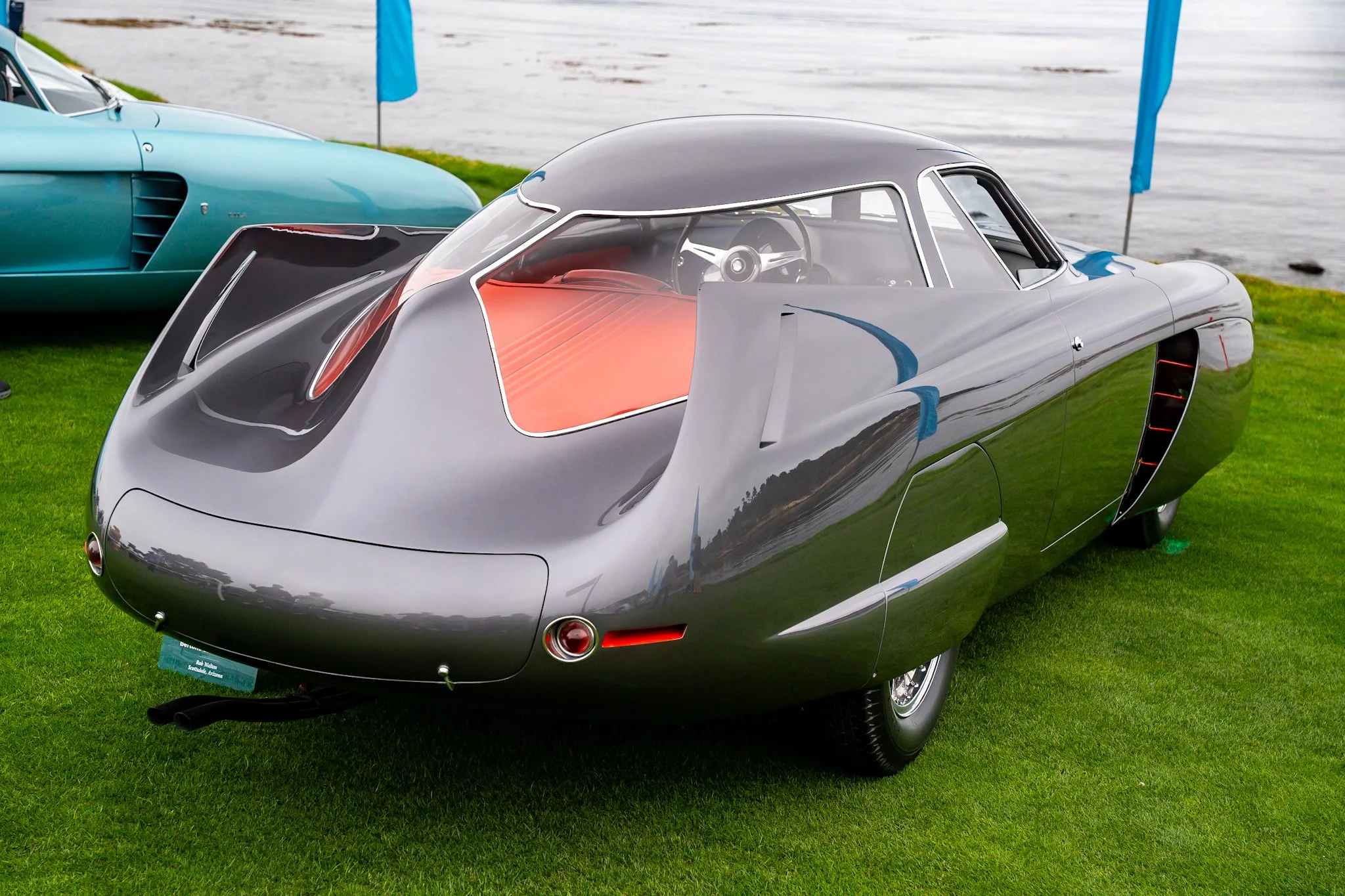
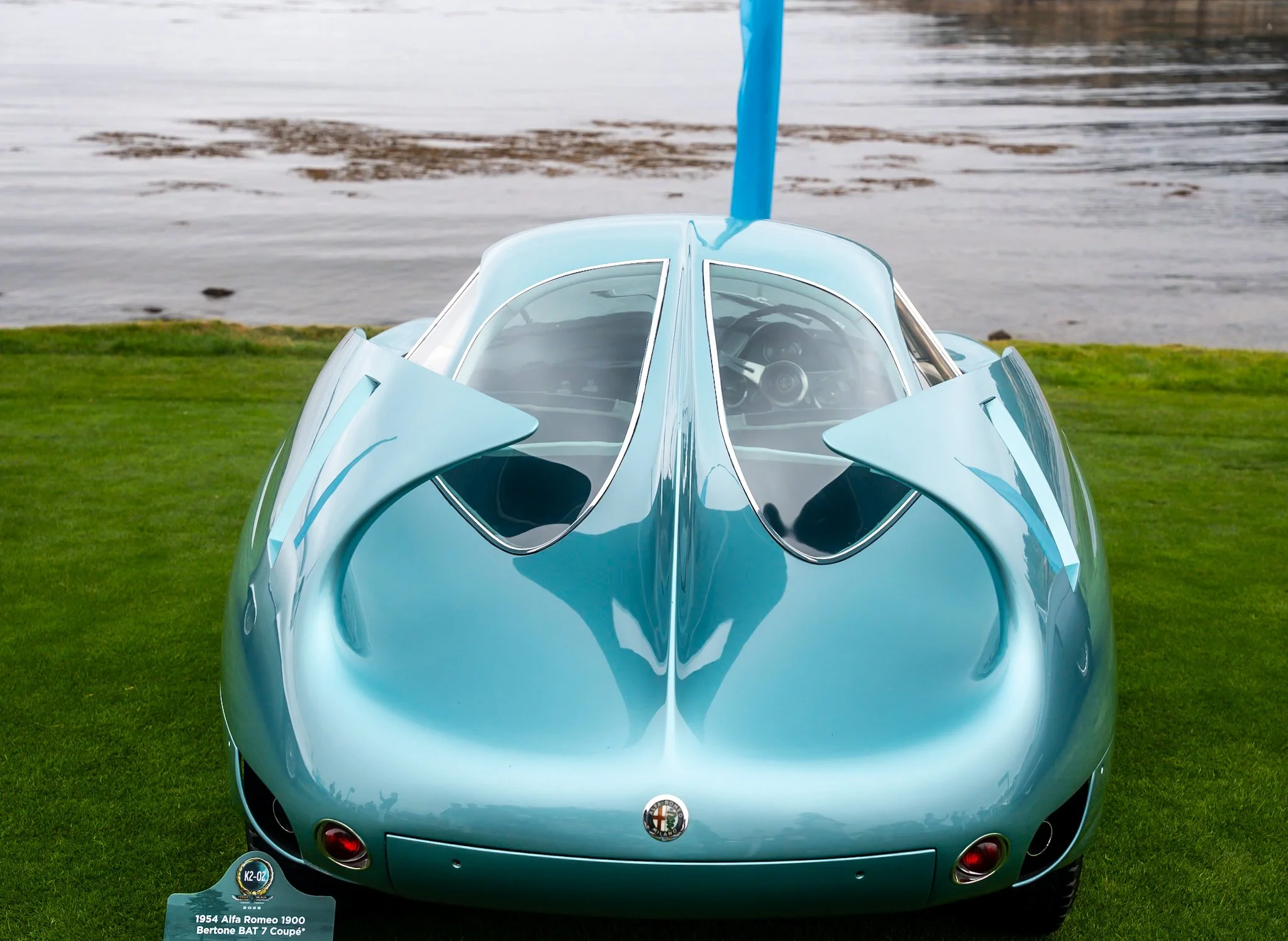
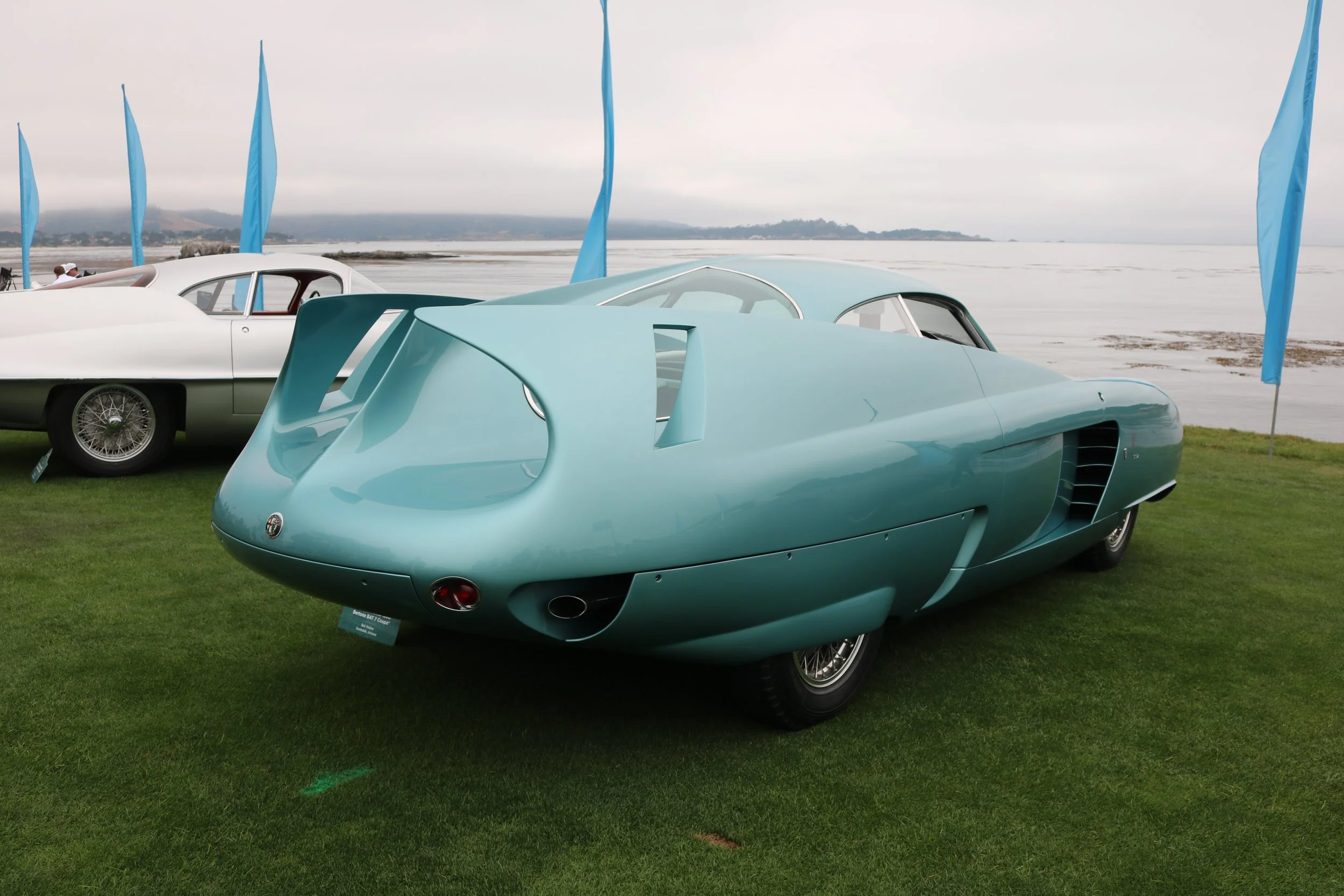
The trio—B.A.T. 5, B.A.T. 7 and B.A.T. 9—were created by Bertone in the 1950s, with Franco Scaglione shaping their extraordinary aerodynamic forms around the Alfa Romeo 1900 platform. B.A.T. stood for Berlinetta Aerodinamica Tecnica, and the cars were genuine experiments in reducing aerodynamic drag, even if they looked as though they had arrived from a 1950s prediction of the year 2000. Their exaggerated rear fins, enclosed forms and impossibly smooth bodywork remain startling more than seven decades later. Pebble Beach has particular history with the trio: the three cars were famously united there in 1989, reportedly the first time Nuccio Bertone himself saw all three of his creations together. For the Concours’ 75th anniversary in 2026, Pebble brought them together again, giving the B.A.T.s pride of place in its celebration of historically important exhibits—and even making the trio the stars of the official Concours poster. It was exactly the sort of display Pebble Beach does better than almost anywhere else: not merely putting three extraordinarily valuable cars on a lawn, but recreating a moment in automotive design history.
Sixty Years of the Lamborghini Miura
One of the most memorable displays at this year’s event was not competing for best of show at all.
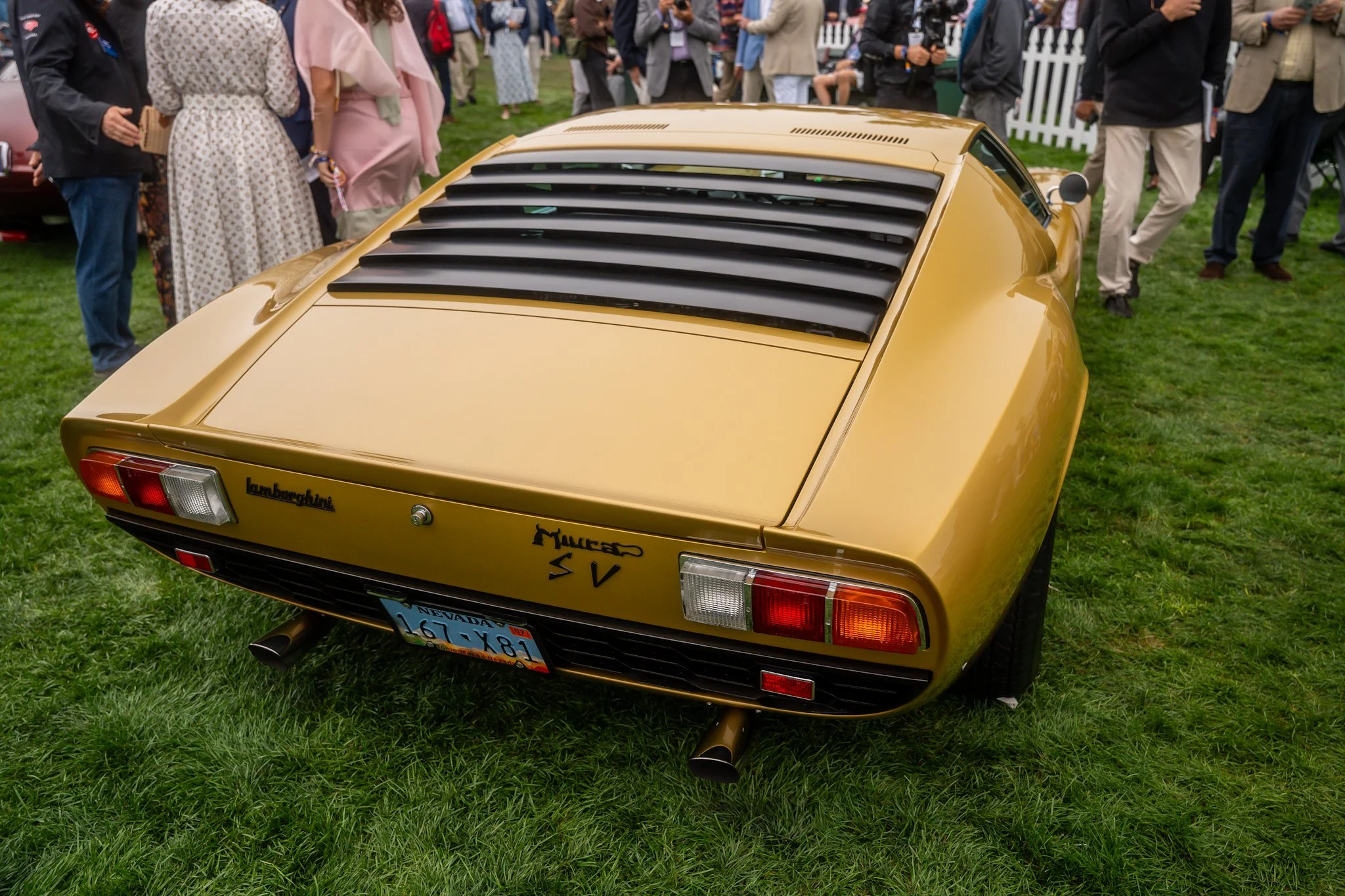
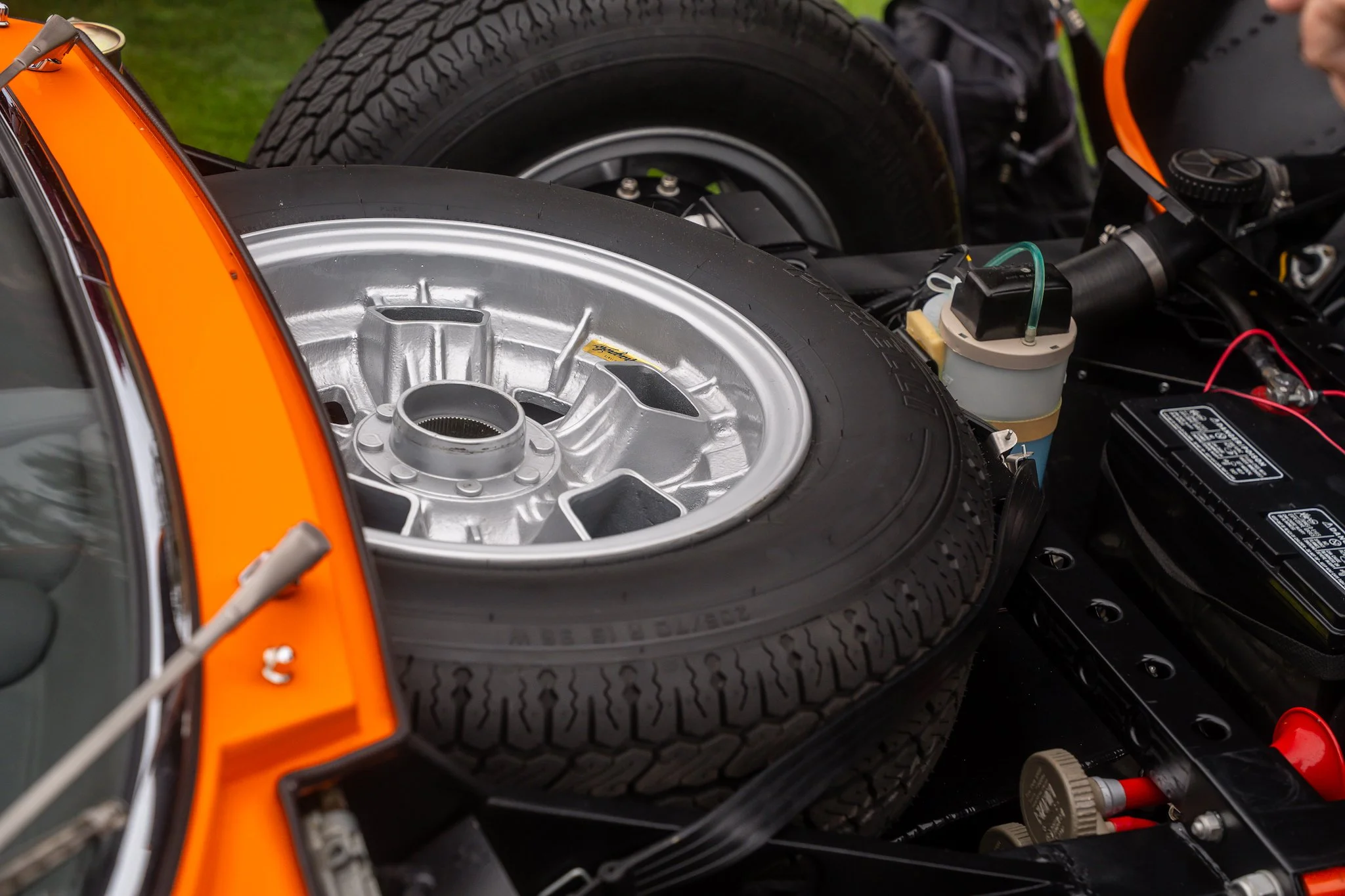
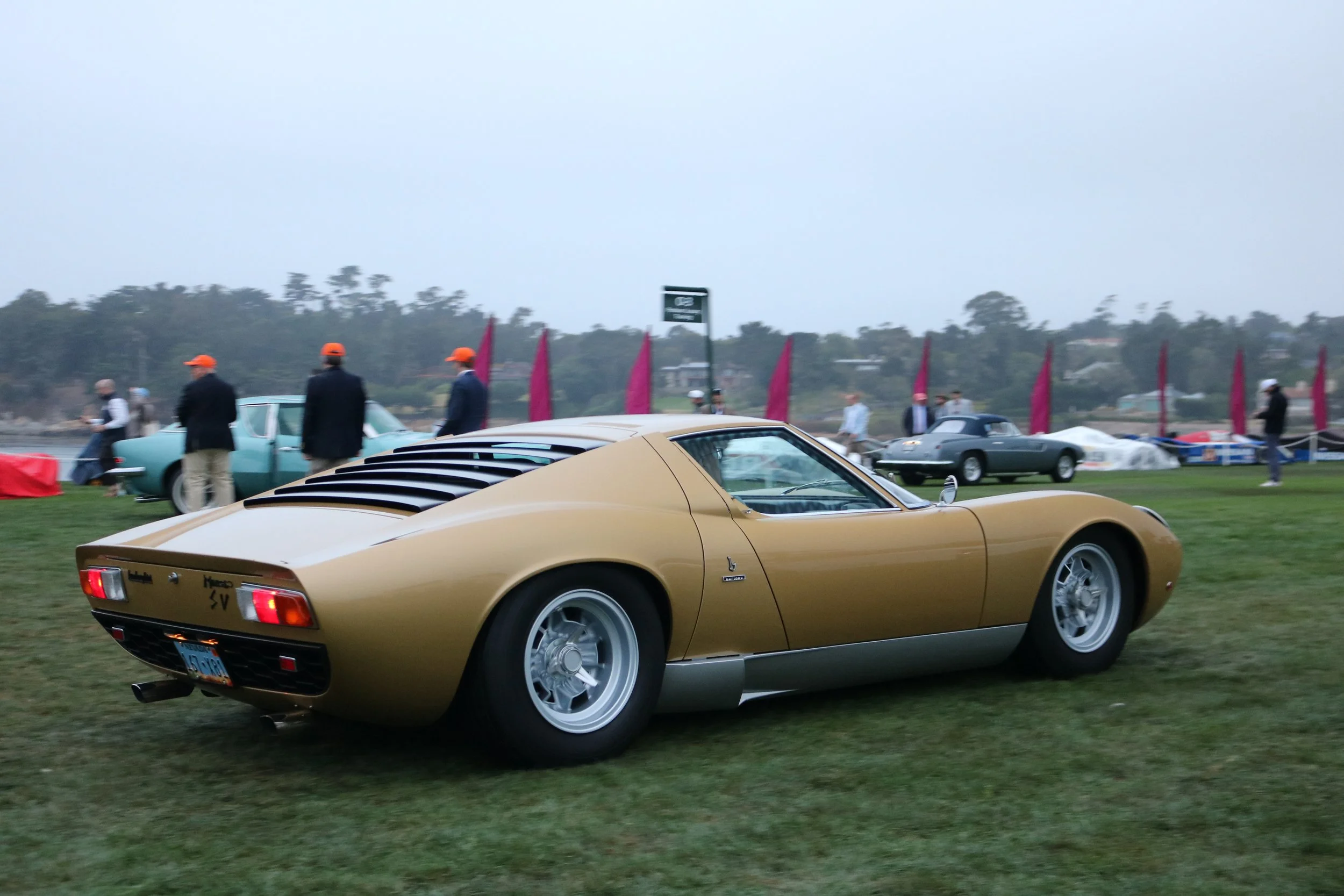
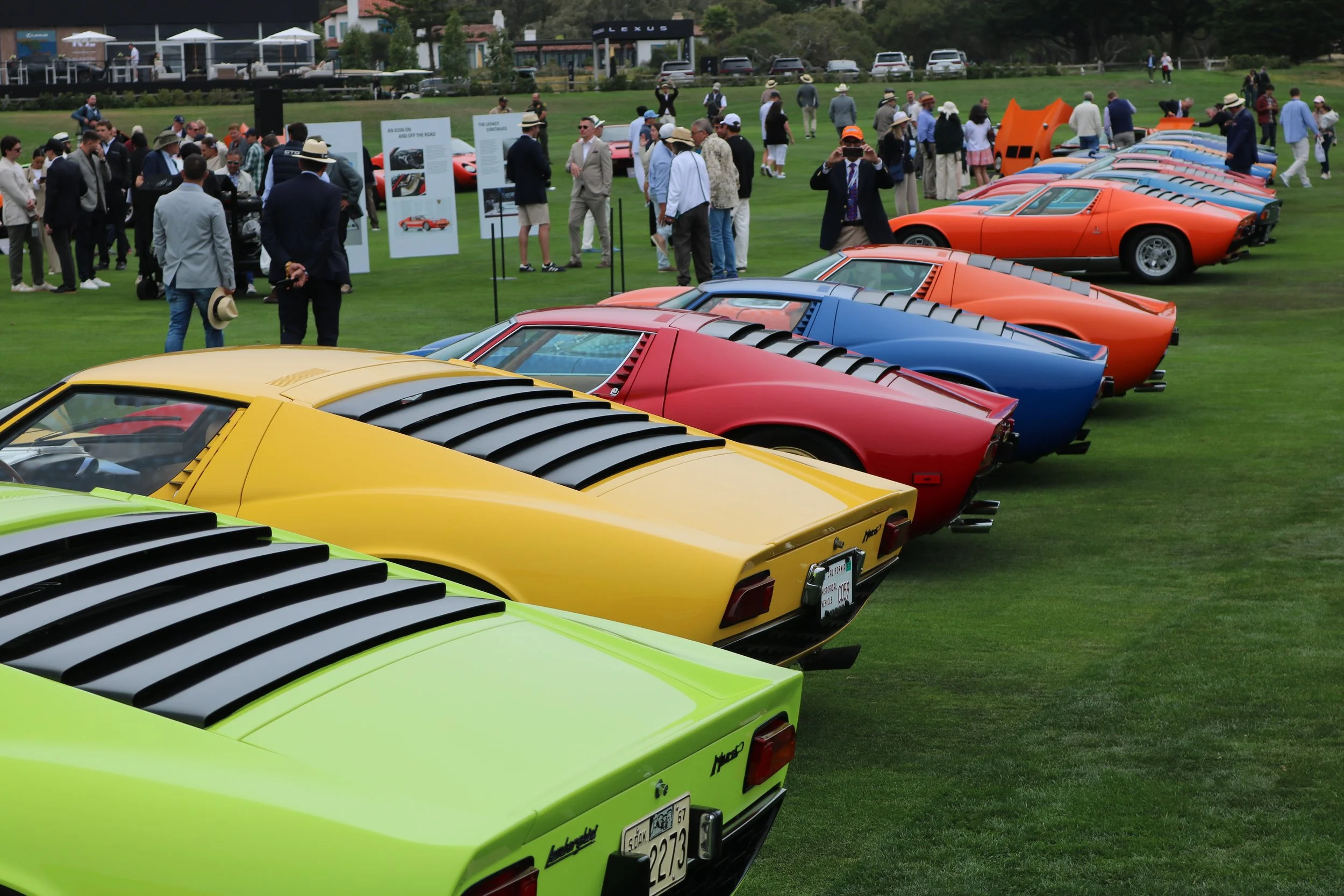
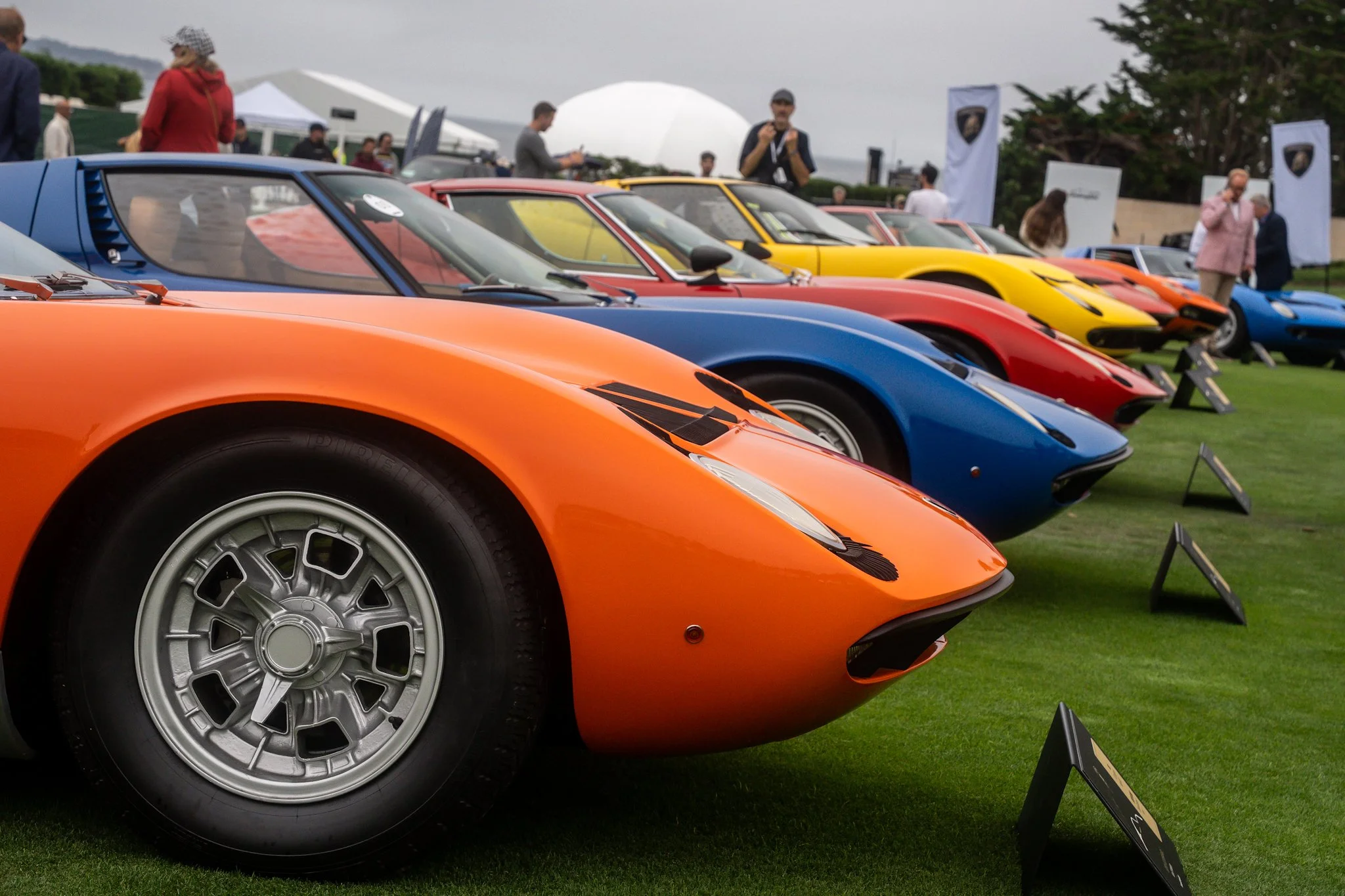
Pebble Beach opened its third fairway for a special all Lamborghini presentation celebrating the 60th anniversary of the Miura. The gathering was conceived as a major concentration of Miuras, building on earlier anniversary celebrations and giving one of the most important supercars ever made a setting worthy of its reputation.
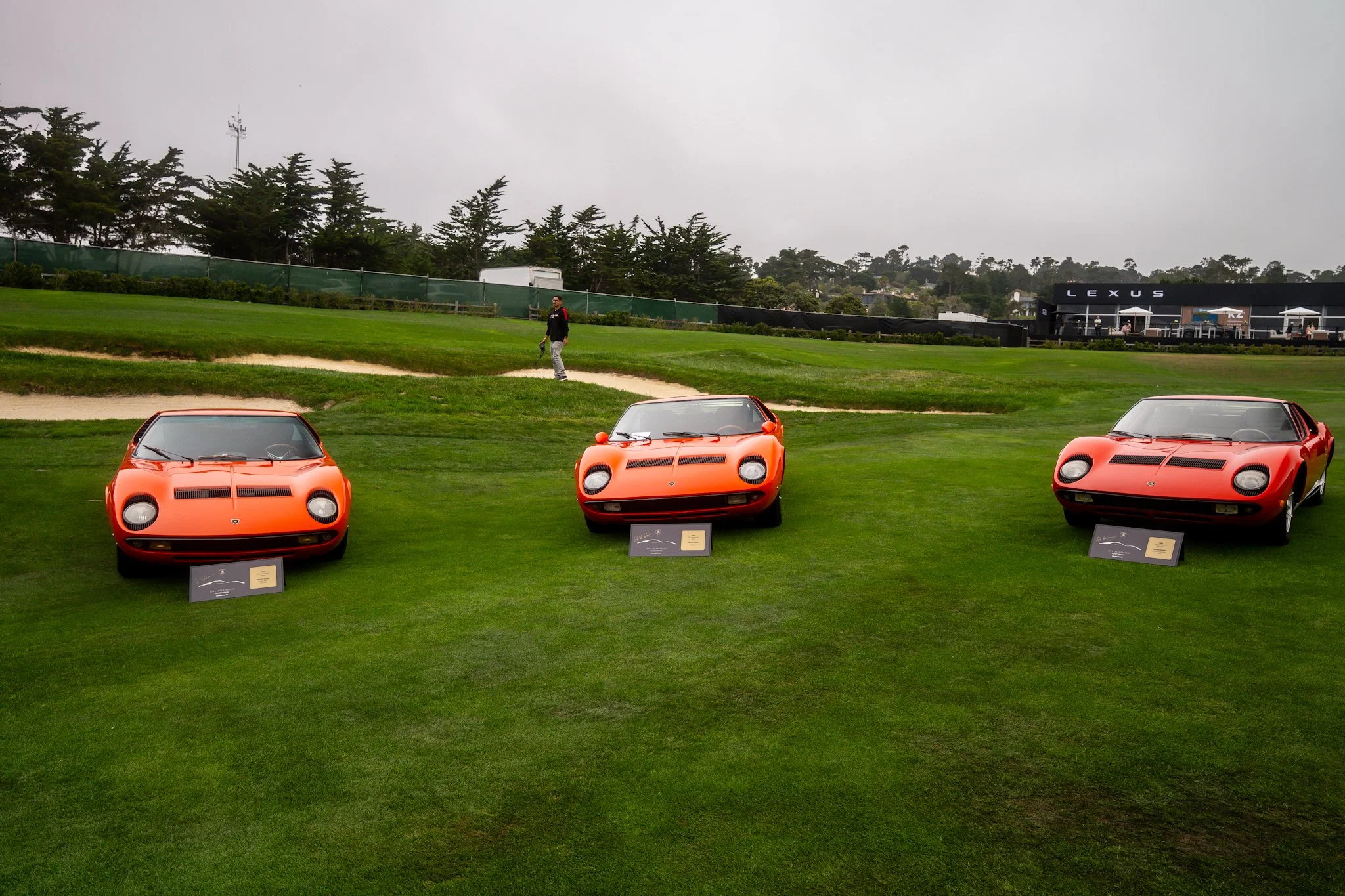
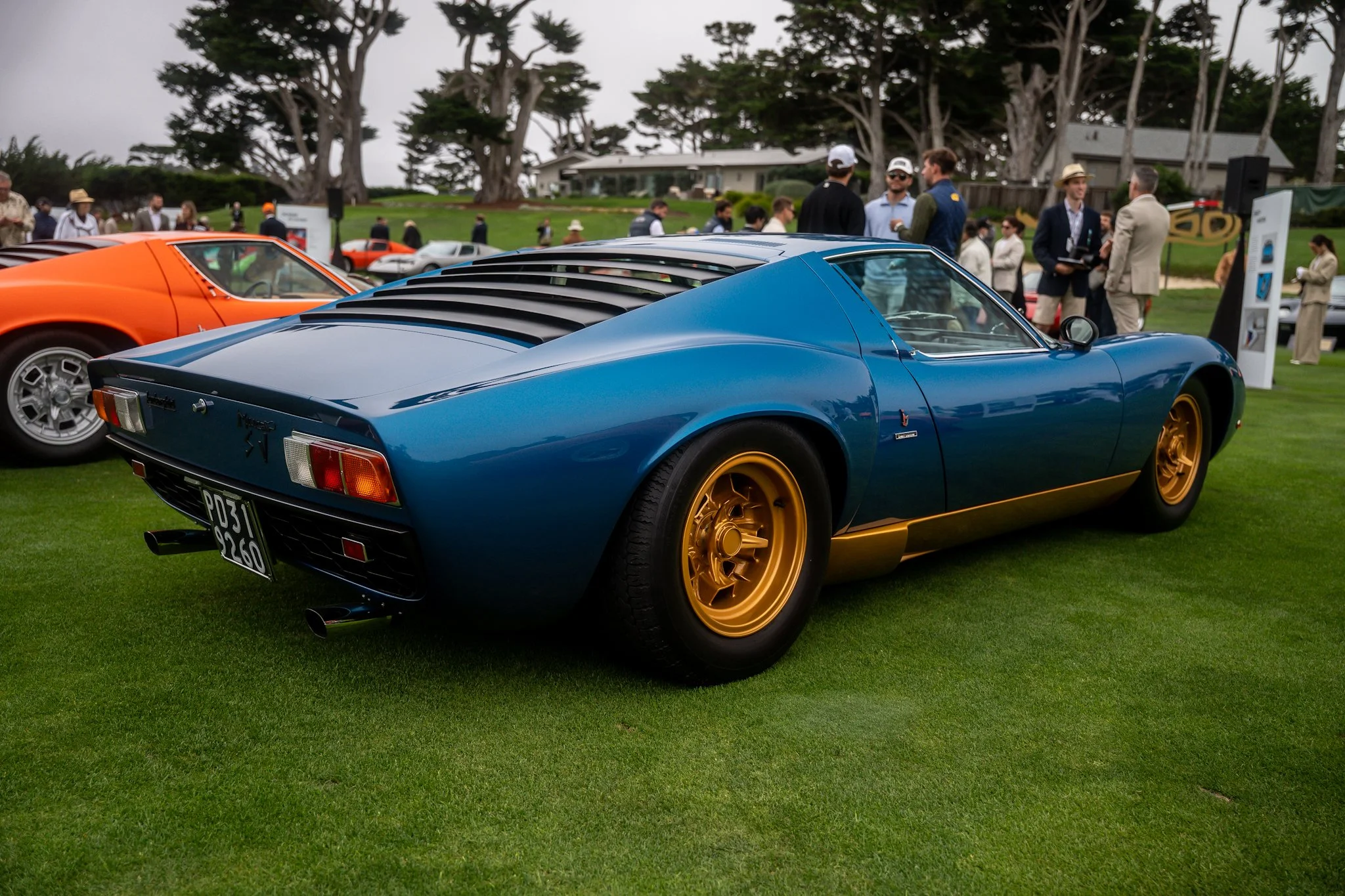
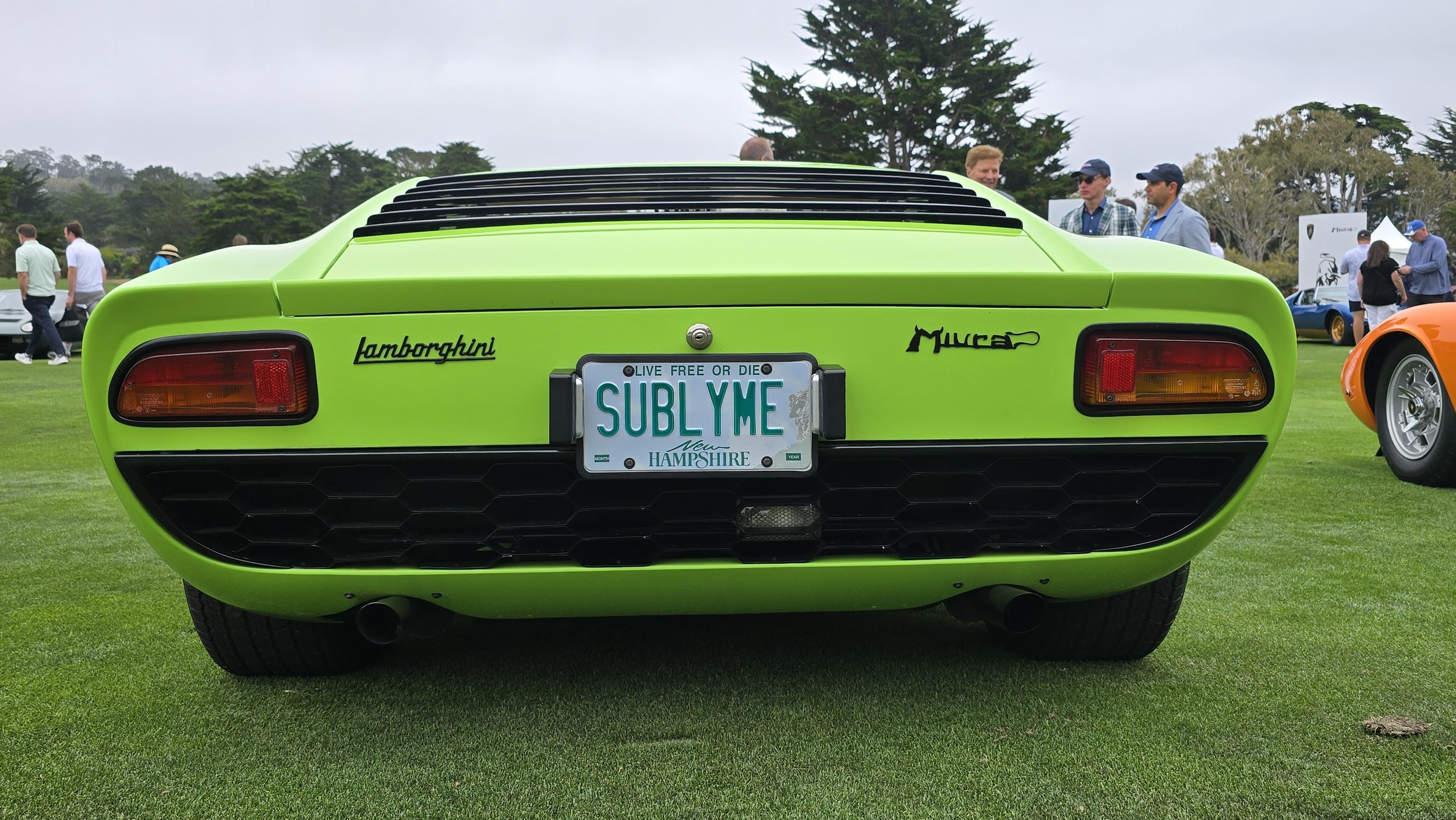
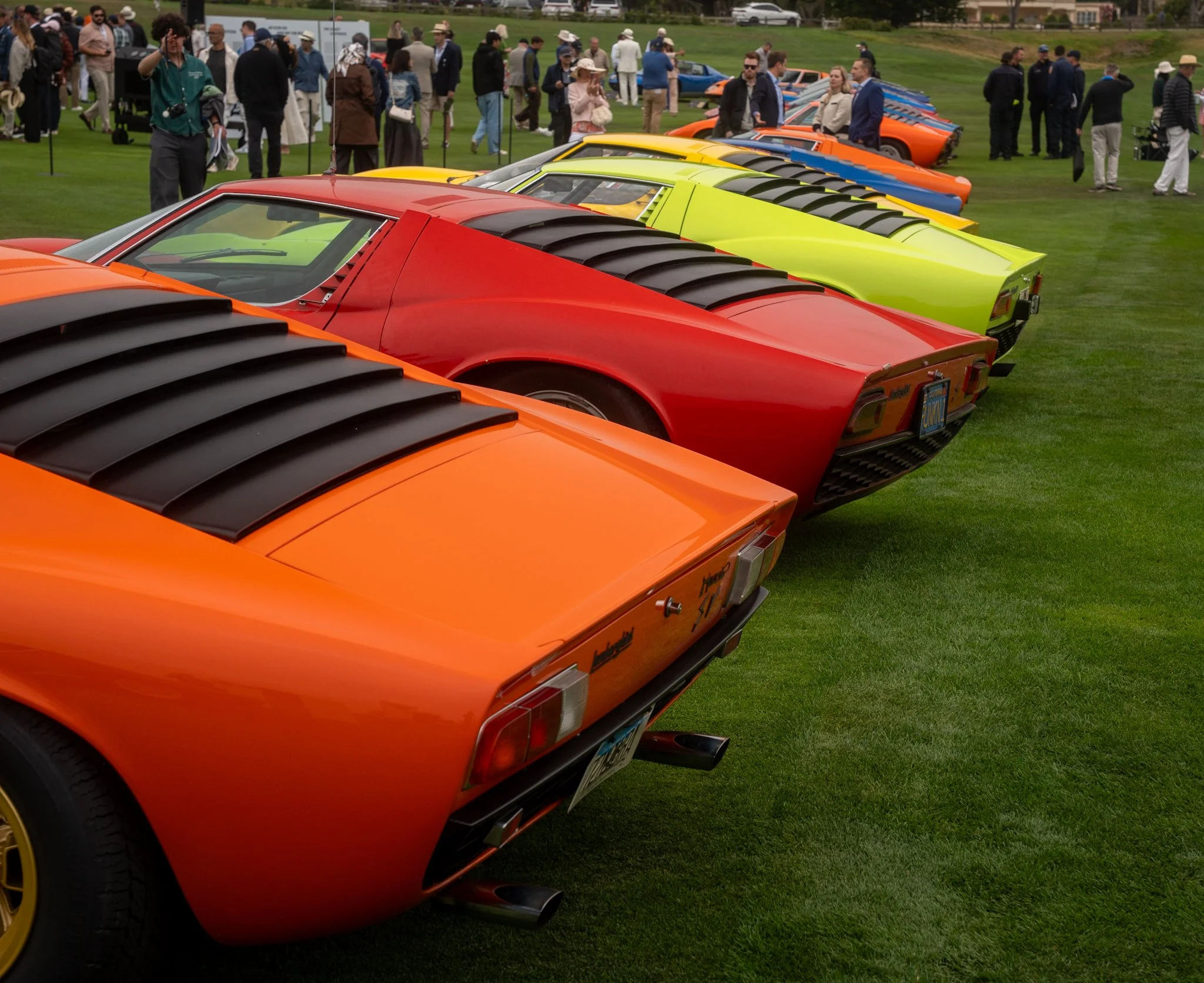
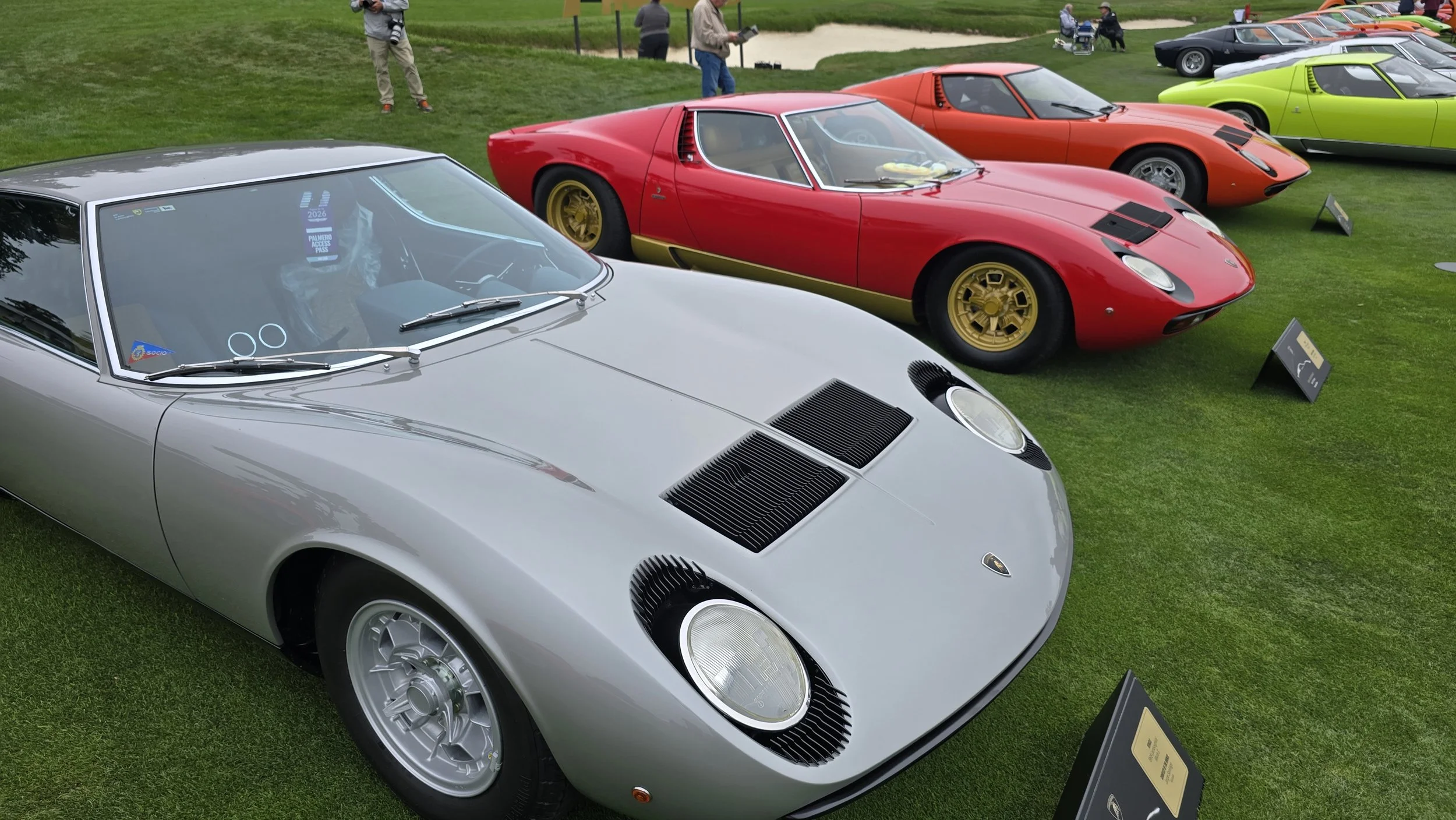
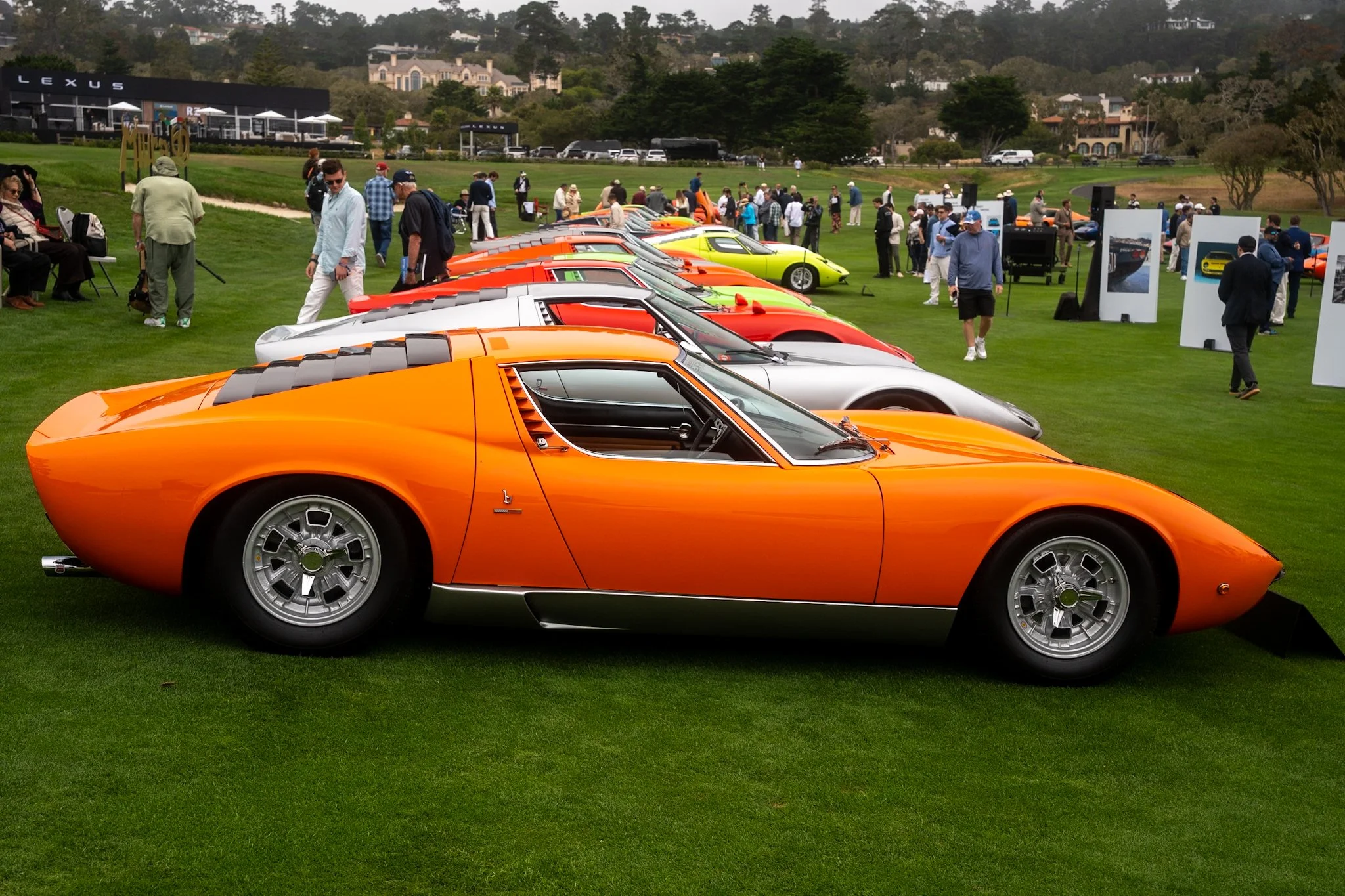
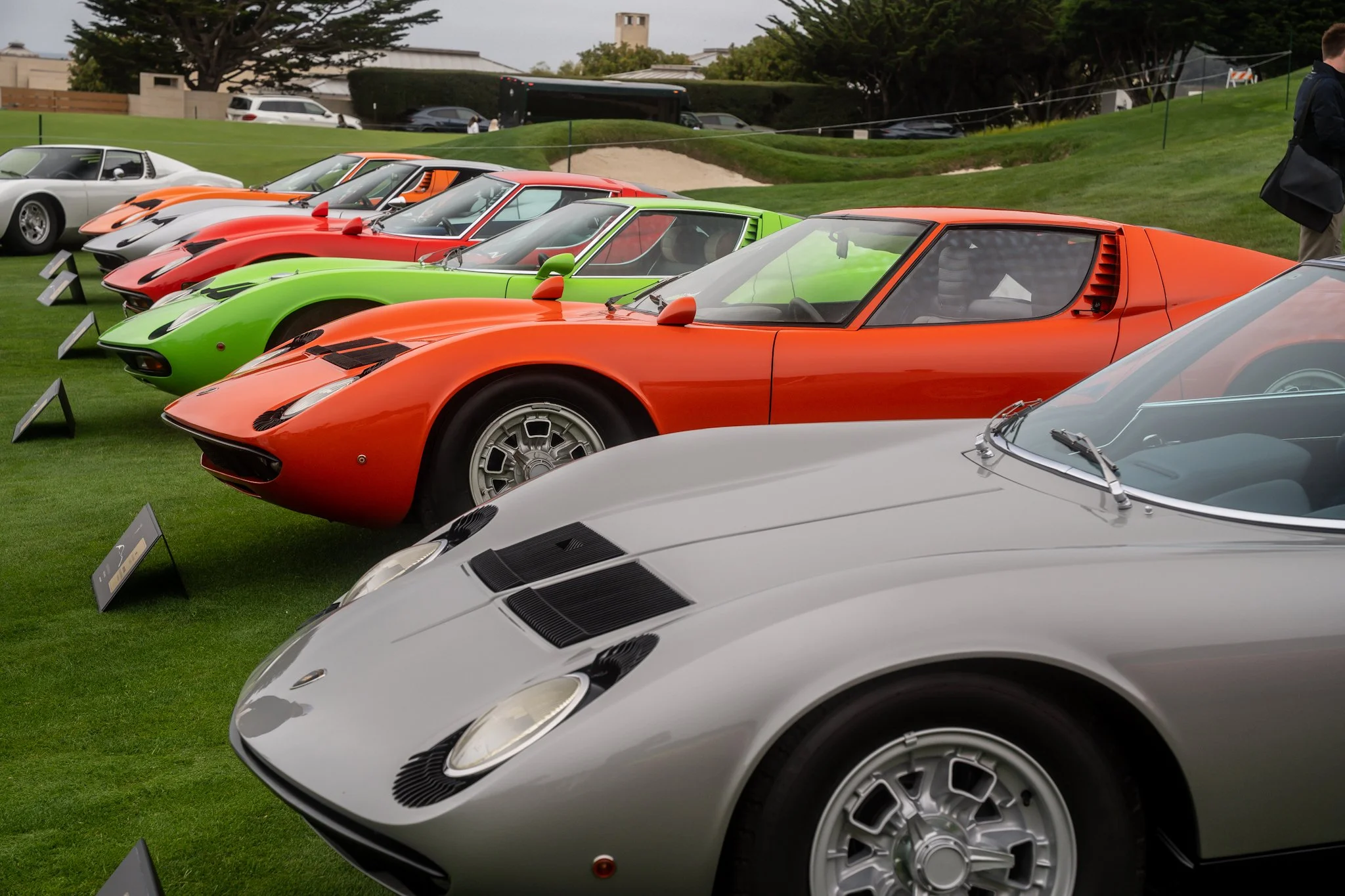
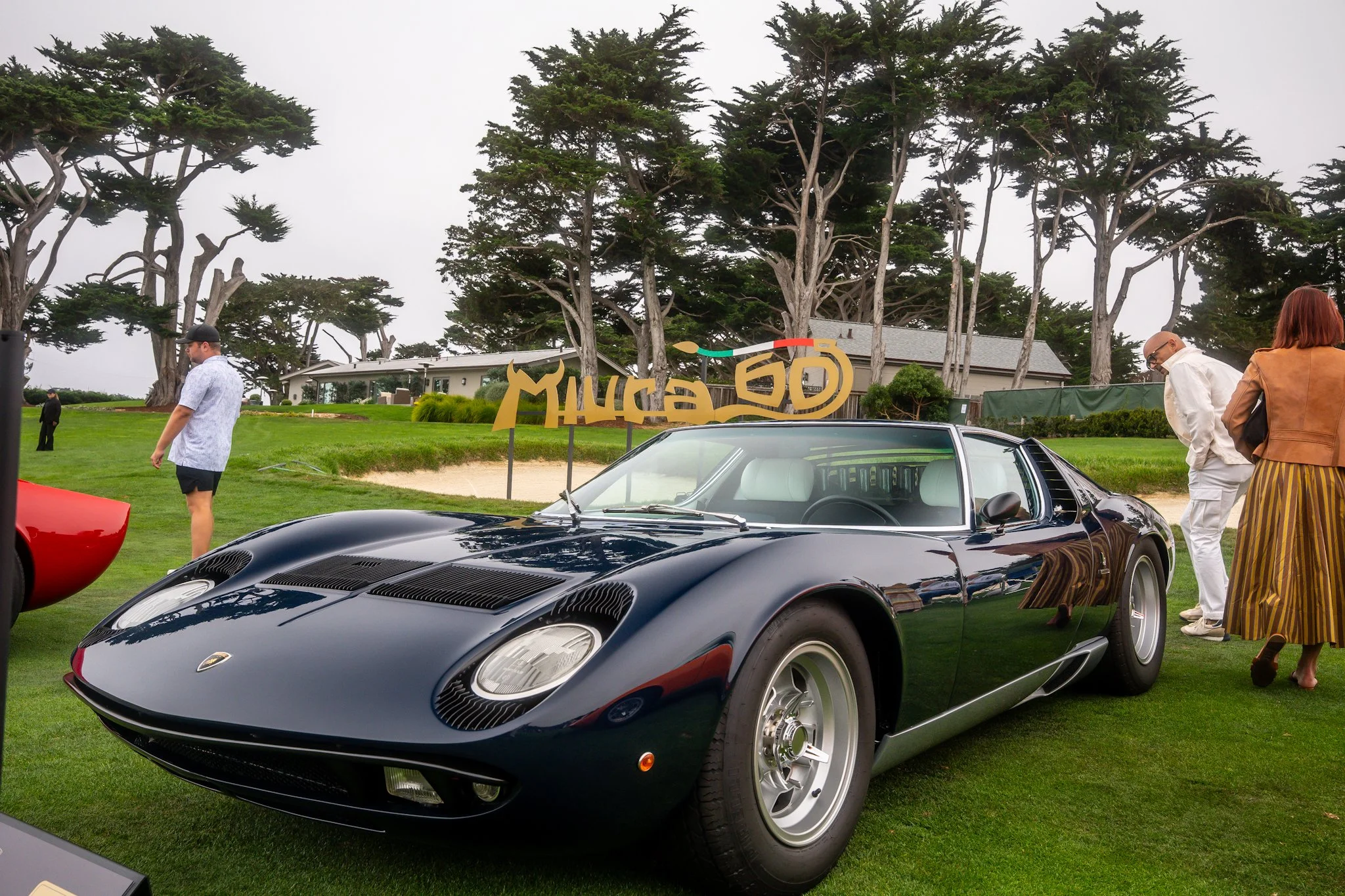
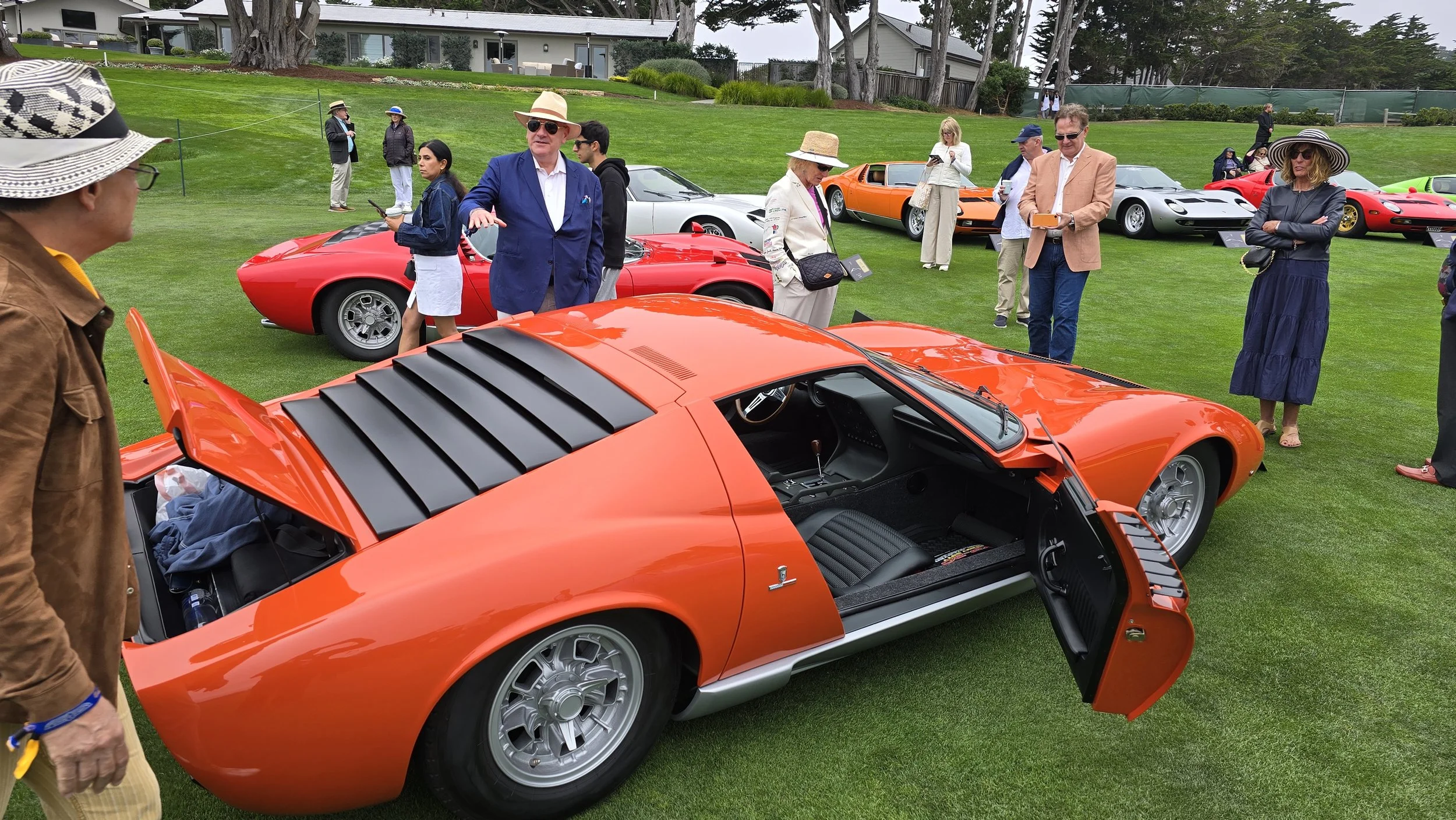
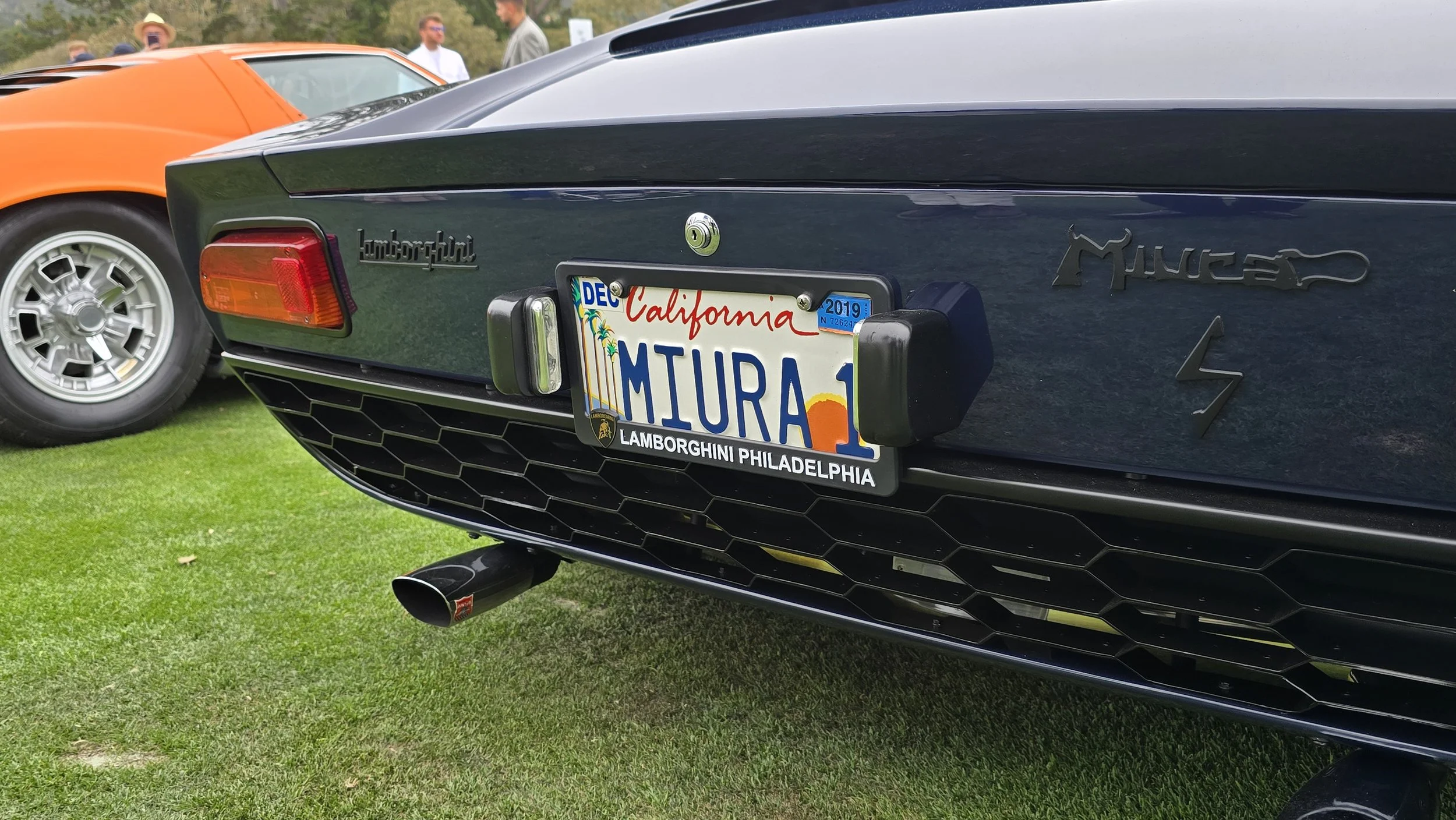
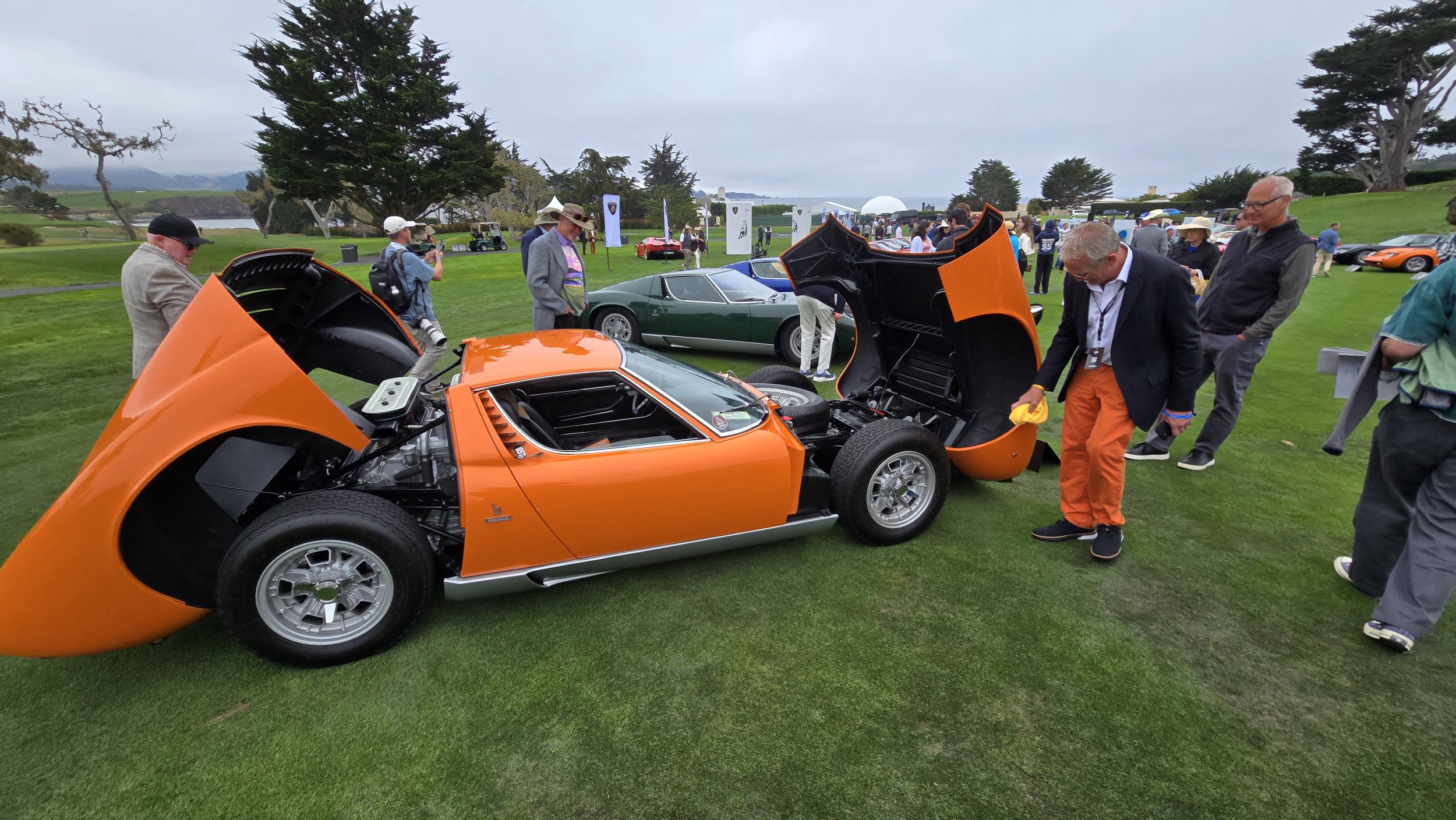
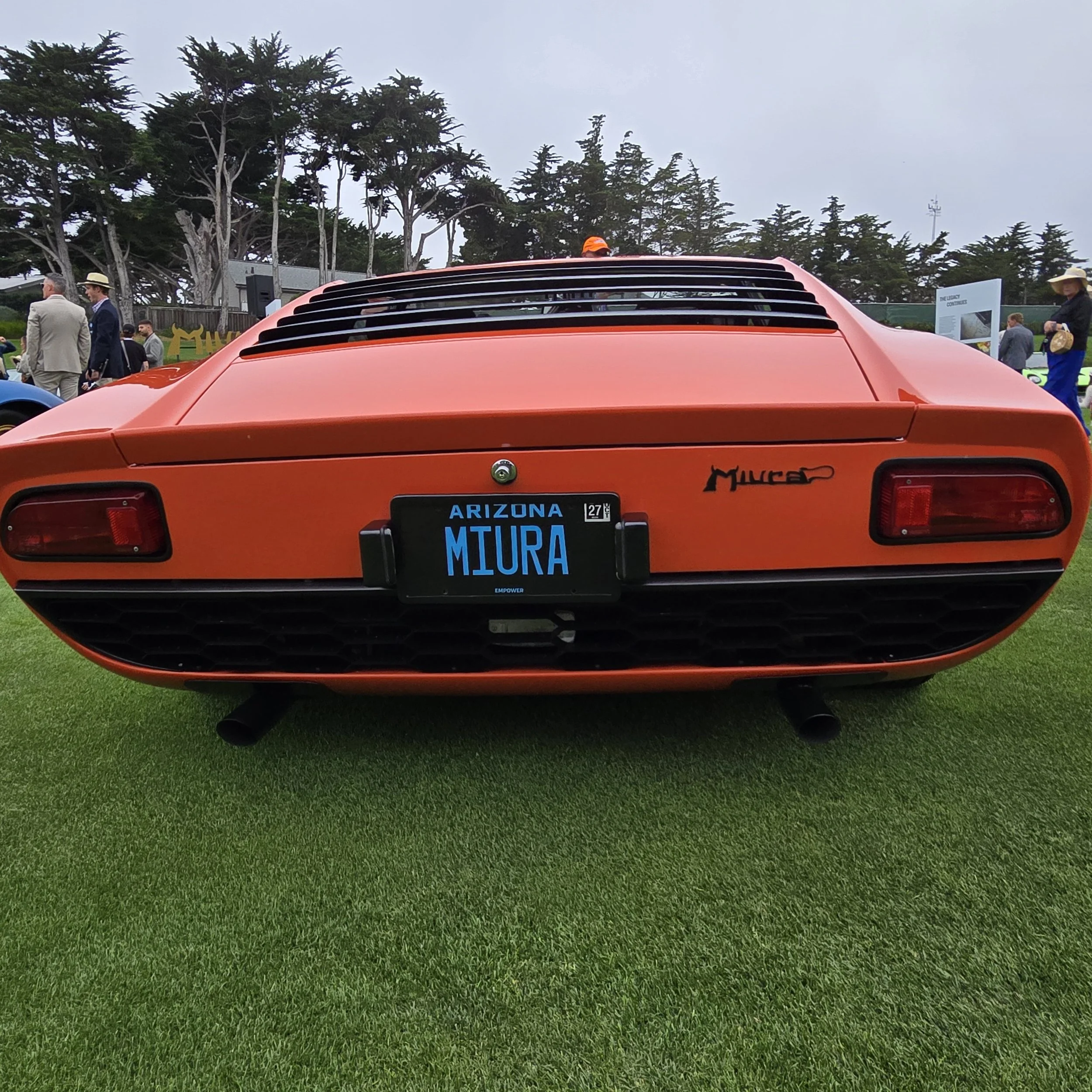
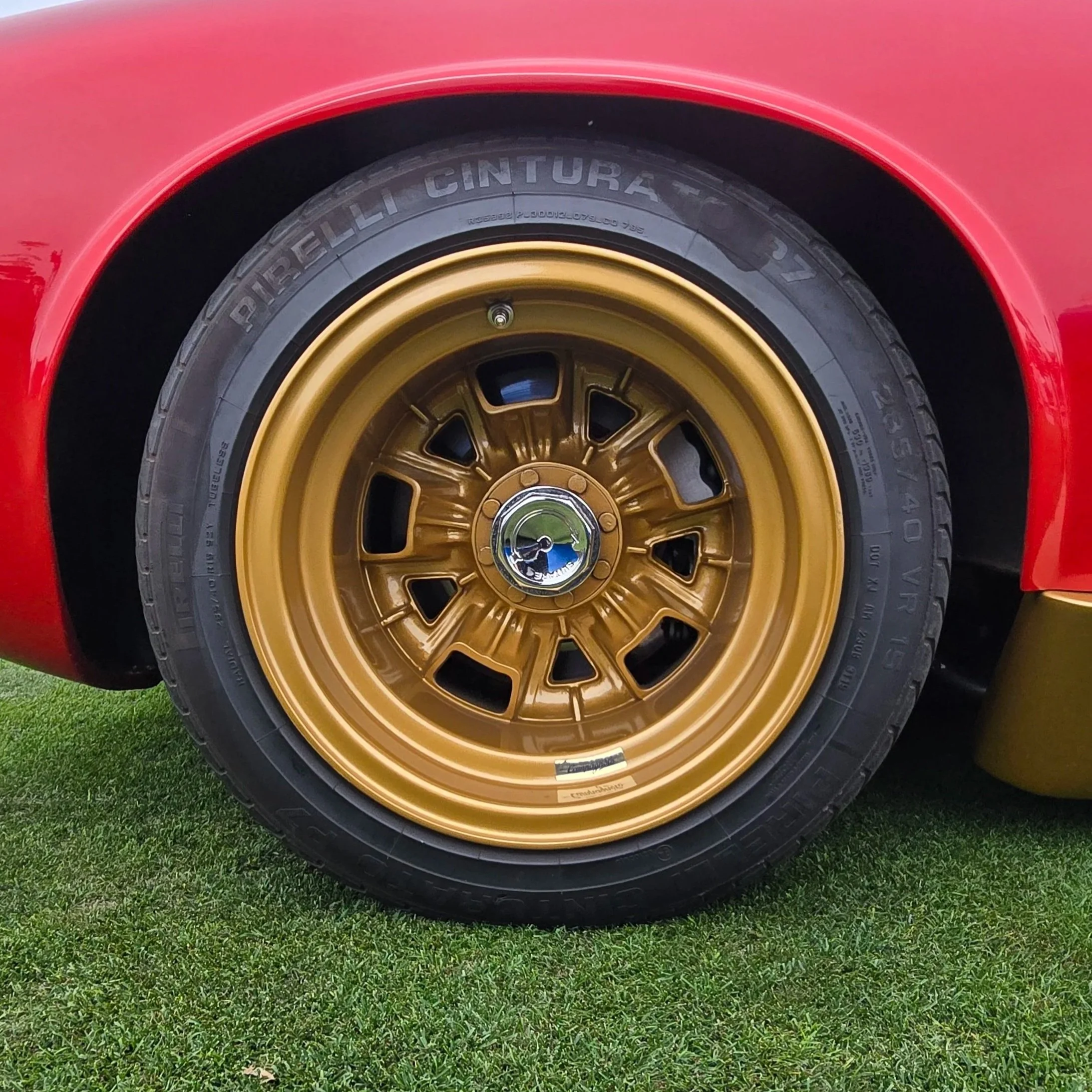
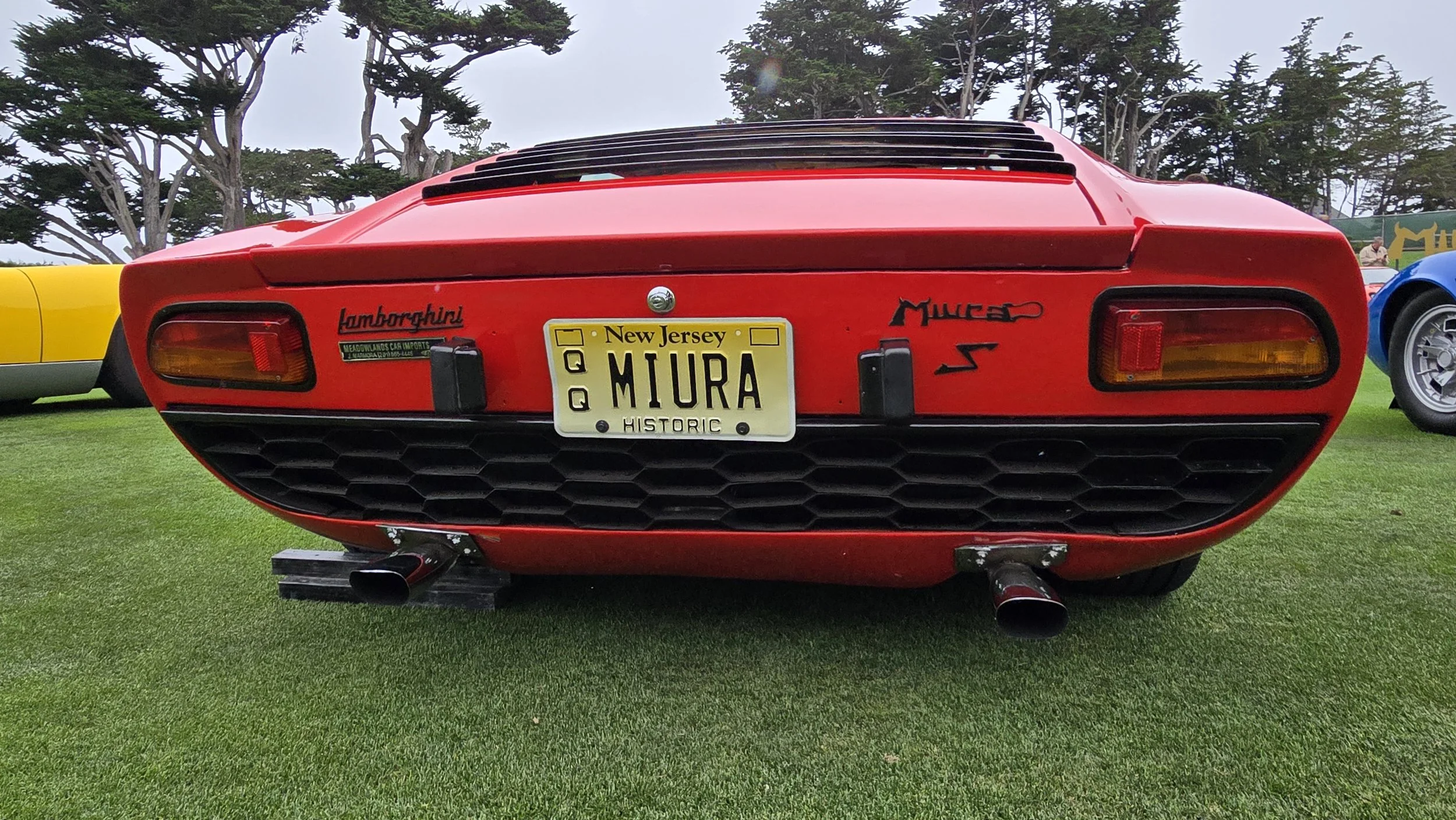
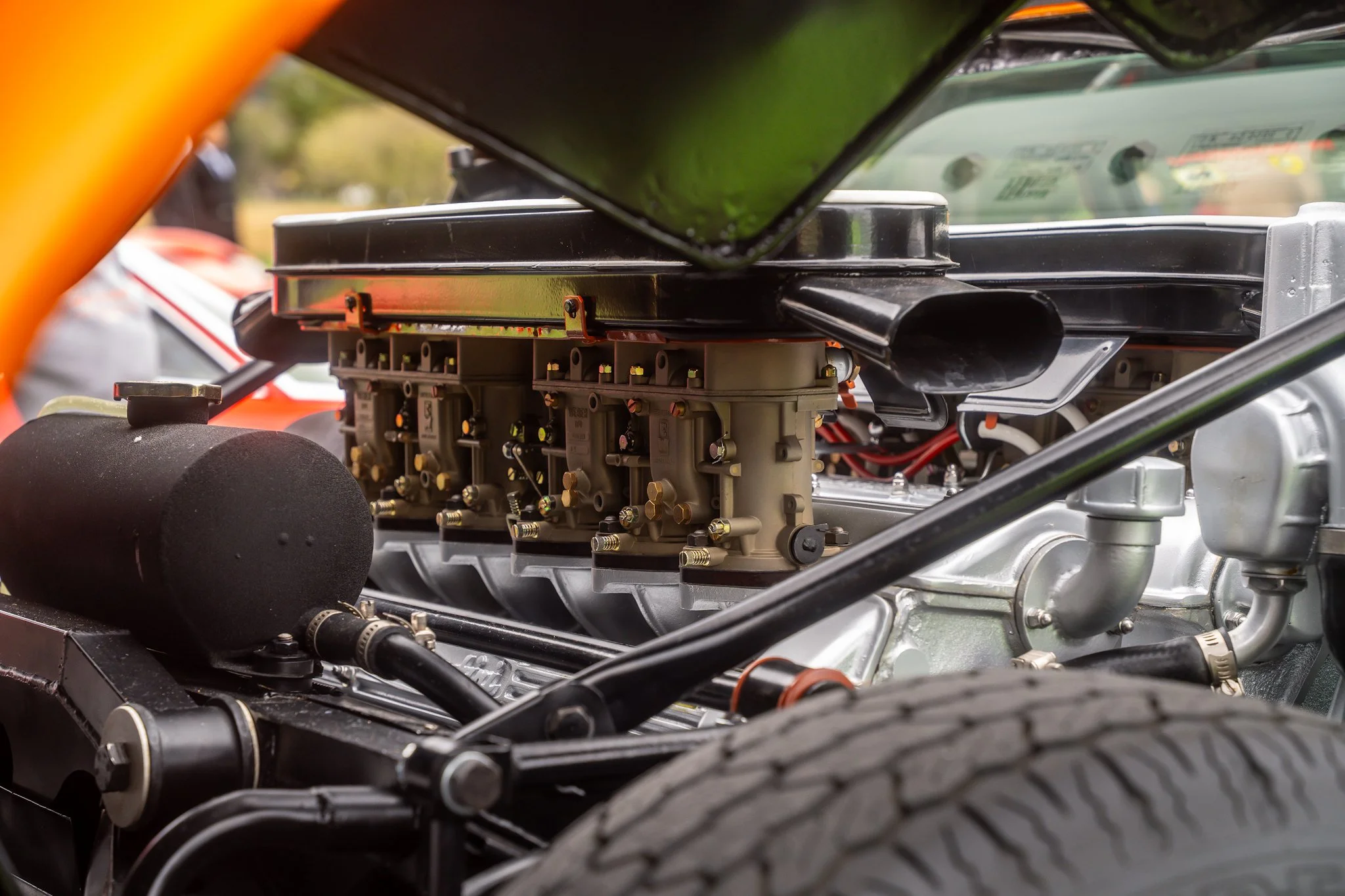
It is difficult to imagine a car better suited to Pebble Beach. The Miura occupies that tiny piece of automotive history where mechanical architecture and visual design simultaneously changed the rules. When Lamborghini revealed the production Miura in 1966, putting a transverse V12 immediately behind the occupants in an achingly low Marcello Gandini-designed Bertone body, it provided the template for what would eventually be considred the first “supercar.”
Sixty years later, a field full of them still looked outrageous.
And that is perhaps the greatest compliment you can give the Miura. Plenty of cars become historically important. Far fewer remain beautiful after six decades, and fewer still retain the ability to stop people walking in their tracks when several dozen eight-figure automobiles are sitting nearby.
The display also provided a useful counterpoint to Pebble Beach’s more formal judged classes. These were not simply museum objects arranged chronologically. Together they illustrated the evolution from the early P400 through the S and SV, while reminding visitors just how much variation existed within what is now viewed as a single iconic shape. Though some in the field were pristine condition and probably could have been judged with the rest of the cars on the 18th fairway, others were clearly well loved and regularly driven as they should be.
The Other End of the Timeline: The Concept Lawn
And then there is the Concept Lawn, Pebble Beach’s wonderfully strange portal from automotive history into whatever comes next. every year we see several concets that have been teased, in pictures or words, elsewhere and built up our anticiaption. On the other hand, there are always others place on the putting green in front of the lodge that have escaped our social media feeds.
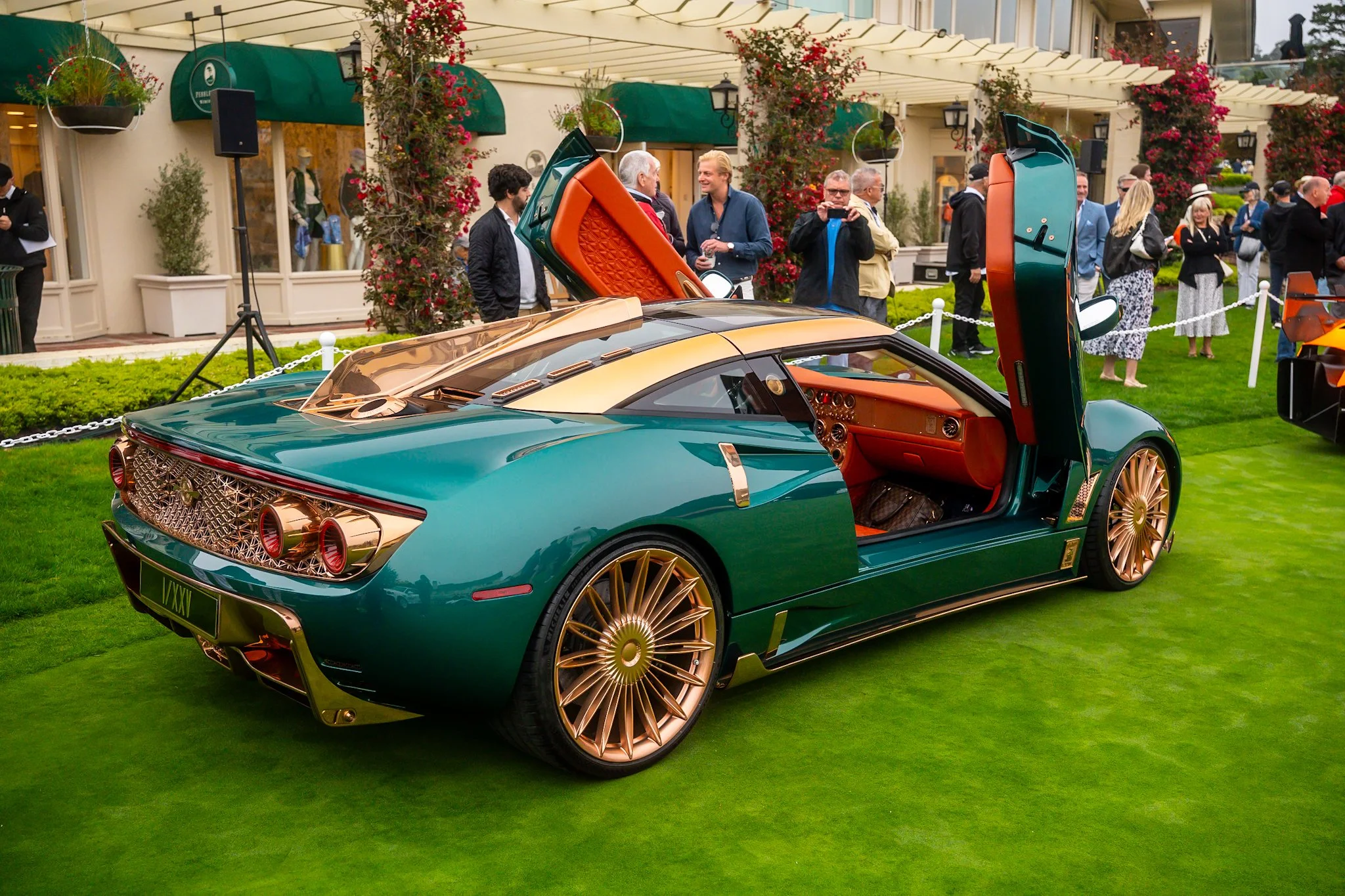
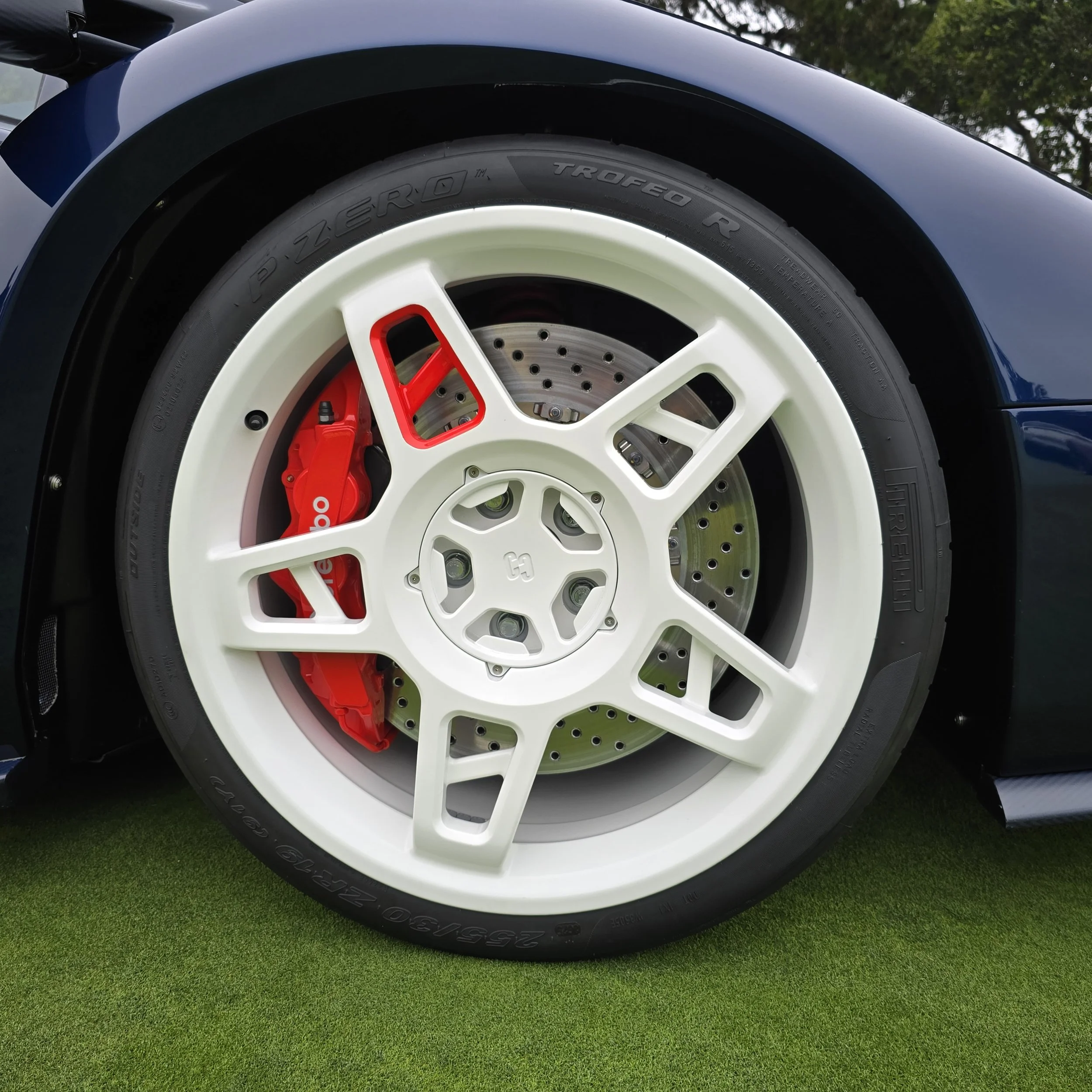
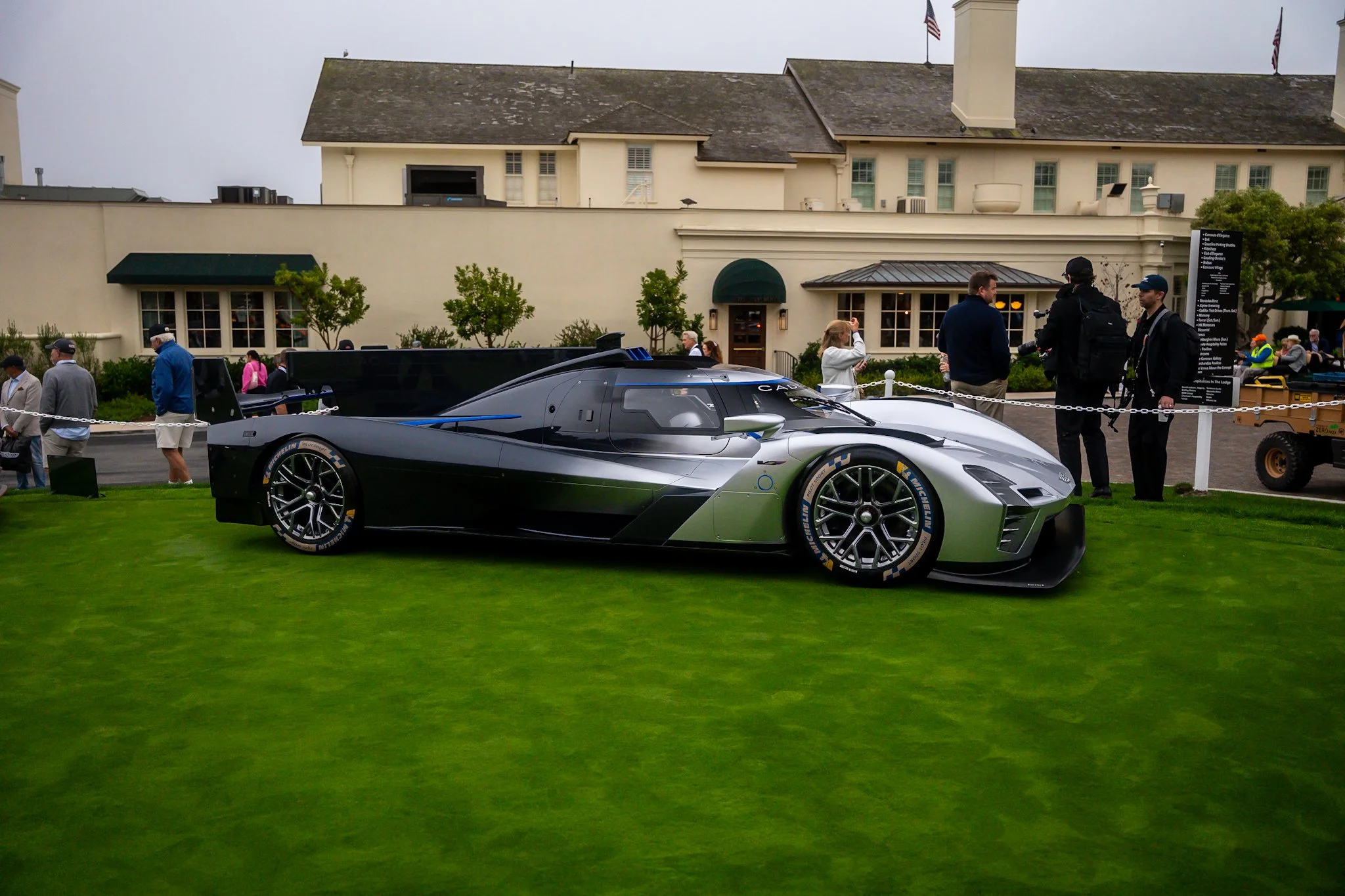
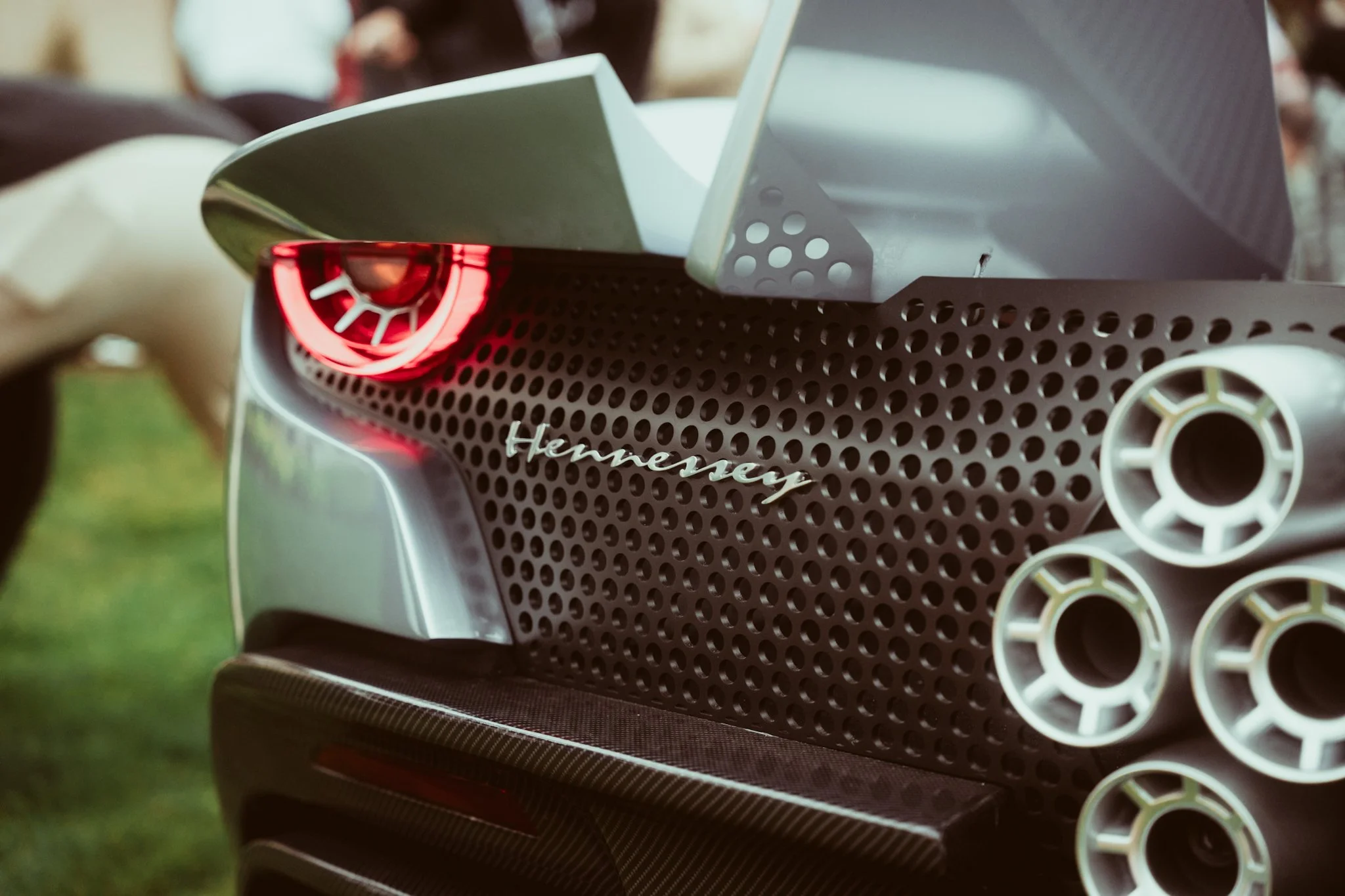
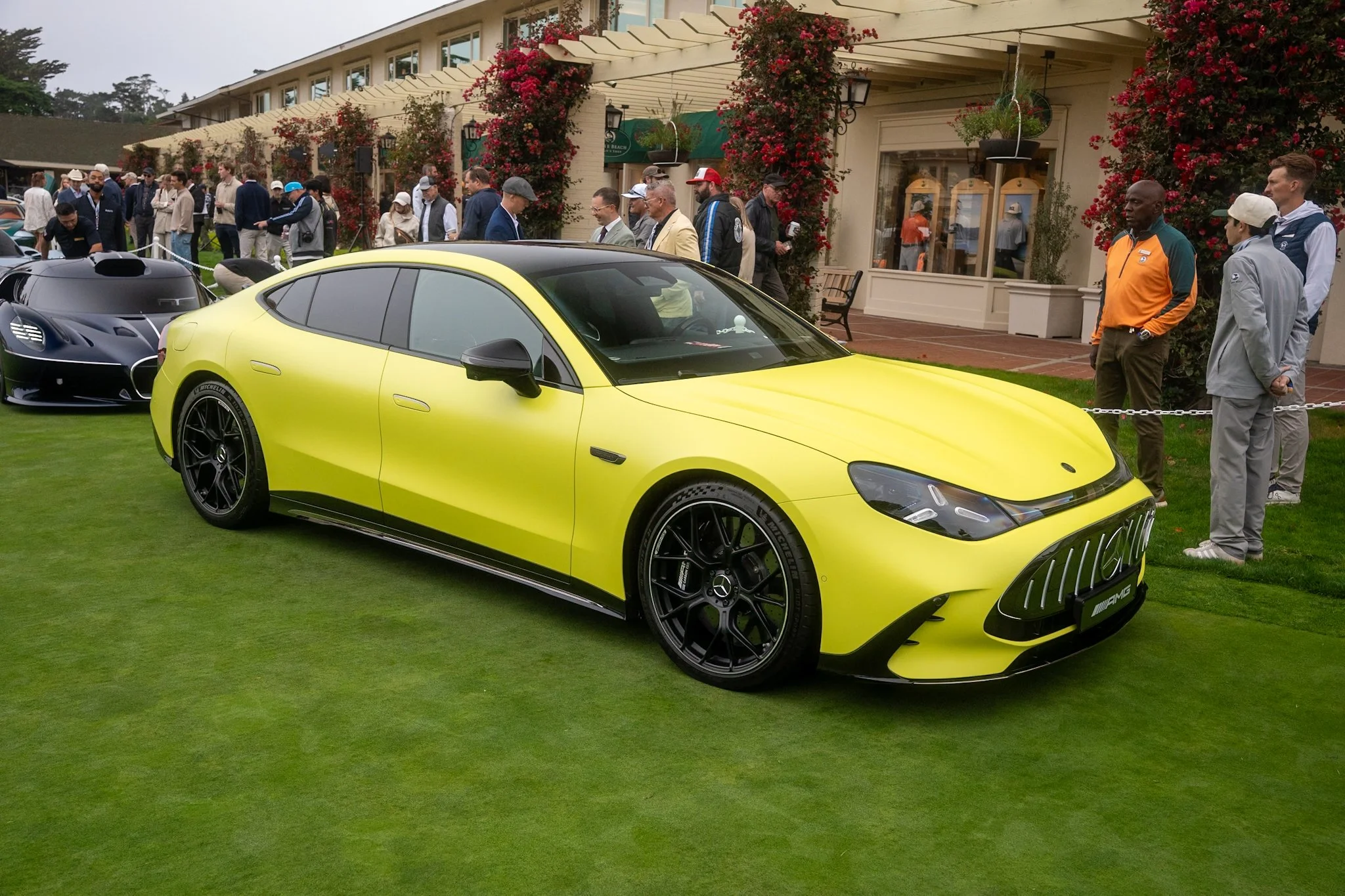
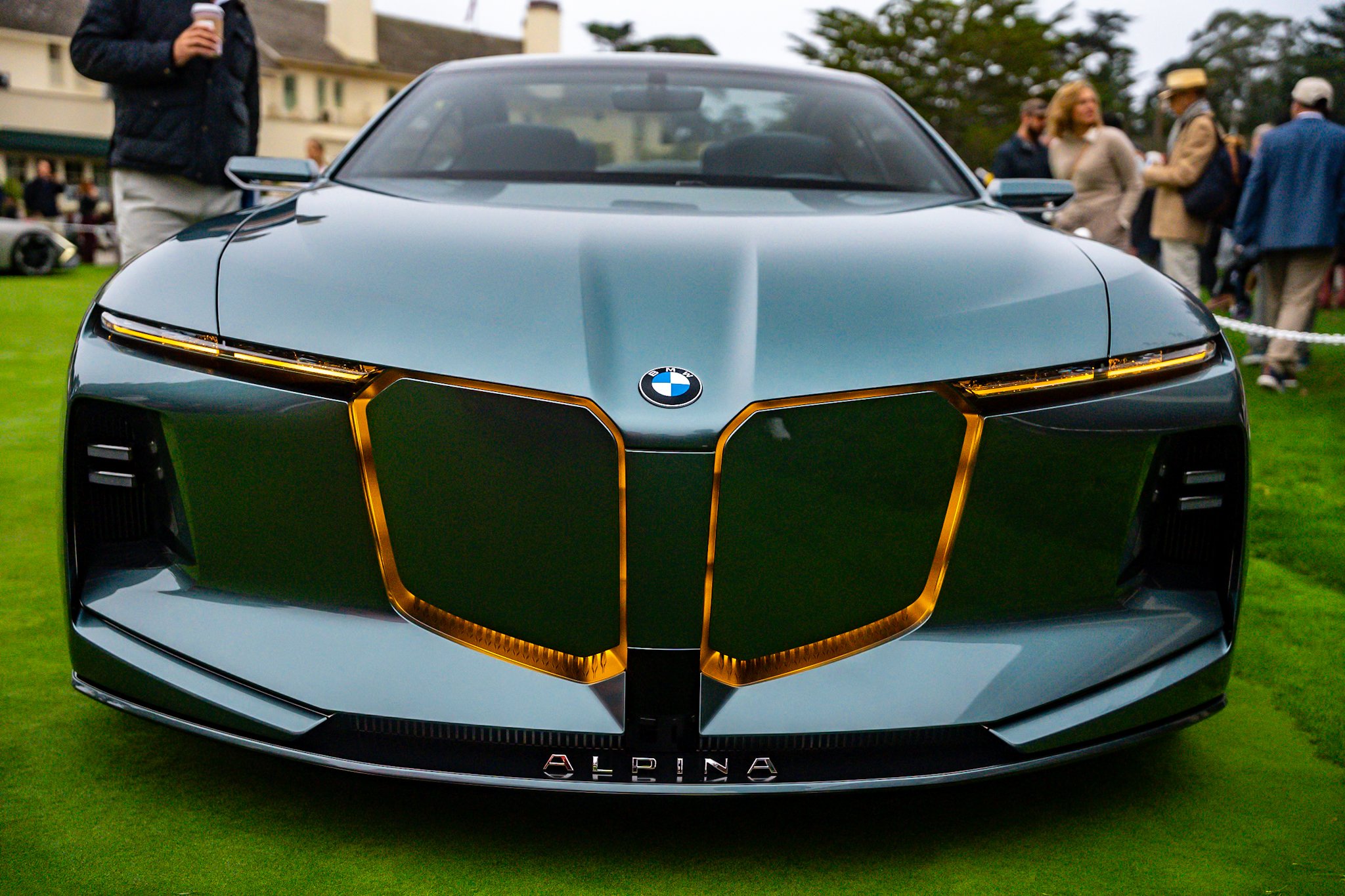
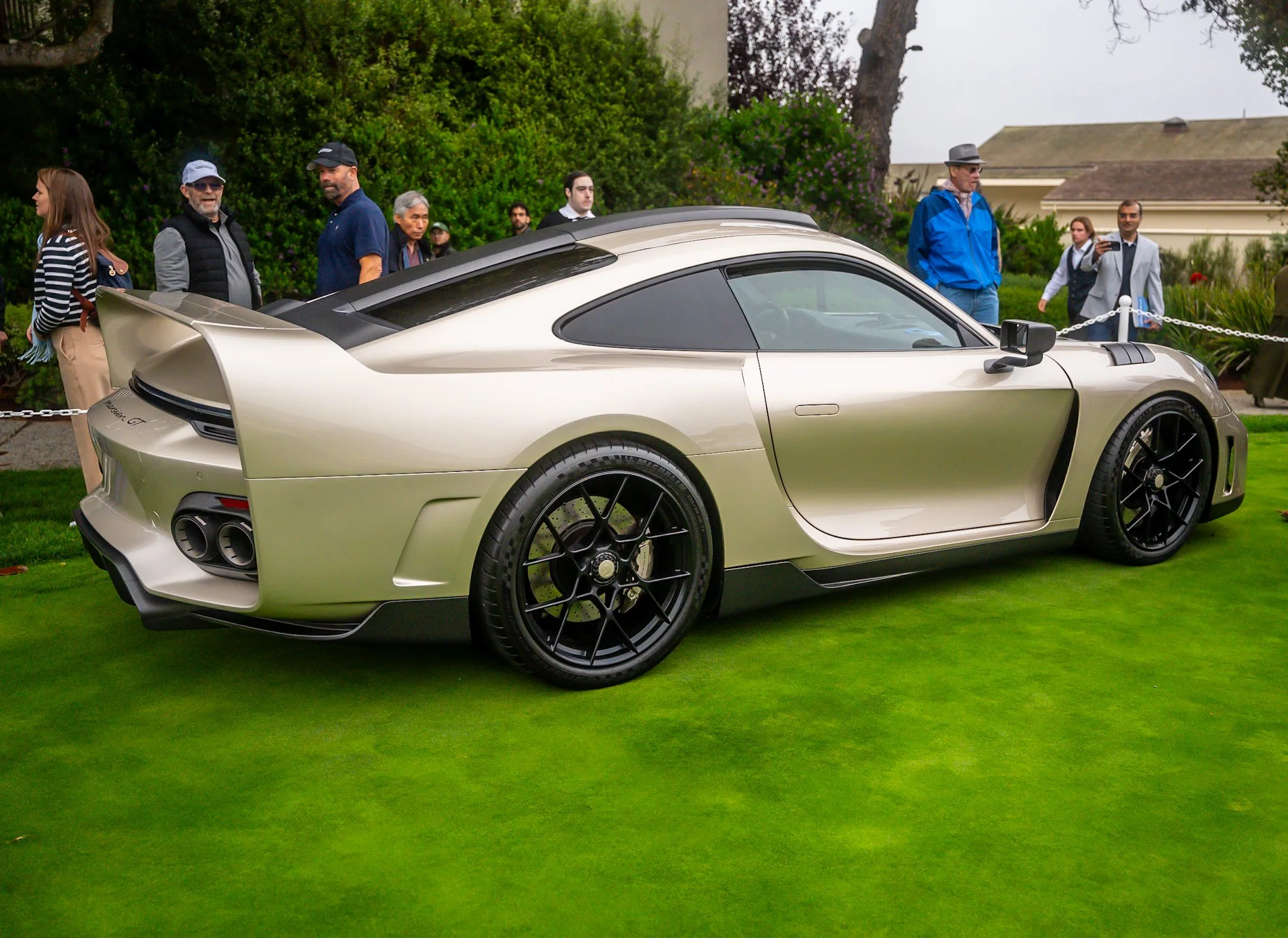
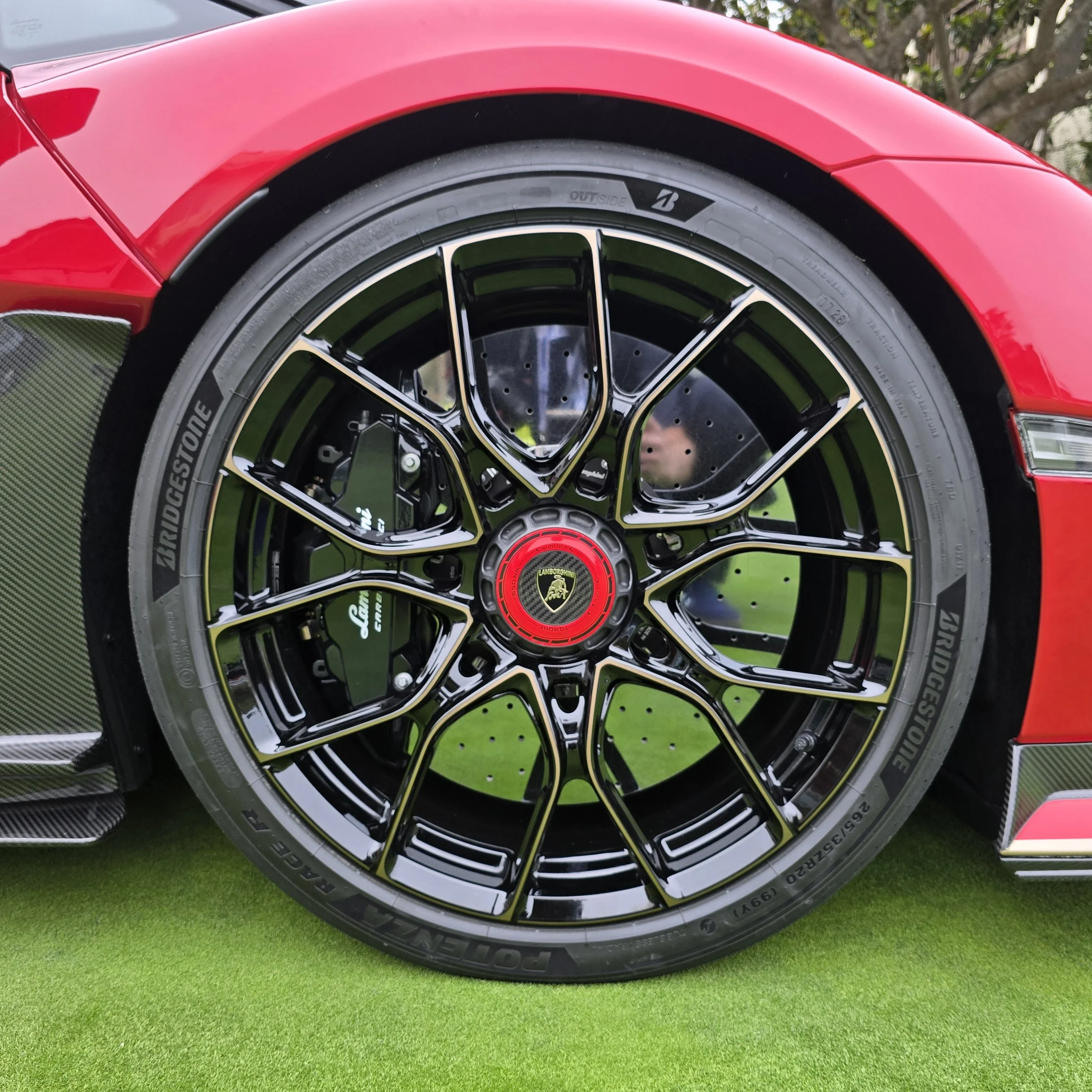
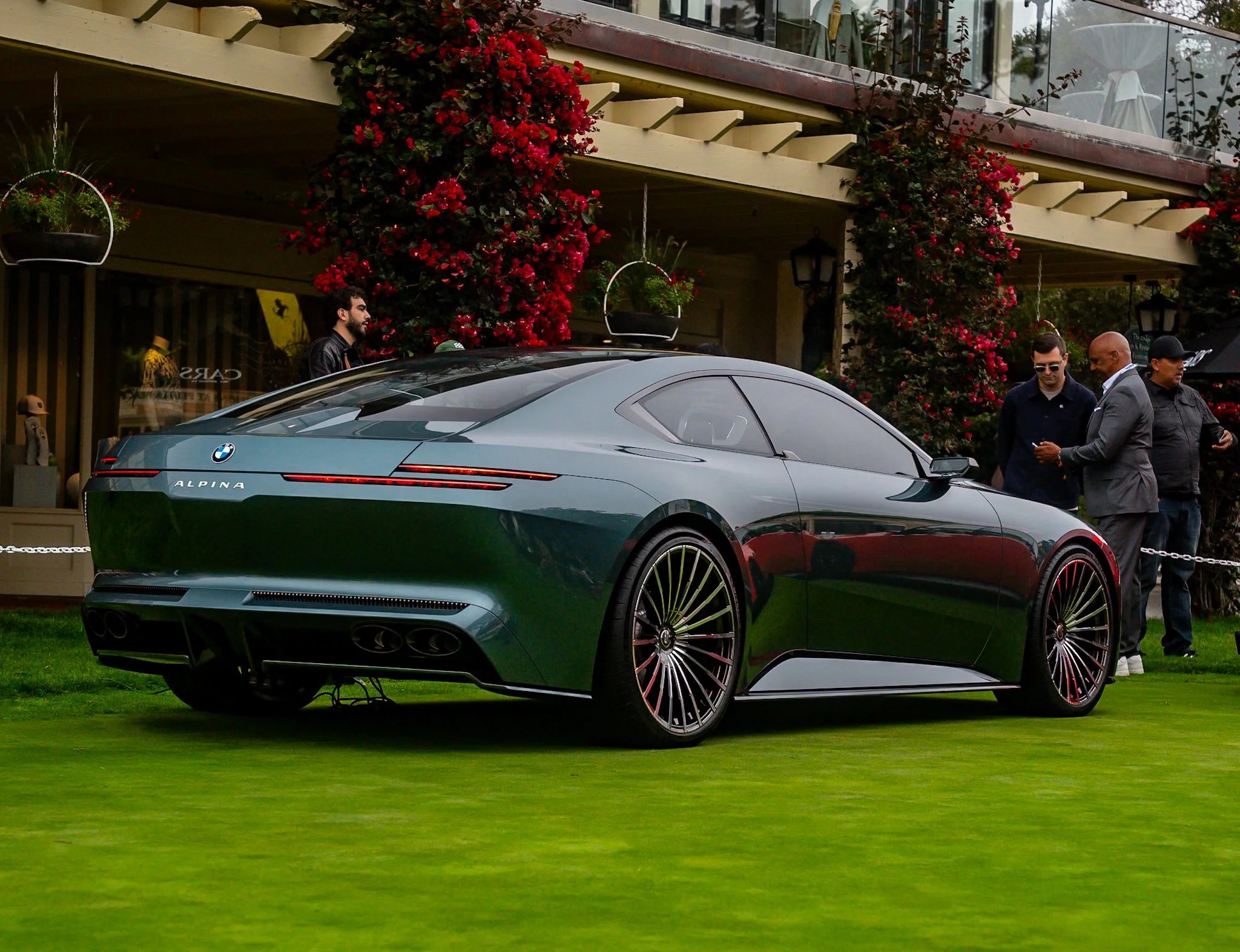
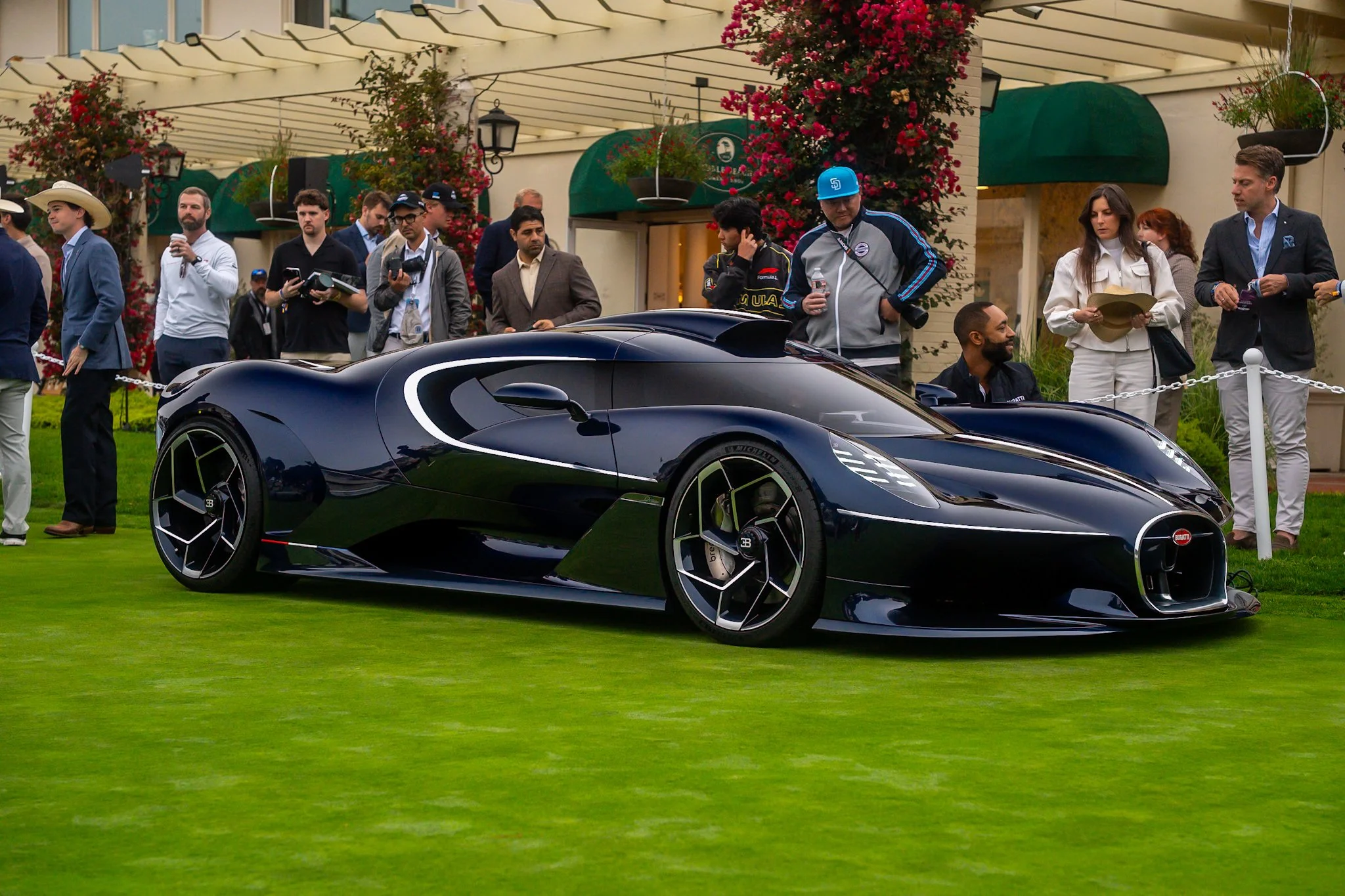
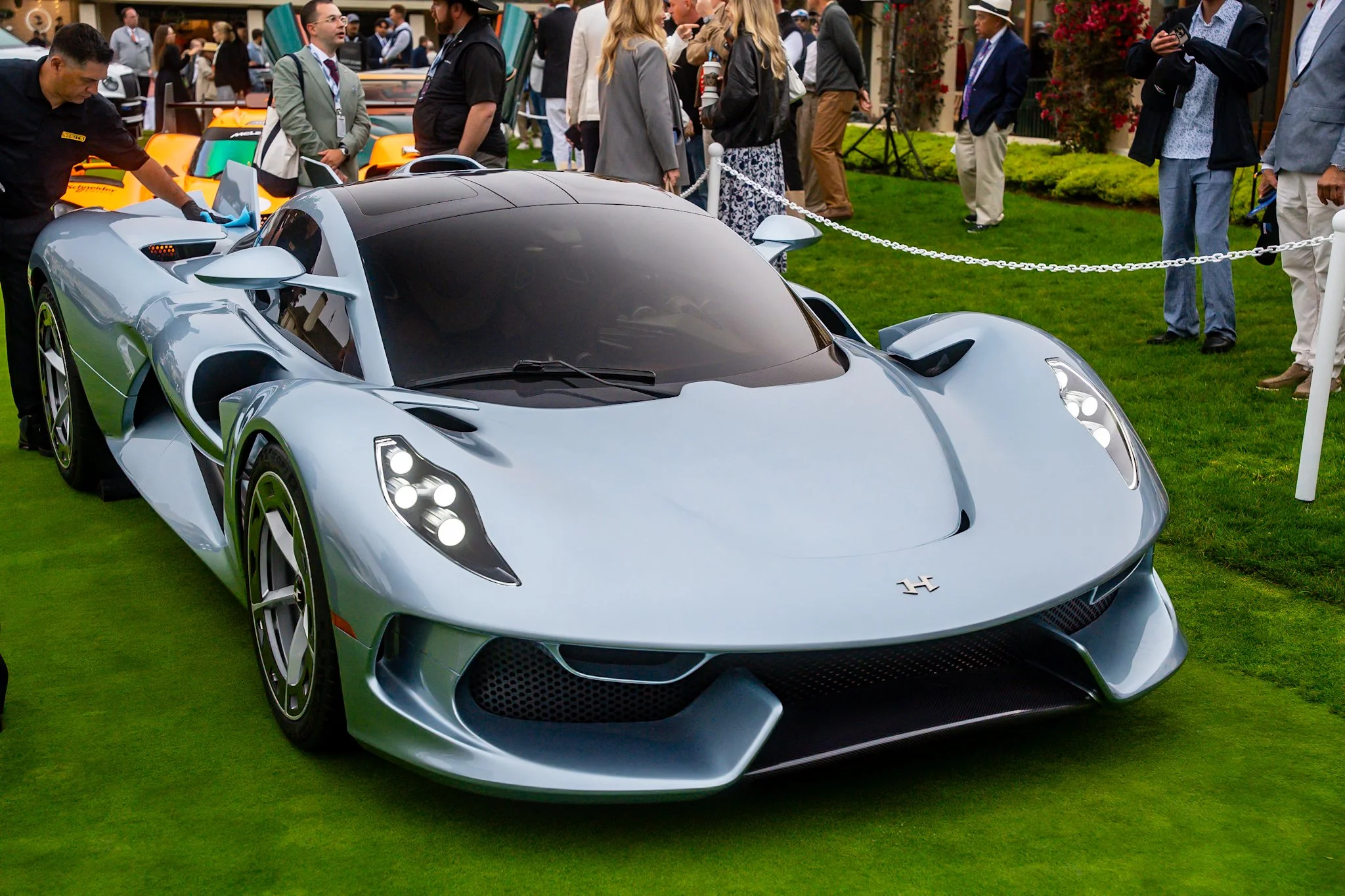
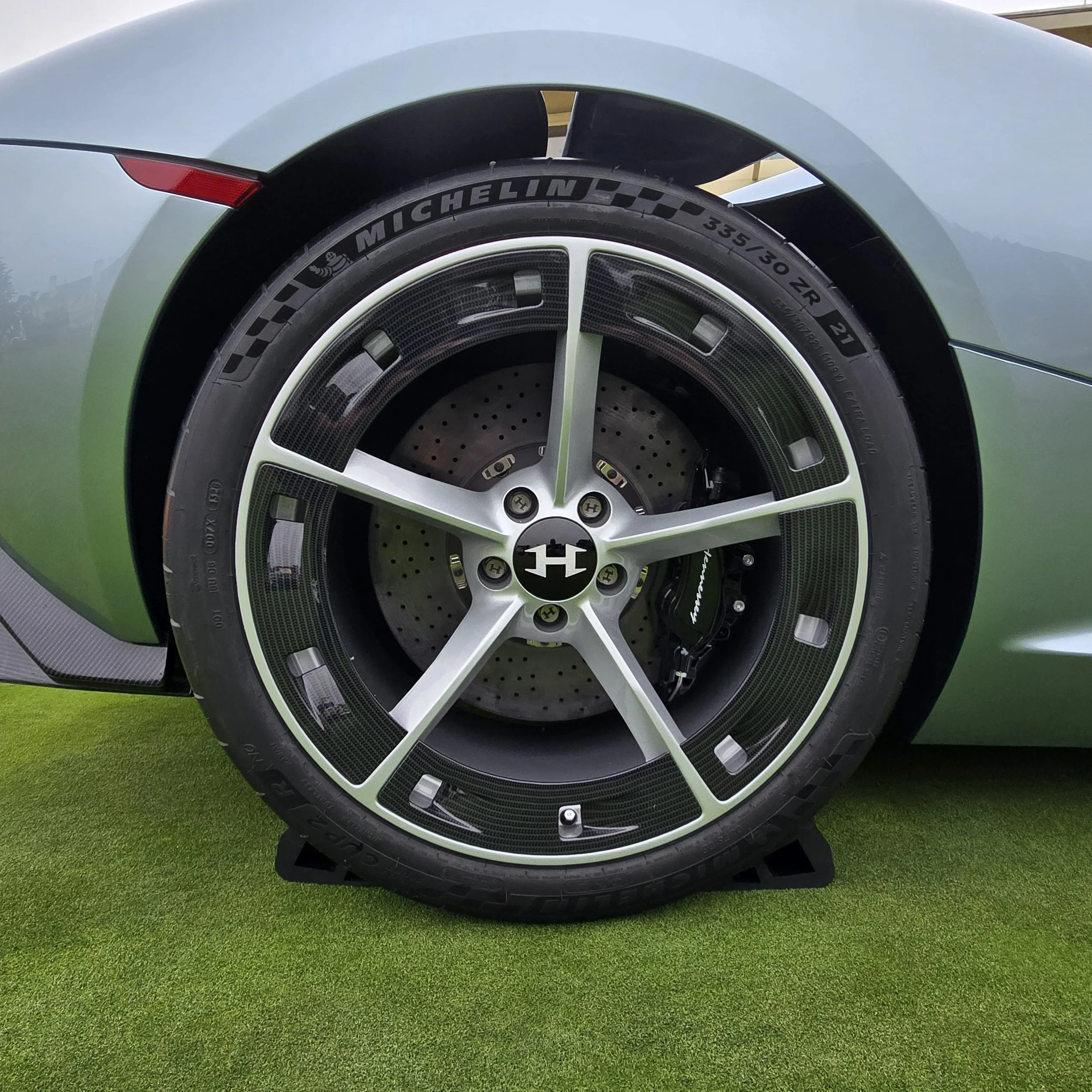
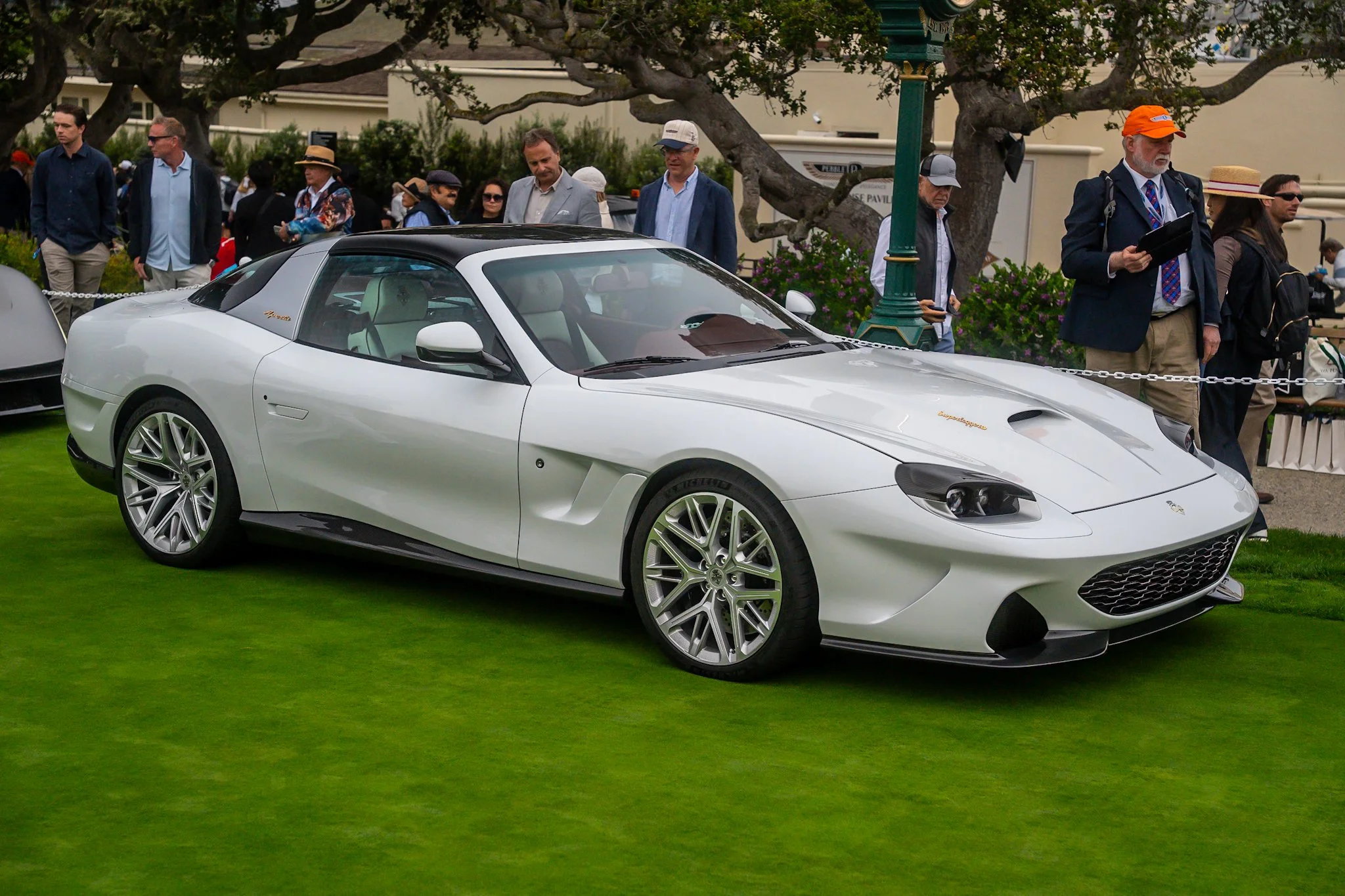
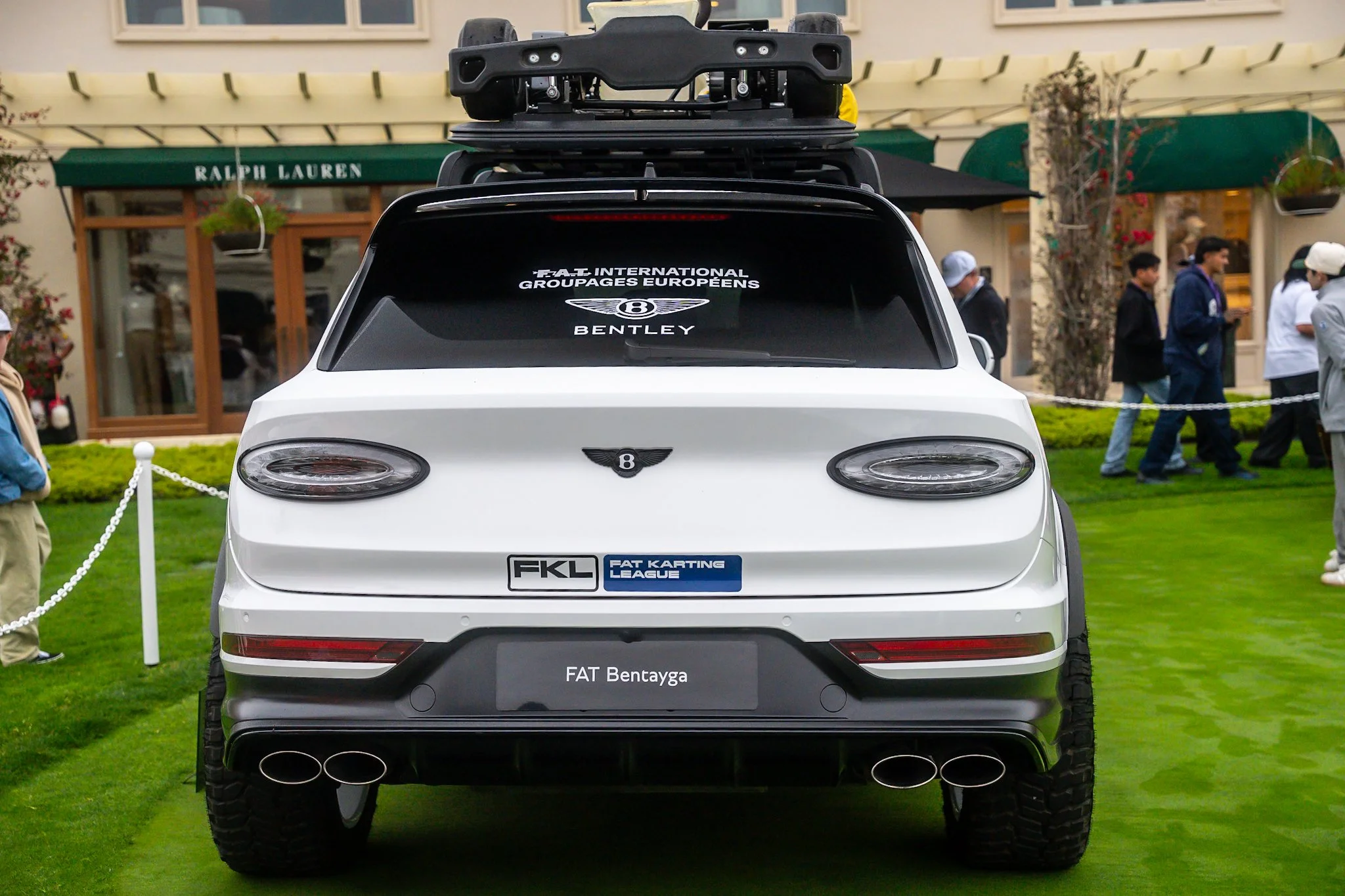
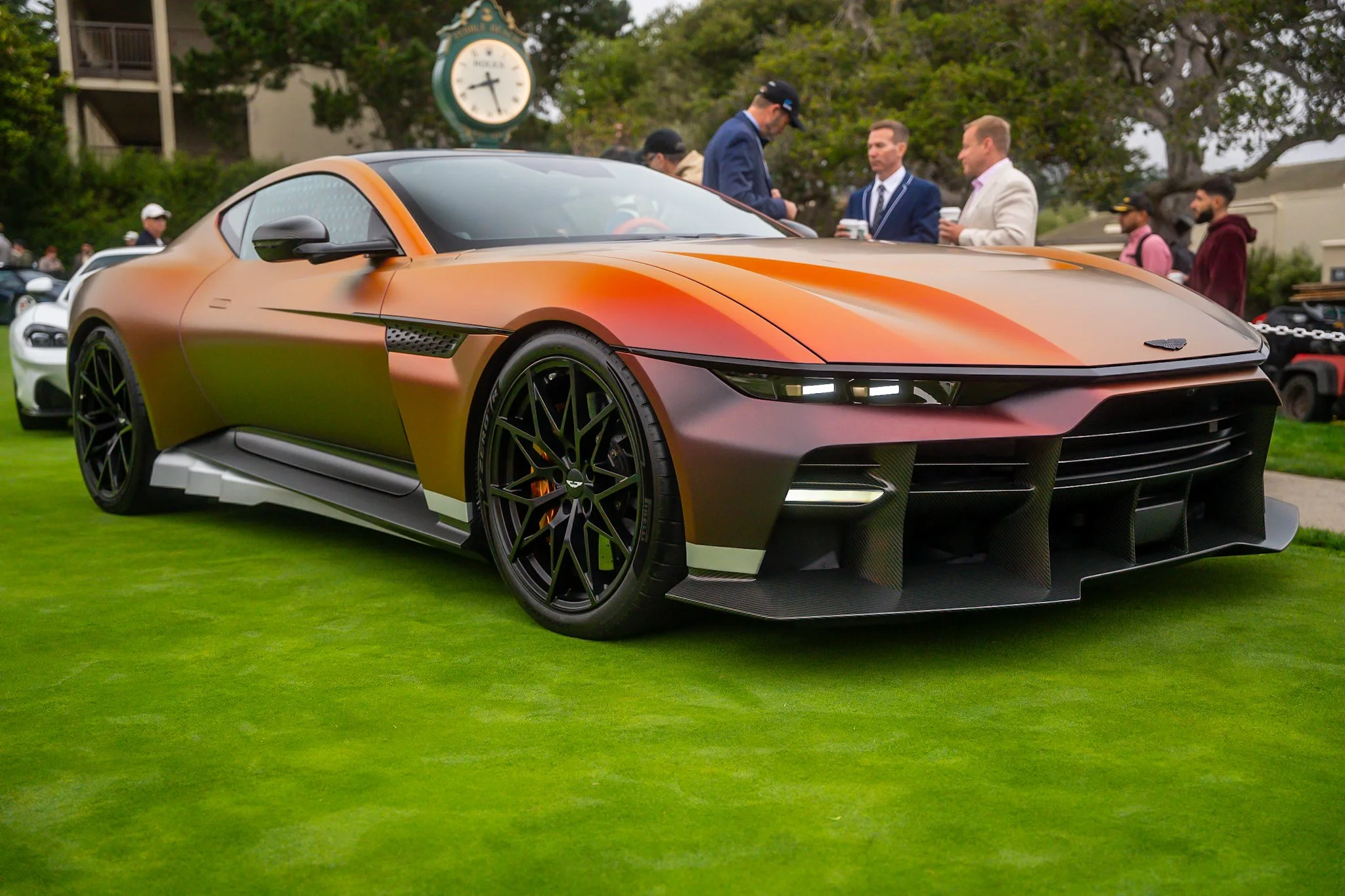
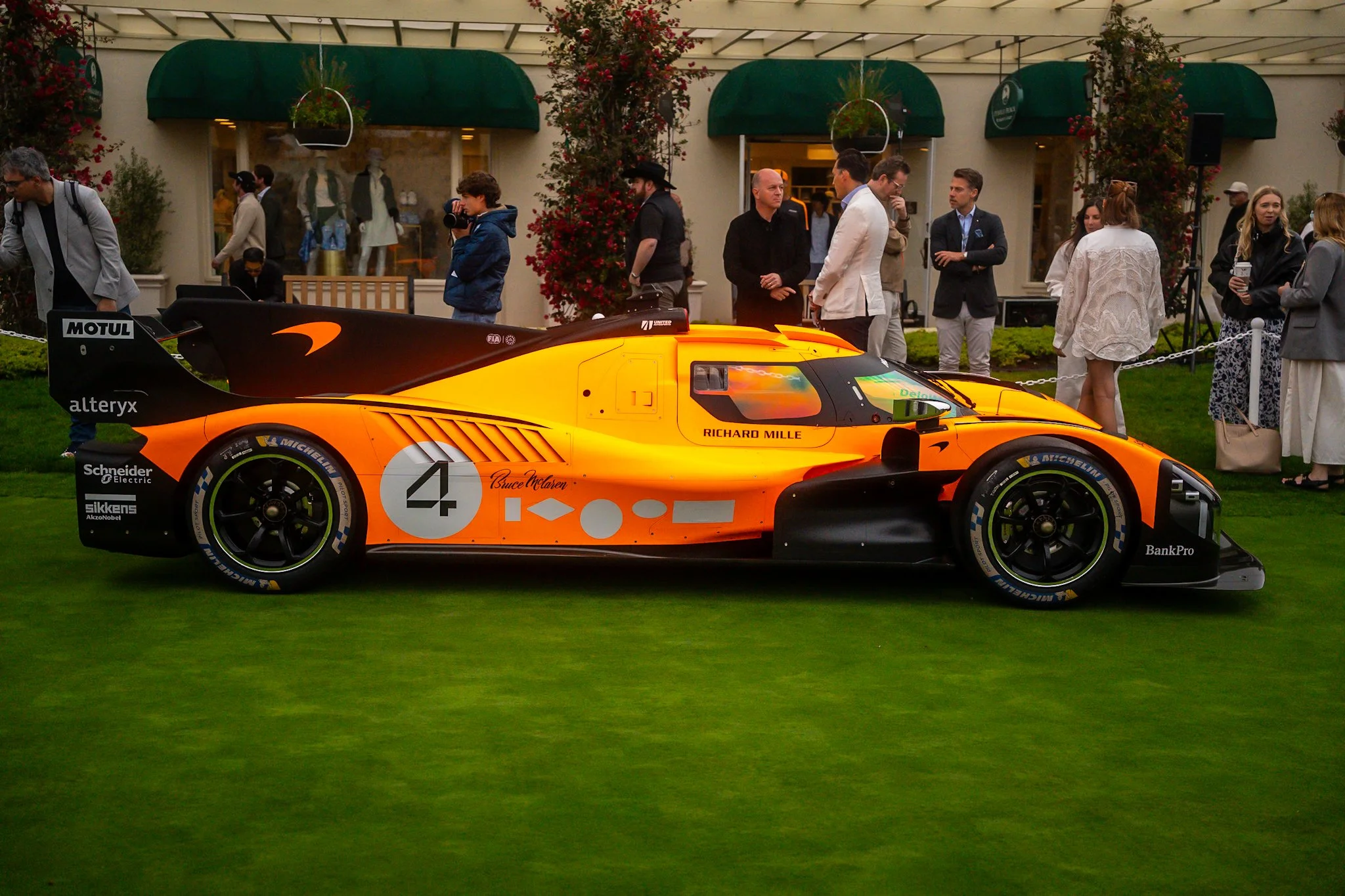
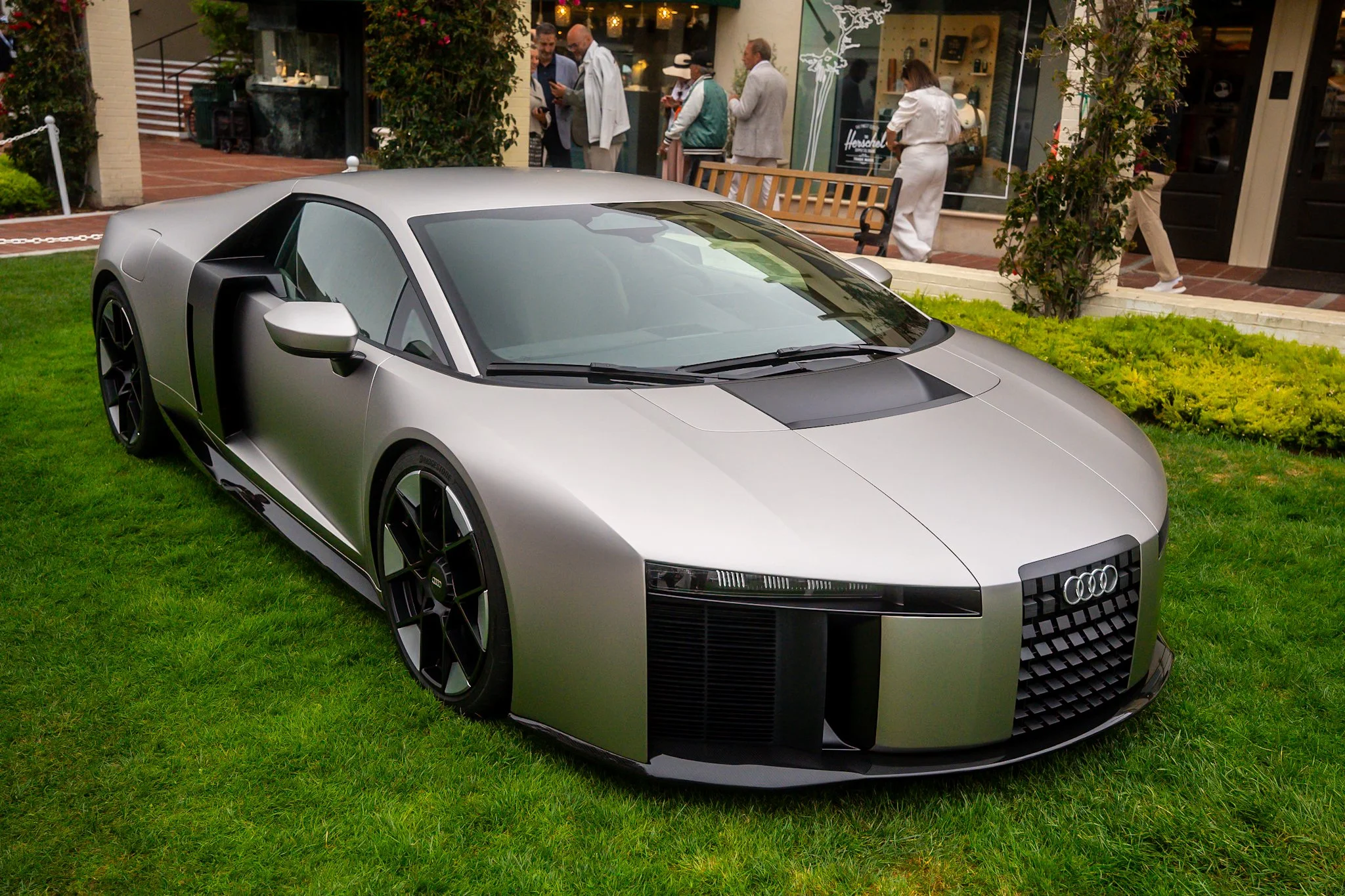
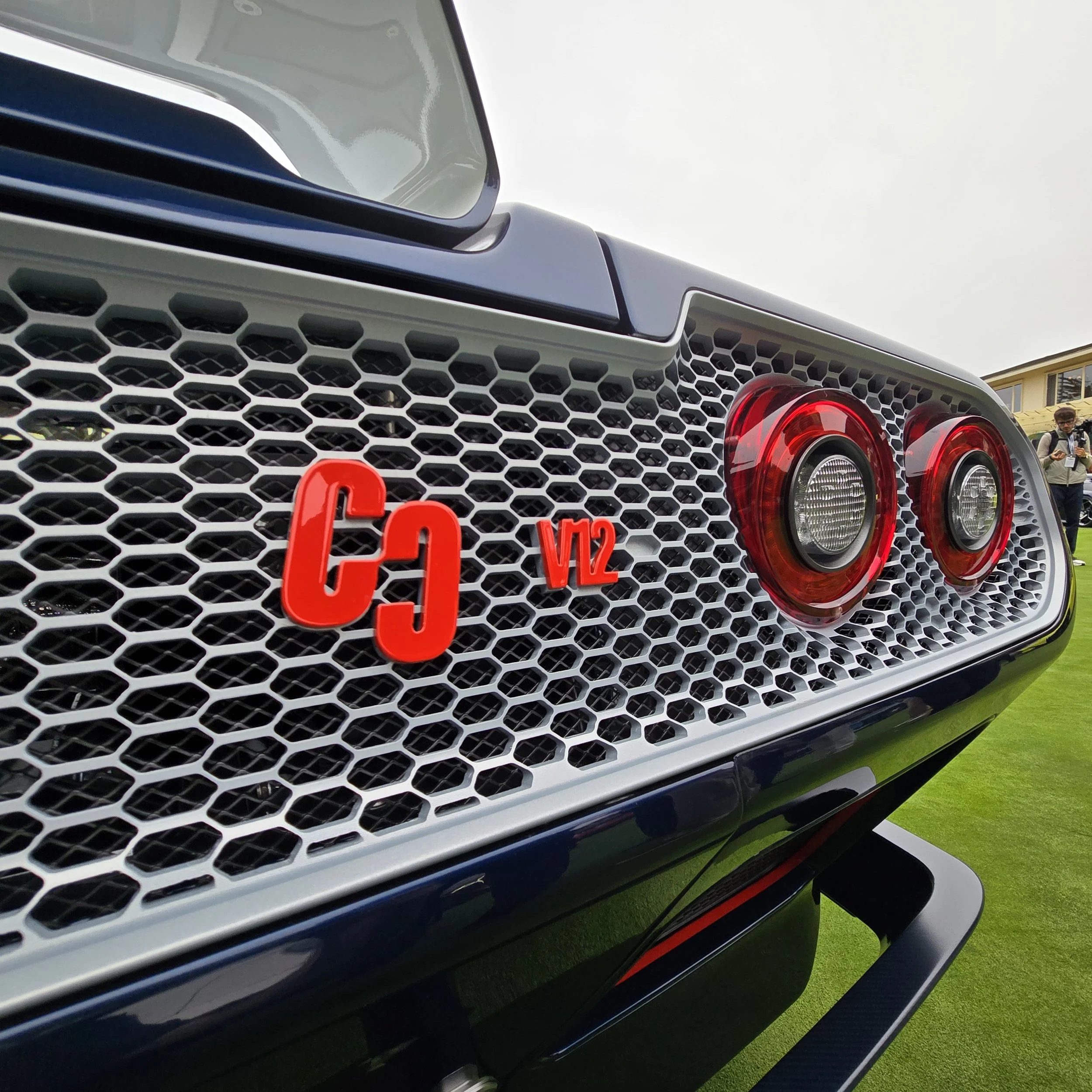
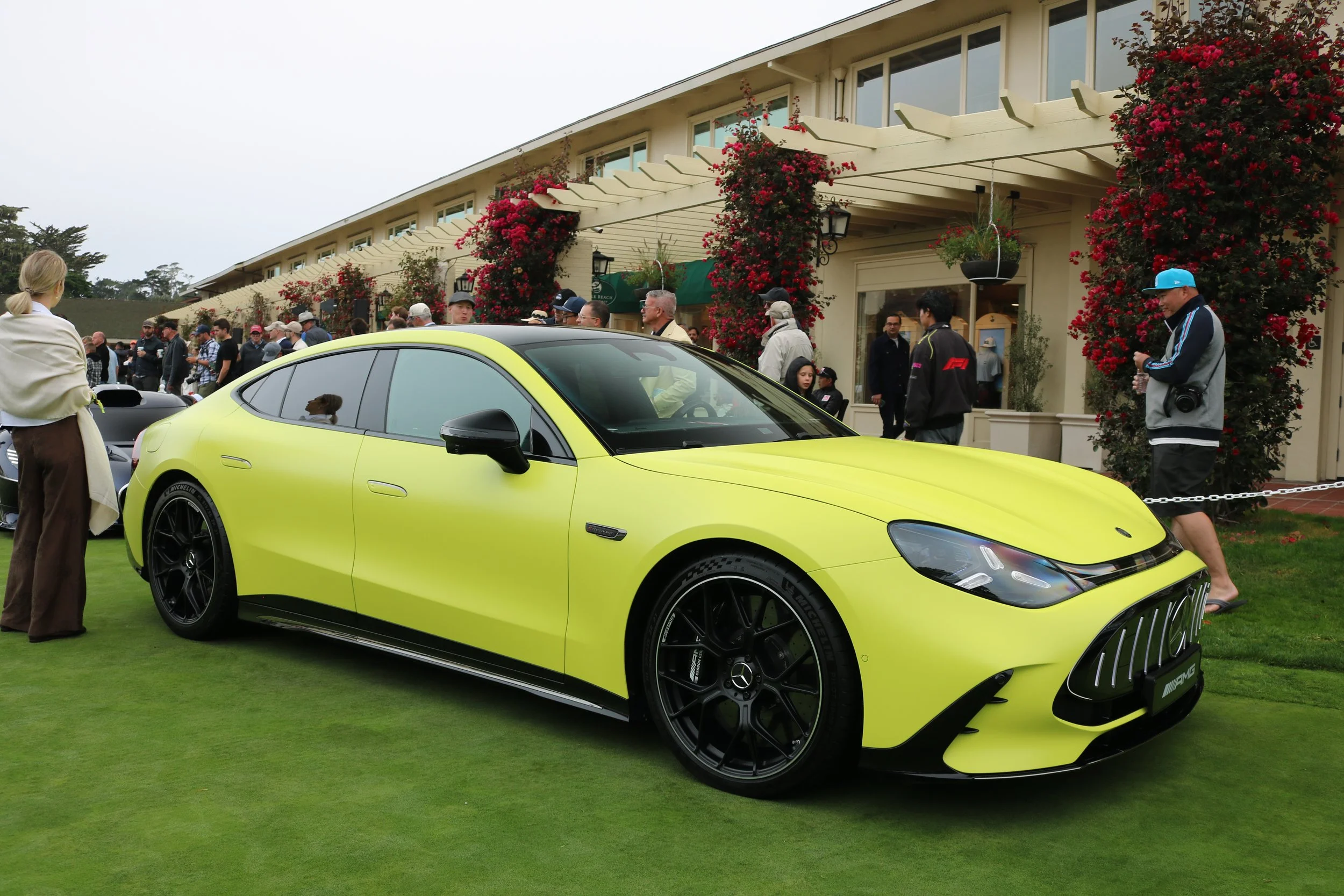
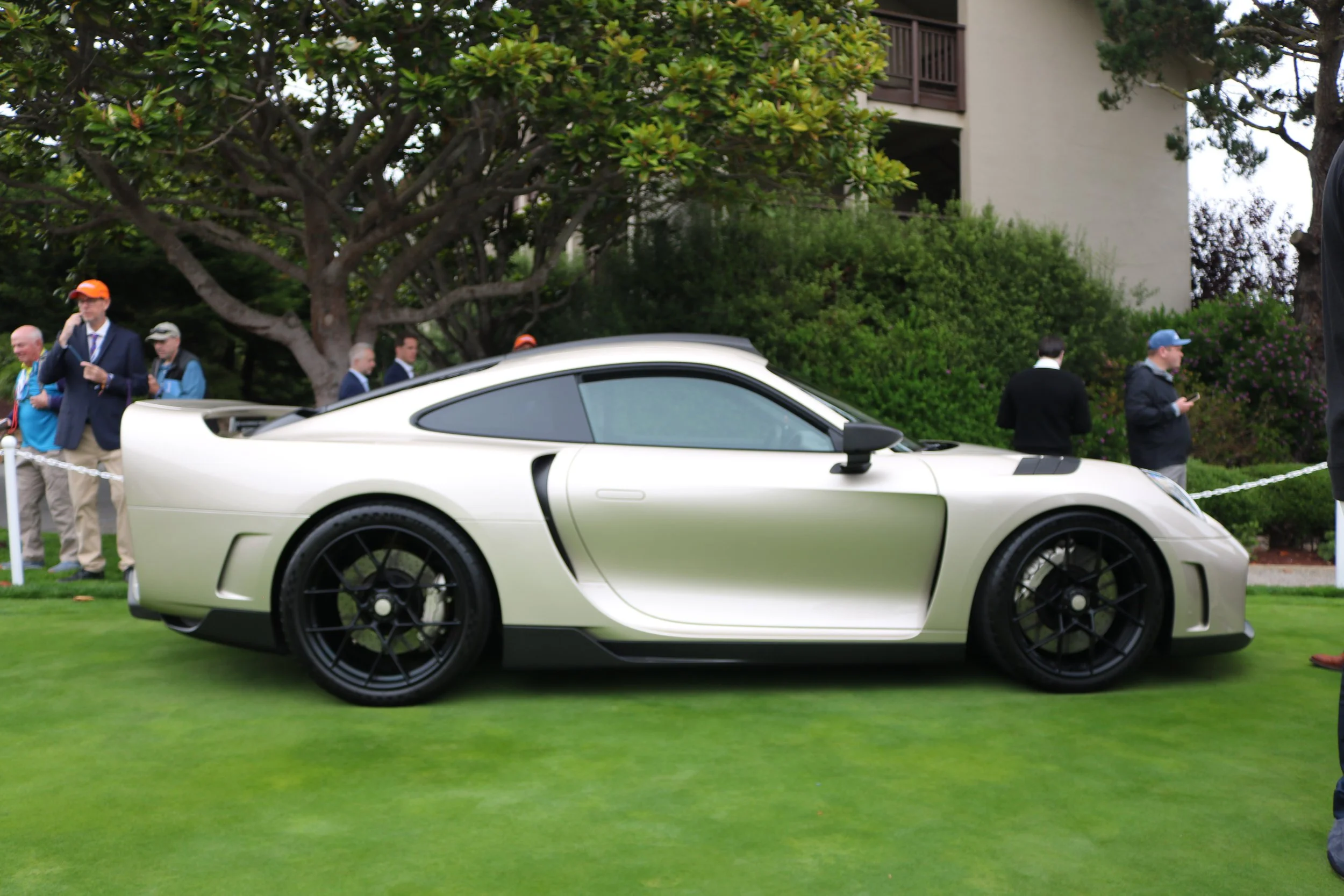
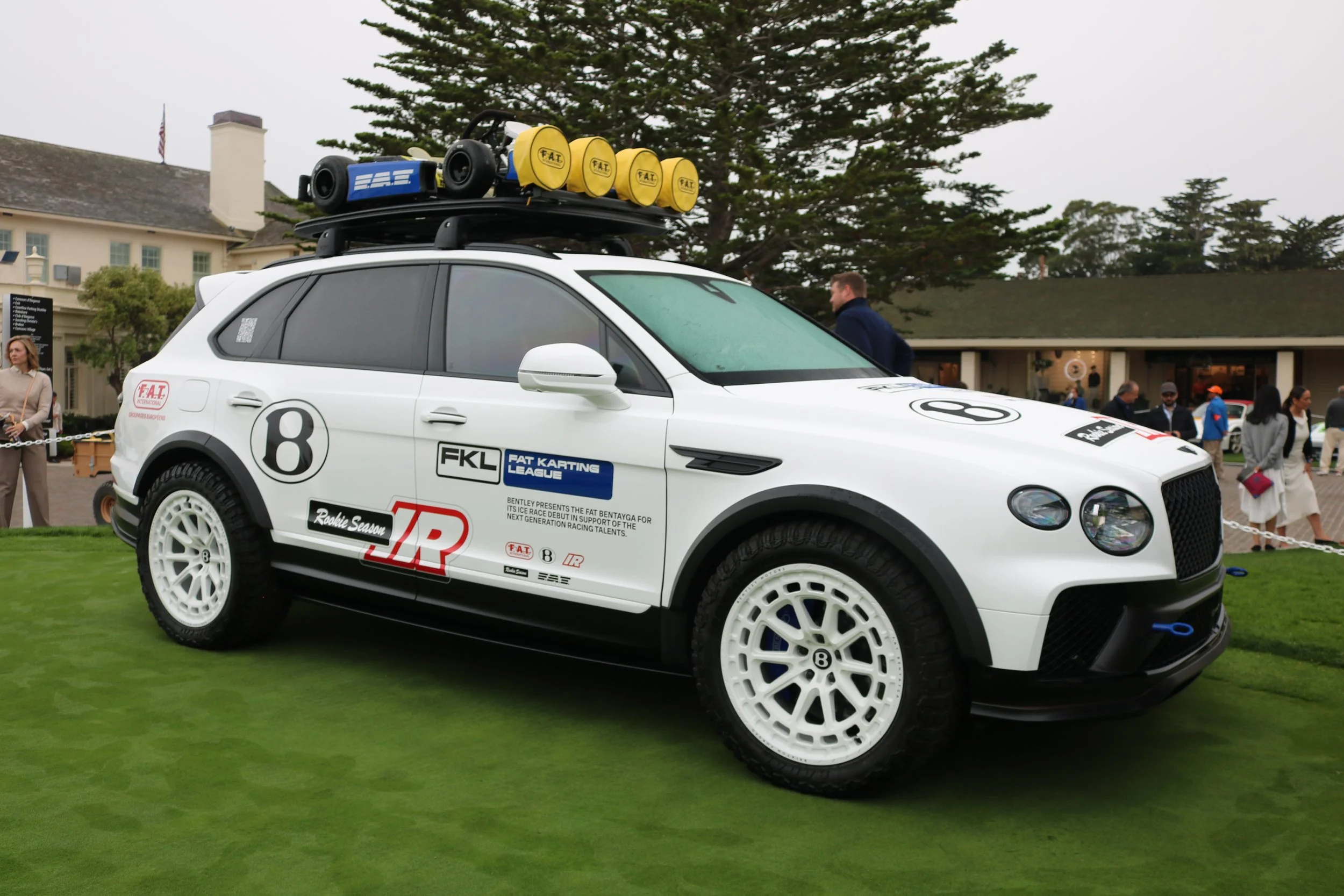
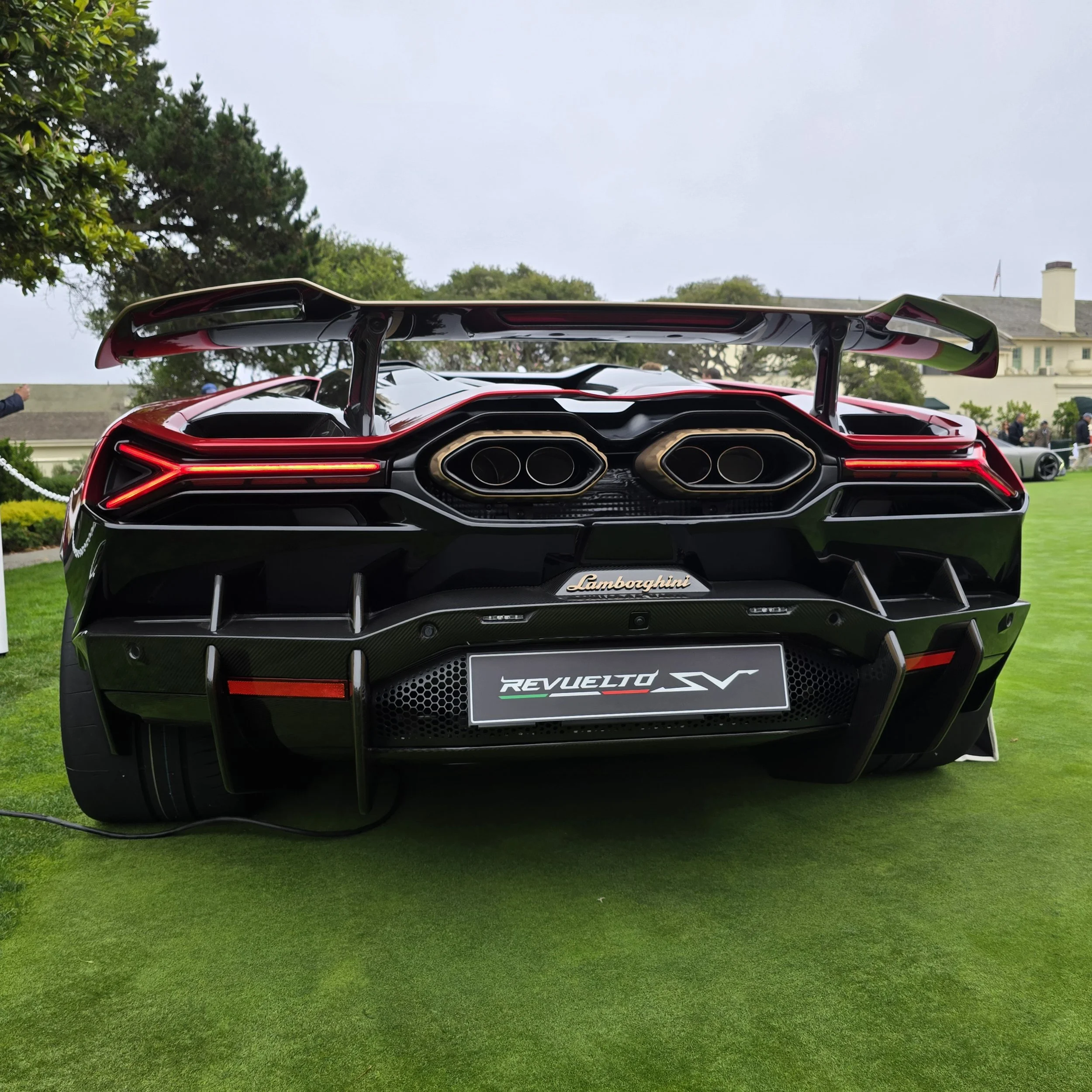
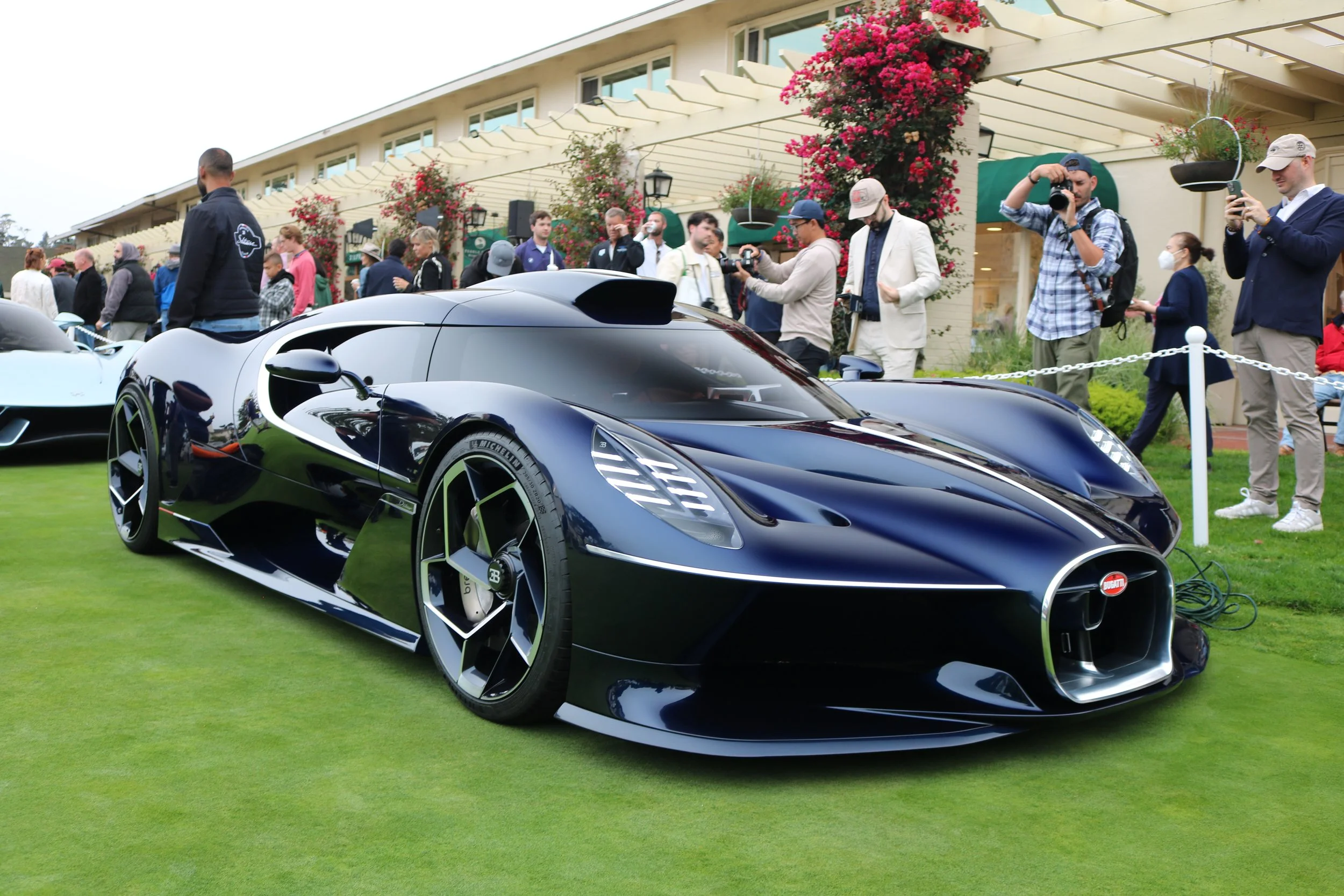
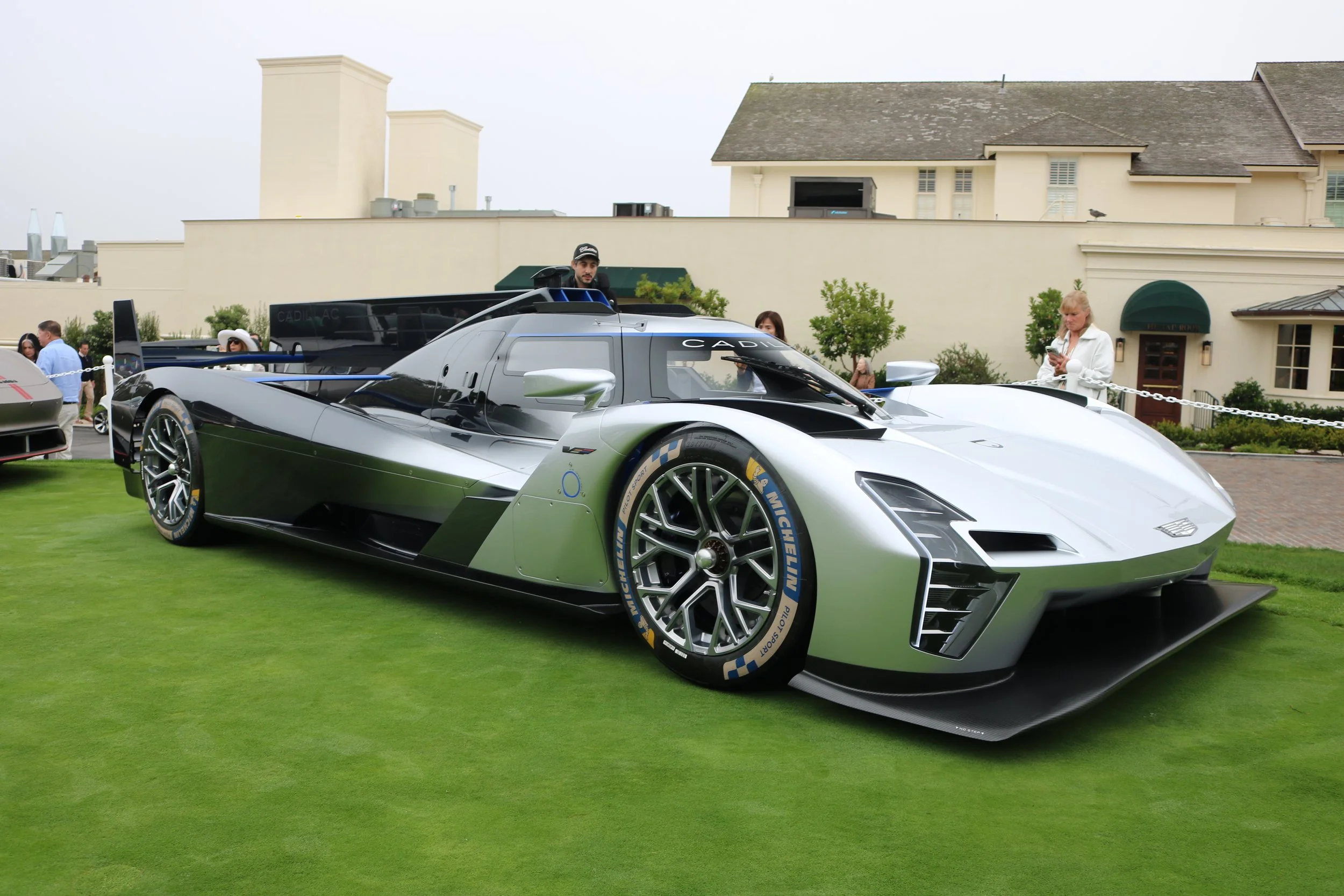
Its presence is important. A concours devoted entirely to preservation could easily become an extraordinarily beautiful museum exhibition. Pebble Beach has long resisted that temptation by placing future-facing design alongside its historic field. On one side of the event are the cars that shaped automotive history; on the other are the machines hoping to shape what comes next.
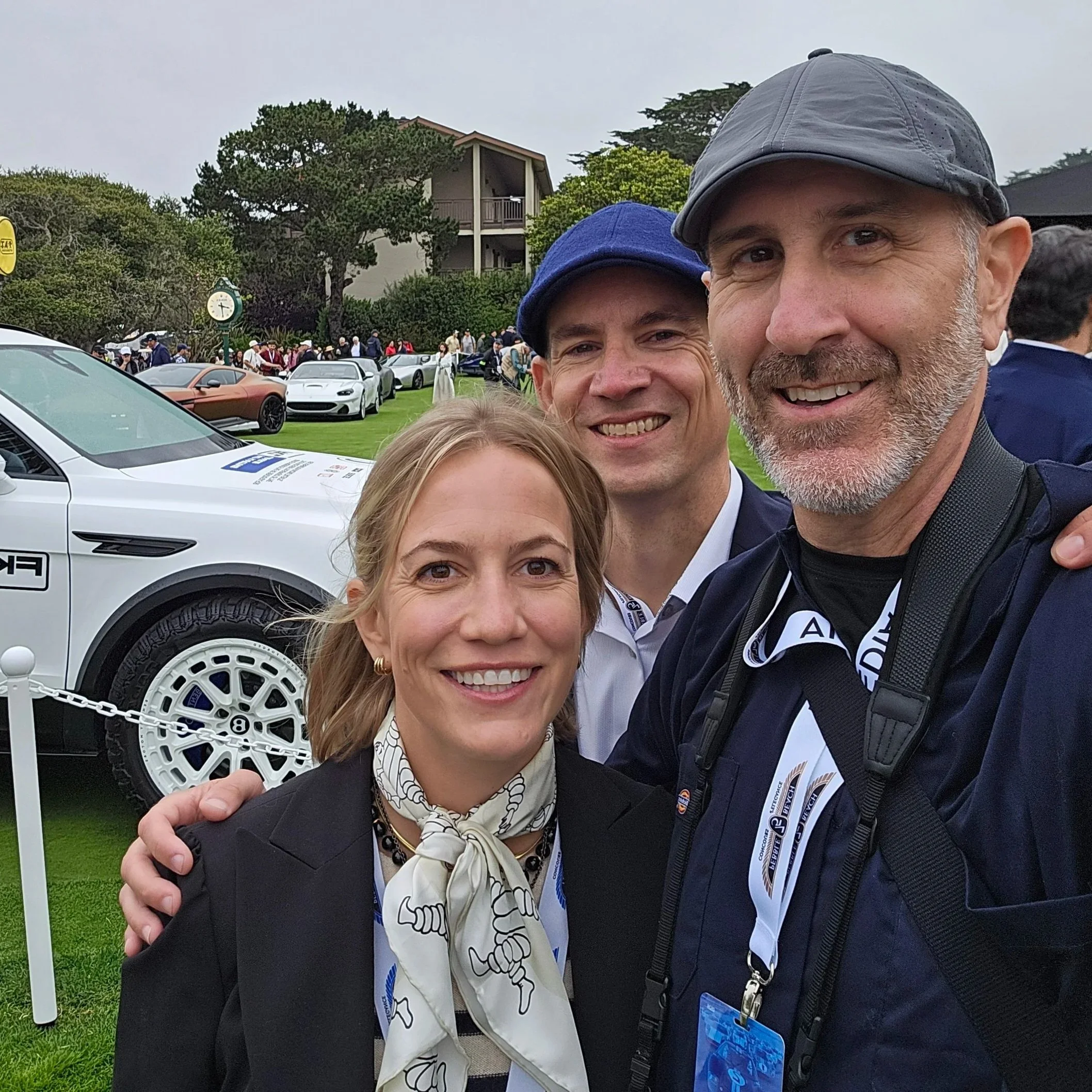
At this point, we’d be remiss if we didn’t give a special TLP shout out to our friend Alicia Busa, who manages the Concept Lawn for the event. This is the second year she’s taken pitty on us and allowed us beyond the cordons and into the inner sanctum of the display, and we’re absolutely in her debt for giving us the opportunity to capture images from the inside the ropes. We hope you enjoy the shots above unobstructed by the masses of people circulating around the green, taking in the newest and unicorn-iest cars on the planet.
Why Pebble Beach Still Matters
There are now so many events during Monterey Car Week that it is entirely possible to have an extraordinary Car Week without ever setting foot on the 18th fairway.
You can spend Thursday watching significant cars actually being driven on the Tour d’Elegance. Friday can disappear inside The Quail. Saturday can be spent deafening yourself at Laguna Seca. The auctions alone could occupy several days.
But Pebble Beach remains the standout.
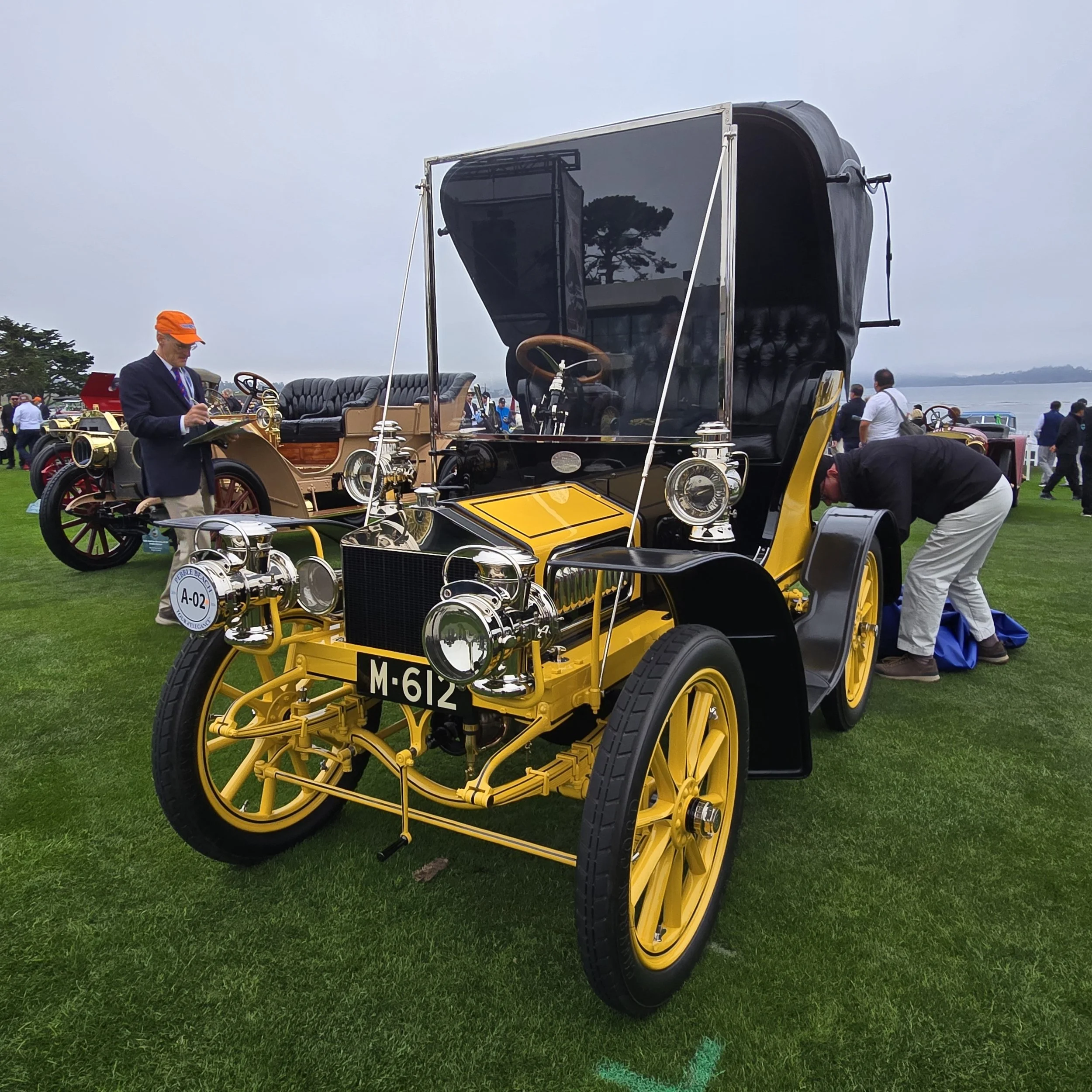
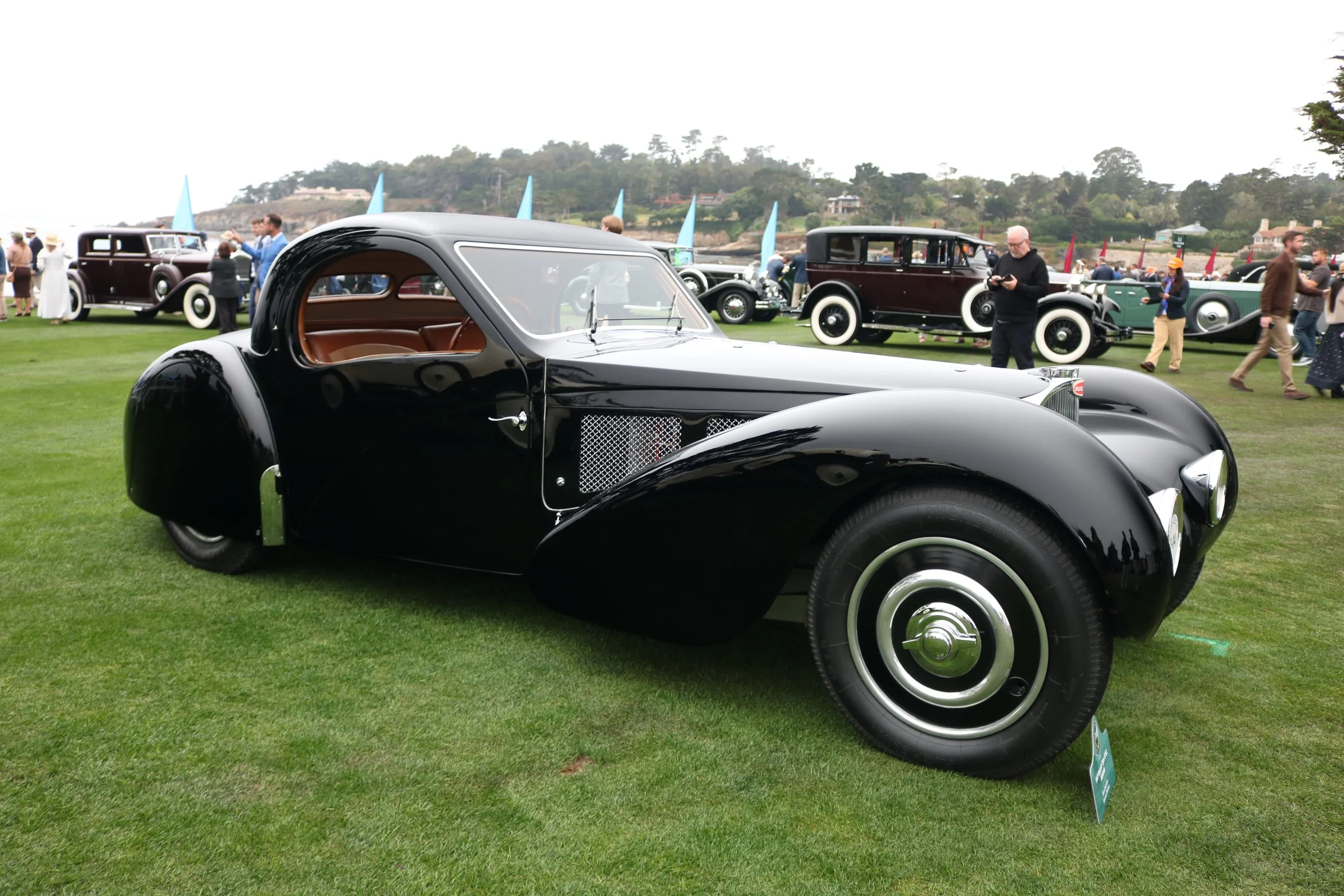
The significance is not simply that the cars are rarer or more valuable. It is the extraordinary concentration of automotive history in one place. A Le Mans-winning Ferrari can sit within walking distance of a 120-year-old speedster, a Japanese prototype racer, a one-off coachbuilt classic, a row of Miuras and an Audi supercar that barely exists yet.
Past, present and future all occupy the same place.
And perhaps that is why, after 75 years and despite Monterey Car Week becoming vastly larger than anyone in 1950 could possibly have imagined, everything still seems to point toward Sunday at Pebble Beach.
The Concours began as the sideshow to a road race. It ended up creating an automotive universe around itself.
We hope you enjoy our event recap, and as always, we have a mega gallery below to make our limited writing abilities.
-The Loud Pedal